Portuguese
  Spanish


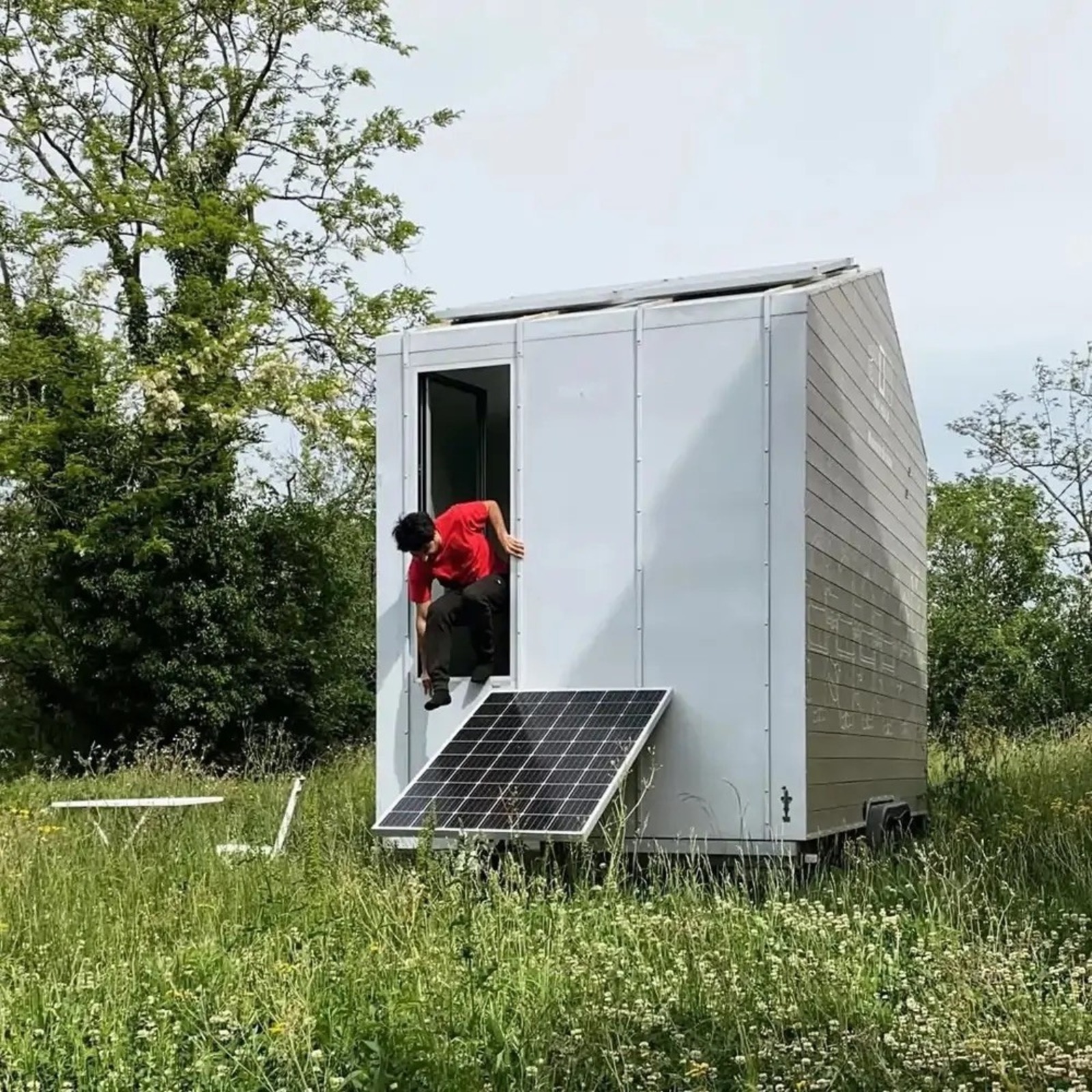

Compact Project Accompanies Movements Through Europe, Gathers Essential Functions in Modular Wood, Uses Solar Energy, Independent Water and Proposes a New Reading on Living, Conscious Consumption and Contemporary Mobility
What would it be like to live in a space equivalent to a single room? This is the proposal of the house measuring just 9 m² developed by Italian architect Leonardo Di Chiara, who transformed the reduced area into a complete and functional residence.
Designed to not depend on a fixed address, the dwelling accompanies the architect in his movements through Europe and serves as an experiment in architecture, mobility, and autonomy. The experience arises from the desire to live without geographical ties.
A House That Moves with the Resident
The project has solidified as an example of compact housing capable of gathering essential functions for daily life.
-
How to Unclog Showerhead Holes Blocked by Limescale and Hard Water Without Replacing or Hiring a Technician

-
Award-Winning Korean Electric Scooter Concept Folds to Briefcase Size, Eases Transport Challenges

-
YouTuber Discovers Surreal Collection in 400-Year-Old Italian Fortress Near Florence: 419 Anvils, Giant Walruses, Ancient Church, and WWII Tunnels
-
Creative Uses for Toilet Paper Rolls That Will Change Your Perspective


Built almost entirely by the architect himself, the structure uses natural wood and adopts a modular system, with lightweight components and joints that dispense with extensive technical resources.
The result is a mobile residence designed to be disassembled and reinstalled in different contexts.
Inside, the logic is multifunctional. Continuous panels hide cabinets, shelves, retractable seats, and technical areas. Every inch is utilized in an integrated manner, without compromising circulation.
The living area converts into a dining room through a foldable table embedded in the wall, with capacity for up to six people. The chairs remain hidden.
Autonomy and Smart Use of Space
The bedroom, initially individual, can be expanded to accommodate two people. Activities such as making coffee, storing books, organizing tools, or ironing clothes come with custom compartments, reinforcing the versatility of the compact space.
Another central point is autonomy. The house operates with a photovoltaic system and batteries, allowing it to function without a connection to the electrical grid.
Water supply occurs through independent reservoirs for clean water and wastewater.
According to architect Leonardo Di Chiara, the construction cost ranged between € 70,000 and € 80,000, approximately R$ 380,000 to R$ 430,000 at current exchange rates. He regards the amount as an investment in a lifestyle.
After years of use and movements through cities such as Rome, Berlin, Hamburg, and Milan, the house continues to function, showcasing the durability of the project. Compact and mobile, the residence enhances contemporary debate.
With information from Casa e Jardim.