






 Portuguese
  Spanish


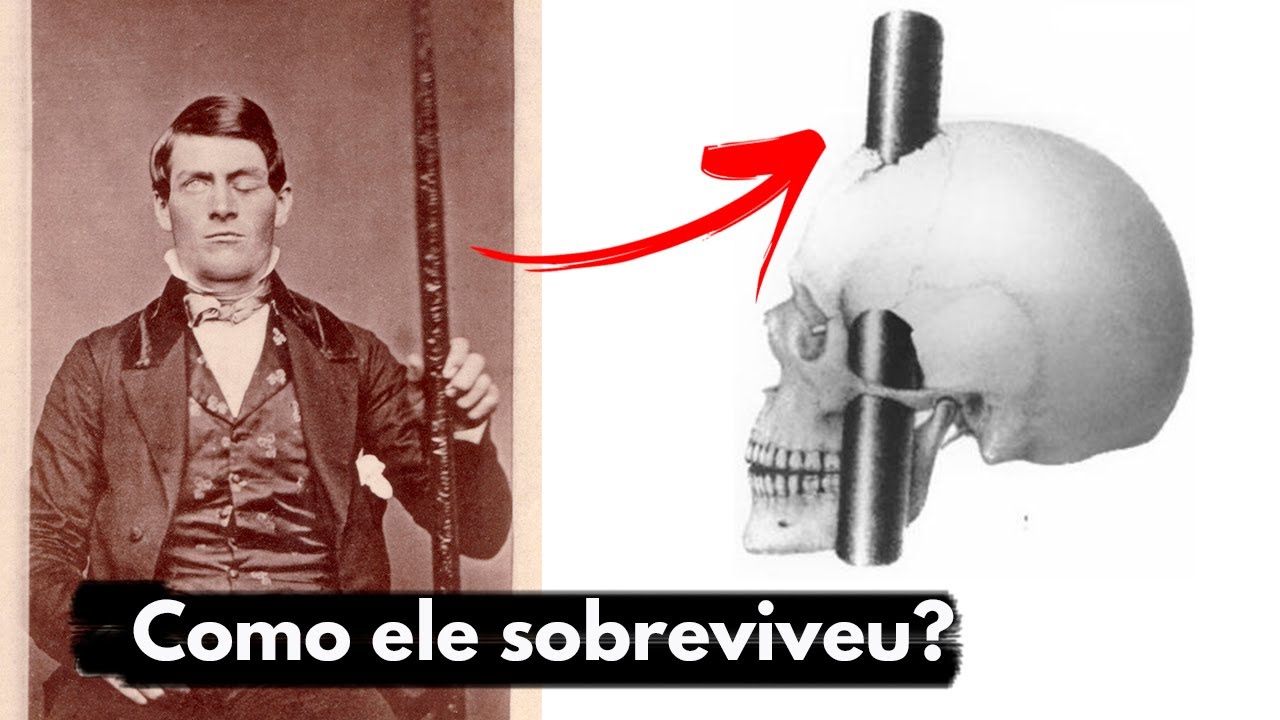

Man Survives 90-Cm Iron Bar Piercing His Skull and Becomes the Most Famous Case in Neuroscience, Revealing How the Brain Changes After Extreme Trauma.
On September 13, 1848, an accident deemed biologically impossible forever marked the history of medicine. The American Phineas Gage, then 25 years old, was a railroad construction foreman in Cavendish, Vermont, when a premature explosion launched a metal bar measuring 90 centimeters in length, 3 centimeters in diameter, and weighing about 6 kilograms at him. The bar entered through his left cheek, pierced his skull, destroyed part of the frontal lobe, and exited through the top of his head, being thrown more than 20 meters away. Even so, Gage did not die, did not lose consciousness immediately, and, according to medical reports of the time, was still able to walk and talk just minutes after the impact.
The case was documented in detail by the physician Dr. John Martyn Harlow, and has since become one of the most studied episodes in modern neuroscience, influencing global understanding of behavior, personality, emotions, and brain functions.
The Accident Scene: The 90-Cm Iron Bar Piercing the Skull Without Causing Immediate Death
Gage supervised a team preparing explosives to level railroad land. At one point, while packing gunpowder into a drilling hole, a spark ignited the charge prematurely.
-
Xiaomi Launches 17T in Brazil with 120x Zoom, 6,500 mAh Battery, and Leica Cameras to Rival iPhone

-
Young Innovator Develops Low-Cost Synthetic Skin Using Buriti Oil to Aid Burn Victims, Gains International Recognition in the U.S.

-
Robot Developed to Navigate Sewers and Prevent Blockages and Flooding in Brazil

-
17-Year-Old Brazilian Develops AI to Aid Students with ADHD and Dyslexia, Capturing Google’s Attention with Flexia


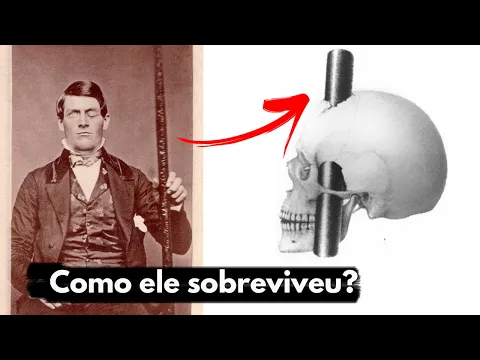

The explosion propelled the iron bar like a projectile:
- entered through the left cheek;
- pierced the frontal lobe;
- destroyed essential brain tissue;
- exited through the top of the head;
- fell several meters away, covered in blood and brain matter.
Historical accounts claim that Gage never completely lost consciousness. He was transported to a cart and taken for medical attention while conversing and claiming to remember everything.
The Survival That Defies Medical Logic
The physician who attended to him, Dr. Harlow, was impressed with the patient’s condition. Even with a massive injury:
- Gage exhibited coherent speech;
- moved his arms and legs;
- answered questions;
- identified people;
- understood instructions.
The subsequent infection nearly killed him, but after months of recovery, he managed to stand, walk, and resume some personal activities.
The great scientific question that arose from the case was: how can someone live after losing such an important part of the brain?
The Personality Changes That Transformed the Case Into a Milestone in Neuroscience
Before the accident, Gage was described as:
- disciplined;
- responsible;
- organized;
- respected by the team;
- calm and polite.
After the injury to the frontal lobe, historical accounts claim that he began to show:
- impulsivity;
- irritability;
- difficulties in planning;
- loss of social filters;
- aggressive behavior at times;
- inability to maintain stable employment.
These changes were essential for medicine to understand that the frontal lobe is directly linked to emotional control, decision-making, social behavior, and personality.

The case inaugurated the modern understanding that brain injuries can profoundly change human behavior — something today widely documented but completely unknown at the time.
Modern Reconstructions: What Really Happened in Gage’s Brain
With the advancement of neuroscience, researchers from Harvard Medical School, Massachusetts General Hospital, and UCLA Brain Mapping Center performed 3D reconstructions of Gage’s skull, preserved to this day.
The studies indicated that:
- the bar destroyed a significant part of the ventromedial prefrontal cortex;
- there was a loss of internal connections between the hemispheres;
- areas responsible for decision-making and impulse control were severely affected.
These conclusions confirmed what Harlow had observed empirically nearly 200 years ago.
Life After the Accident: Work, Circus, and New Career
After years of struggles, Gage finally found stability working as a stagecoach driver in Chile, a role that required:
- concentration;
- planning;
- motor coordination;
- responsibility for passengers.
This surprised modern researchers, indicating that the brain can reorganize functions, even after severe injuries. It is one of the earliest known records of functional neuroplasticity, a fundamental concept in current neurological treatments.
Gage died in 1860, 12 years after the accident, due to complications not directly related to the injury.
Why the Case of Phineas Gage Remains So Relevant in 2025
The story is not just an impressive account of survival. It represents:
The Origin of Behavioral Neuroscience
It was the first case that connected brain physiology and personality.
The First Proof That the Brain Can Reorganize
Neuroplasticity would not be formally studied for about 100 years after.
A Milestone in Modern Medicine
Gage is still cited today in medical, psychology, psychiatry, and neurosurgery courses.
One of the Most Extreme Accidents Ever Documented
The trajectory of the bar is studied in biomechanics and trauma pathology.
A Key to Studies on Emotions and Decision-Making
Patients with damage to the frontal lobe exhibit behaviors similar to those observed in Gage.
Phineas Gage survived something that, to this day, challenges biological logic:
an object measuring 90 centimeters pierced his brain without causing immediate death while preserving essential functions and profoundly altering others.
His story has become a scientific pillar and continues to teach doctors, psychologists, and researchers about the relationship between brain, behavior, and human identity.


