Portuguese
  Spanish



What Professions Are Dedicated to Offshore Maintenance of the Giants of the Seas, Revealing Advanced Technologies and the Skill of Divers Who Ensure the Efficiency and Sustainability of Global Vessels?
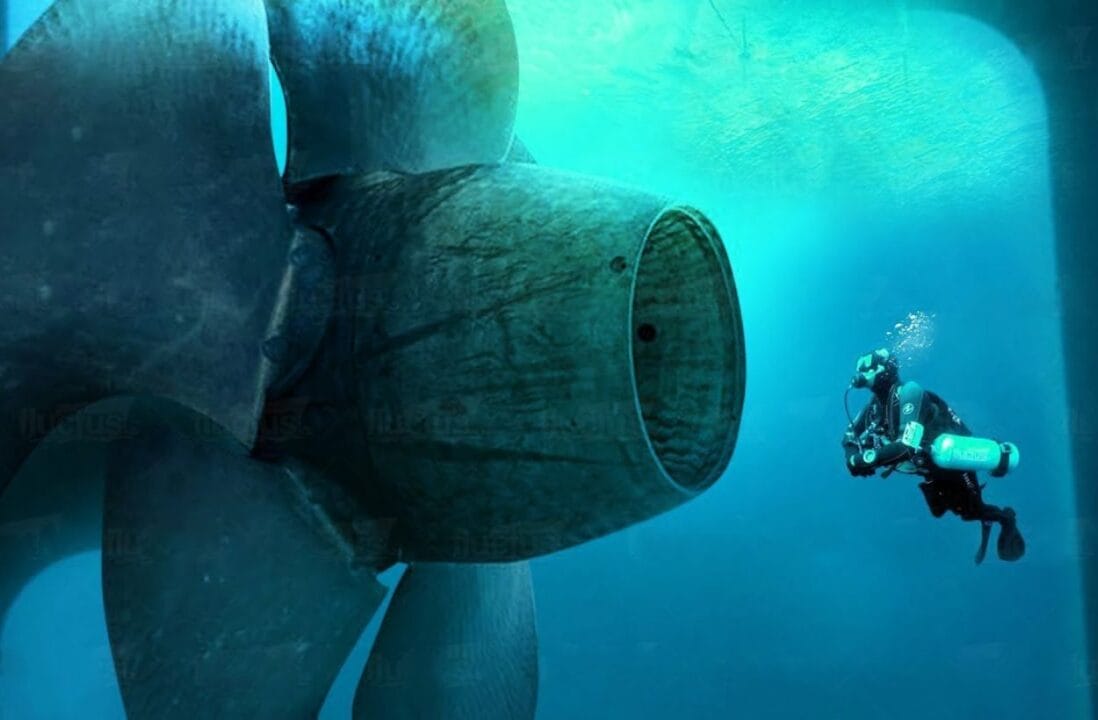
The maintenance of maritime vessels faces a significant challenge in caring for the hulls. The buildup of marine life, such as barnacles, mollusks, and worms, creates a layer known as biofouling or epibiosis, increasing the ship’s resistance against water, resulting in substantial financial costs and considerable environmental impacts. Cleaning these fouled areas is therefore a crucial task, but how is it performed and what are the implications for the environment and the operability of ships?
Traditionally, cleaning the hulls of ships is performed in dry docks, a process that, besides being extremely costly — ranging from $1.2 to $1.6 million — results in commercial losses due to the time required to complete the task. As an alternative, many shipowners opt for underwater cleaning while the vessels are still in the water. This method, which requires specialized divers and advanced equipment, aims to avoid significant expenses and operational disruptions.
The Technological Evolution in Ship Hull Cleaning
The technology involved in underwater cleaning of hulls has evolved, with automation playing a key role in making the process more efficient and less harmful to the environment. However, there are still operations that release harmful compounds into the water, impacting local marine ecosystems. Notable advancements include the use of specialized drones that vacuum and contain the fouling organisms, minimizing environmental impact.
-
The man who started in construction with his own house founded a company in 1957, went through a banking crisis in 1987, and ended up connected to 16,500 houses in Houston.

-
They exchanged the idea of a large house for a 35 m² warehouse, spent US$ 12,000 on the structure, and created a tiny house in Colorado with space to live and work.
-
While modern cities rely on pumps and electricity, in Iran, ancient tunnels carried water through the desert using only slope and gravity.
-
Instead of sending families far from the city, a project in Chile intentionally created incomplete houses on expensive urban land and left technical space for each to grow.



Saturation Divers and ROVs
Besides drones, saturation divers who work in pressurized chambers for extended periods and remotely operated vehicles (ROVs) have become vital alternatives. These technologies eliminate the need for decompression and reduce risks for divers, operating at depths beyond human reach. This approach optimizes cleaning efficiency and significantly contributes to the safety of the professionals involved.
The Future of Hull Cleaning
The pursuit of improved methods for hull cleaning represents a commitment to preserving marine ecosystems. The introduction of specialized drones marks a significant advancement, allowing efficient cleaning of hulls without damaging the outer coatings or contaminating ports and docks. However, it is crucial to continue research and development to explore new approaches and integrate more sustainable methods, further reducing environmental impact during cleaning operations.
Thus, hull cleaning transcends mere operational necessity, positioning itself as a shared responsibility in preserving marine ecosystems. Continuous efforts to improve existing practices and adopt innovations are crucial to ensuring a balance between global maritime operations and environmental protection.
What Are the Professions on Ships?
Working on ships, especially in offshore operations, involves a wide range of professions and specializations, reflecting the complexity and diversity of maritime operations. Here are some of the key professions involved in this sector:
Professional Divers: Specializing in underwater tasks, including inspection, maintenance, and cleaning of ship hulls. They must be highly trained to work in adverse and potentially dangerous underwater conditions.
ROV Operators (Remotely Operated Vehicle): Professionals who control remote underwater vehicles used for inspecting and cleaning ship hulls without the need for direct human diving, allowing operations at depths beyond human reach.
Underwater Drone Pilots: Similar to ROV operators, these professionals pilot specialized drones for underwater cleaning and inspection tasks, offering an efficient and minimally invasive approach.
Naval Maintenance Engineers and Technicians: Responsible for the overall maintenance of the ship, including its mechanical and electrical systems. They ensure that all aspects of the vessel are functioning correctly and meet safety standards.
Marine Conservation Specialists: Professionals focused on the environmental impact of naval operations. They work to develop and implement sustainable practices that minimize the environmental impact of hull cleaning and other offshore operations.
Marine Scientists and Oceanographers: Essential for understanding the marine environment, these specialists conduct research that can influence cleaning methods and ship maintenance, aiming at the preservation of marine ecosystems.
Captains and Navigation Officers: Professionals who command and operate the ship. They are responsible for safe navigation, trip planning, and overseeing the crew and onboard operations.
Offshore Project Managers: Oversee large-scale projects, such as hull cleaning operations on ships, ensuring they are completed effectively, within budget, and on schedule.
Each of these professions plays a vital role in offshore operations, contributing specific skills that ensure the efficiency, safety, and sustainability of maritime activities. Collaboration among these professionals is essential for the success of naval operations and the preservation of the marine environment.