






 Portuguese
  Spanish


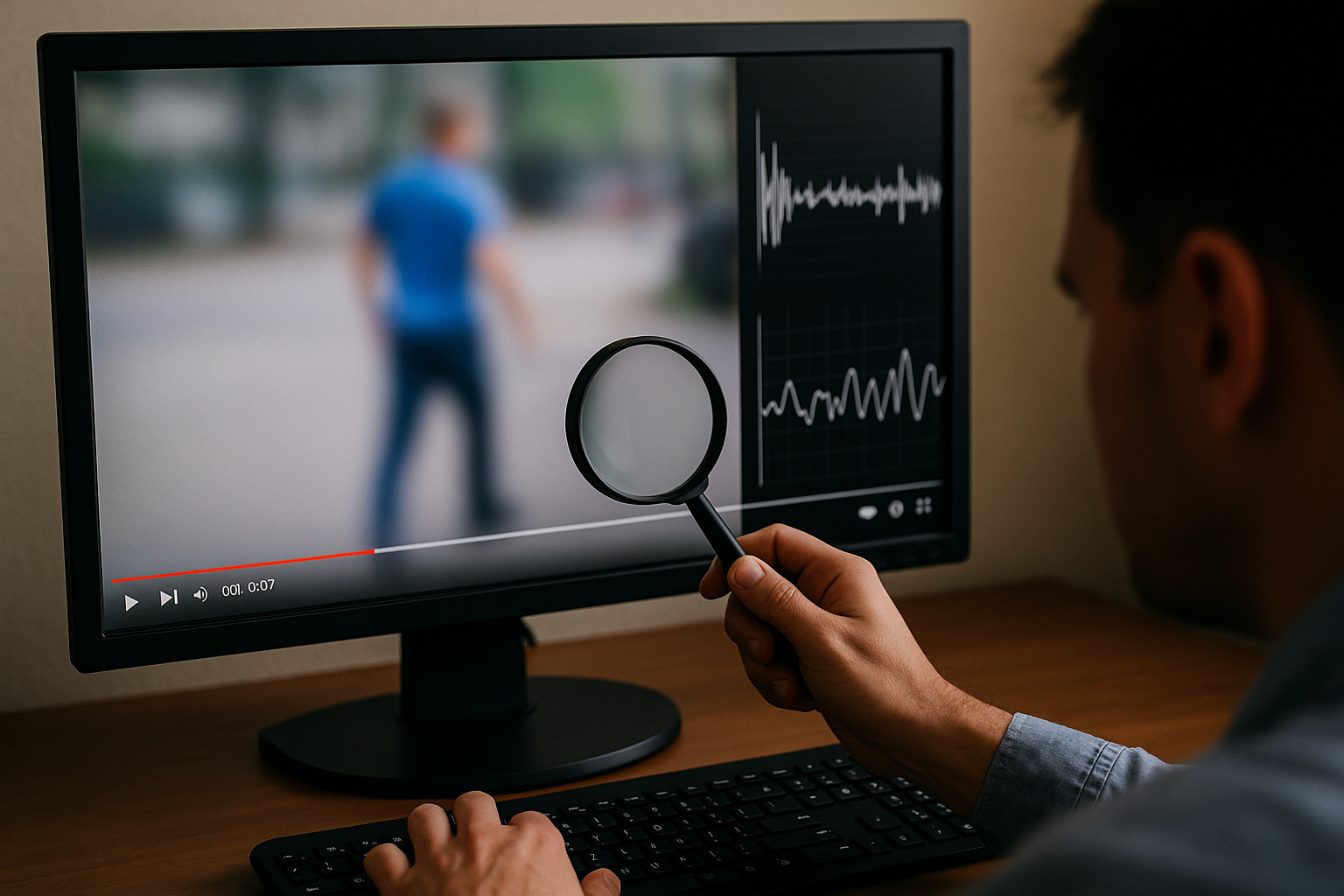
A Clear Guide to Understanding How to Differentiate Real Videos from AI-Generated Content
The rapid evolution of artificial intelligence tools has changed the way we view and interpret videos.
As a result, it has become necessary to learn to recognize signs that indicate whether content is authentic or artificially created.
Thus, experts have highlighted points that help the public observe videos more carefully.
The First Signs That Reveal Possible AI-Generated Videos
Researchers explain that visual quality still serves as one of the main indicators.
Therefore, videos that are very blurry, grainy, or pixelated deserve immediate attention.
In addition, these imperfections tend to appear more frequently in clips produced by AI.
Professors Hany Farid and Matthew Stamm emphasize that out-of-focus images do not prove forgery.
Nevertheless, they warn that low quality facilitates deception and requires careful observation.
-
The ‘tsunami’ of investments directed at Artificial Intelligence (AI) and semiconductor companies, which prioritize security and more predictable profits, has been a determining factor in the declining trajectory of Bitcoin.

-
Samsung eyes strategic chip factory in South Korea and could shake up the global AI landscape with advancements in HBM memories and advanced packaging.

-
Nvidia makes agreements in South Korea for AI factories and takes data centers, advanced chips, and global cloud to another level by 2027
-
ChatGPT reveals which human job it would choose if it could really work


Why Fake Videos Are Generally Shorter
Experts assert that AI-generated videos tend to be very short.
As a result, segments between six and ten seconds frequently appear in analyses.
Thus, it becomes more difficult to identify obvious flaws in movement or details.
Farid explains that longer videos increase the chances of error.
Therefore, many creators break their content into small blocks.
Consequently, visible cuts arise that may indicate manipulation.
Resolution and Compression: Elements That Help Identify Manipulation
Resolution defines the number of pixels and the level of visible detail.
Consequently, manipulated videos often exhibit reduced sharpness or blurry edges.
Thus, excessive compression can hide flaws created by AI, making detection more difficult.
Farid points out that some creators intentionally reduce the resolution.
In addition, they apply intense compression to erase digital clues.
Thus, they increase the chances of the video appearing convincing.
The Evolution of AI and the Loss of Visual Signals
Experts agree that these signals are becoming less perceptible.
Therefore, relying solely on the appearance of the video will soon be insufficient.
Moreover, forensic methods detect patterns invisible to the human eye.
Thus, these digital “fingerprints” help expose subtle manipulations.
Stamm notes that these methods also have limitations.
Consequently, creators continue to find ways to bypass detection systems.
Why Video Origin and Context Matter More Than Appearance
Experts argue that trusting only the image is no longer safe.
Therefore, the origin of the content needs to be verified before any conclusions.
Additionally, the context and the reliability of the person who published the video have become essential.
Researcher Mike Caulfield states that videos should be treated like texts.
Thus, what truly matters is who produced, published, and verified each piece of material.
The Need for Increased Attention to Digital Manipulation
Experts warn that digital manipulation represents a growing challenge.
Thus, it will be necessary to combine technology, education, and critical analysis from the public.
Moreover, researchers continue to develop techniques that identify invisible traces left by manipulated videos.
Conclusion: A More Critical Eye on a Transforming Landscape
Artificial intelligence will continue to evolve rapidly.
Therefore, learning to observe videos carefully is essential to avoid being misled.
Thus, analysis of origin, quality, and duration helps foster a more conscious perspective.
Additionally, understanding these signals allows for safer navigation in an increasingly complex digital environment.





Be the first to react!