Portuguese
  Spanish



Celebrated on January 20, National Volkswagen Beetle Day Highlights Two Industrial Farewells, the Long Brazilian Production, Political Decisions, Cultural Impact, and the Definitive Closing of the Global Automotive Icon
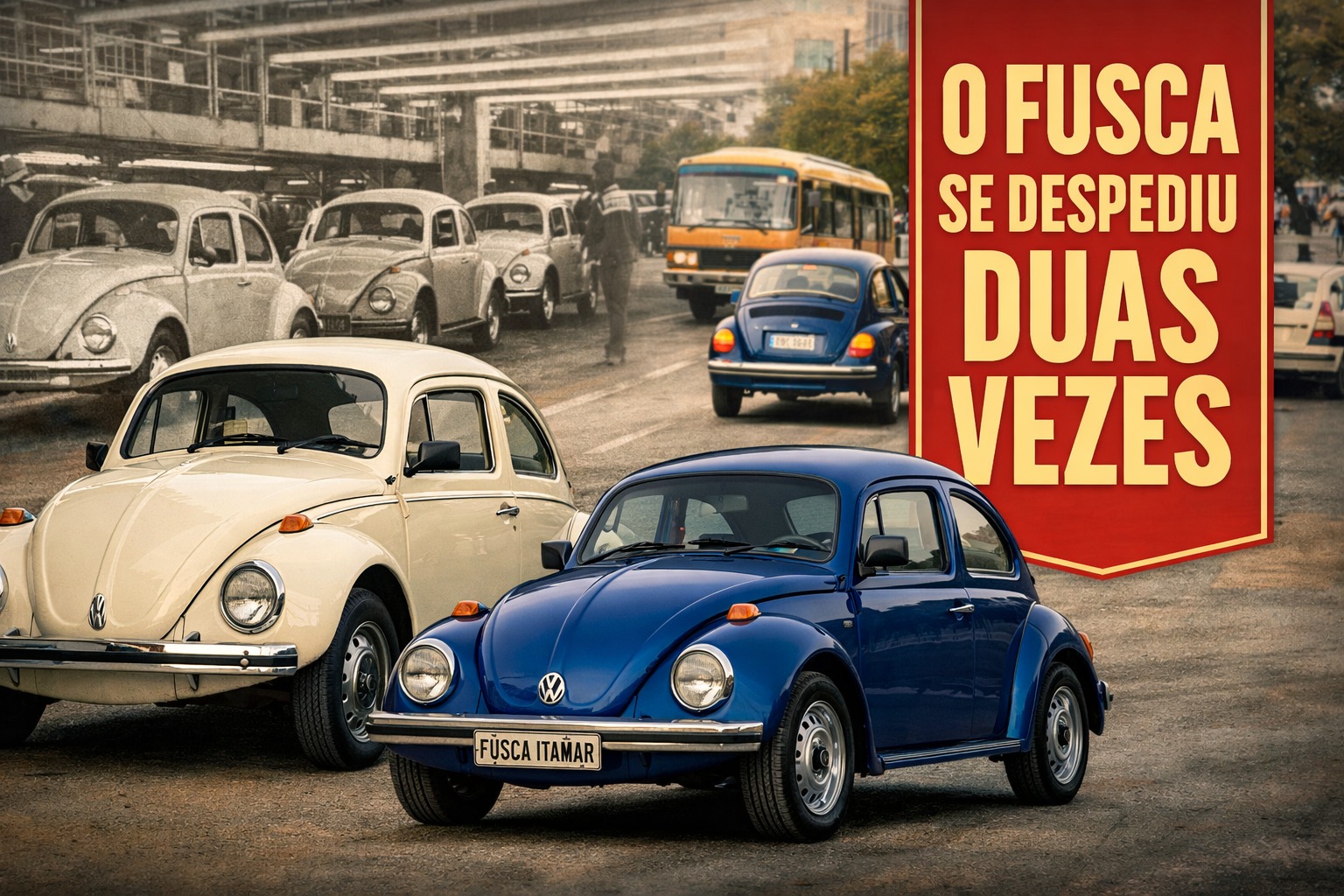
National Volkswagen Beetle Day, celebrated on January 20, marks 30 and 40 years since the two farewells of the model in Brazil, which ended in 1986 and 1996, dates that help explain the historical significance of the car in the country.
Produced in São Bernardo do Campo, São Paulo, between 1959 and 1986, the Beetle had the longest trajectory in the national industry, spanning decades and profound changes in the Brazilian automotive market.
Before that, the first units began to be assembled in CKD mode starting in 1953, in a warehouse in the Ipiranga neighborhood, on Rua do Manifesto, paving the way for its consolidation.
-
Brazilian Factory Restores Truck Engines and Parts, Reducing Raw Material Use by Up to 85% After 80 Years in Business

-
British Marines Set Record by Changing Ford Escort Engine in 42 Seconds, Unbroken for 40 Years

-
BYD Owners in Brazil Raise Concerns Over Warranty After 87,000 km, Two Repairs in Three Days, and Over $500 in Costs

-
Classic Volkswagen Beetles of Brazilian Presidents to Swap Museums in Historic Partnership


Rise and Market Leadership
It was during this initial period that the Beetle established itself as the best-selling car in Brazil, maintaining impressive commercial performance even with the arrival of more modern models.
Not even the launch of the Gol in 1980 managed to reduce the Beetle’s sales momentum, despite the model already being considered technically outdated.
Still, Volkswagen itself decided to end its national production in 1986, closing the first and longest phase of the model in the country.
Return Encouraged by the Government
Seven years later, in 1993, then-president Itamar Franco advocated the need for economical and compact cars for the large Brazilian public.
The policy included tax exemption for vehicles with 1.0 engines and air cooling, creating the environment for the Beetle’s return.
Volkswagen resumed production of the model, which remained in line until 1996, earning the nickname “Itamar” in direct reference to the former president.
Two Official Farewells in Brazil
As a result, the Beetle became a rare case, with two official production closure dates in the country, on October 31, 1986, and July 10, 1996.
In 2026, these dates will complete 40 and 30 years, respectively, reinforcing the symbolic nature of the model for different generations of Brazilians.
The second farewell, however, did not signify the definitive end of the car’s history in the world.
Mexican Production and Final Edition
In Mexico, the Beetle continued to be produced uninterrupted since 1967, where it was known as Vocho or Escarabajo.
The definitive farewell occurred only on July 30, 2003, with the launch of the “Última Edición,” limited to just 3,000 units.
Of that total, 1,500 were painted in Harvestmoonbeige and another 1,500 in Aquariusblue, becoming highly coveted items.
Today, these specimens are sought after in the international collectors’ market, although several units still remain in Mexican territory.
New Chapters and Recent Legacy
The Beetle’s trajectory had new developments in 1997, with the global launch of the New Beetle, based on the fourth-generation Golf platform.
The model, with a more laid-back proposal, remained in line until 2010, paving the way for the Beetle launched in 2011, called Novo Fusca in Brazil.
With a 2.0 TSI engine of 211 hp, the model accelerated from 0 to 100 km/h in 6.9 seconds, surprising performance for a retro-styled car.
The New Beetle was discontinued in 2019 and had no replacement, keeping alive the legacy of a model that spanned decades, markets, and industry transformations.
With information from Auto Esporte.