Portuguese
  Spanish


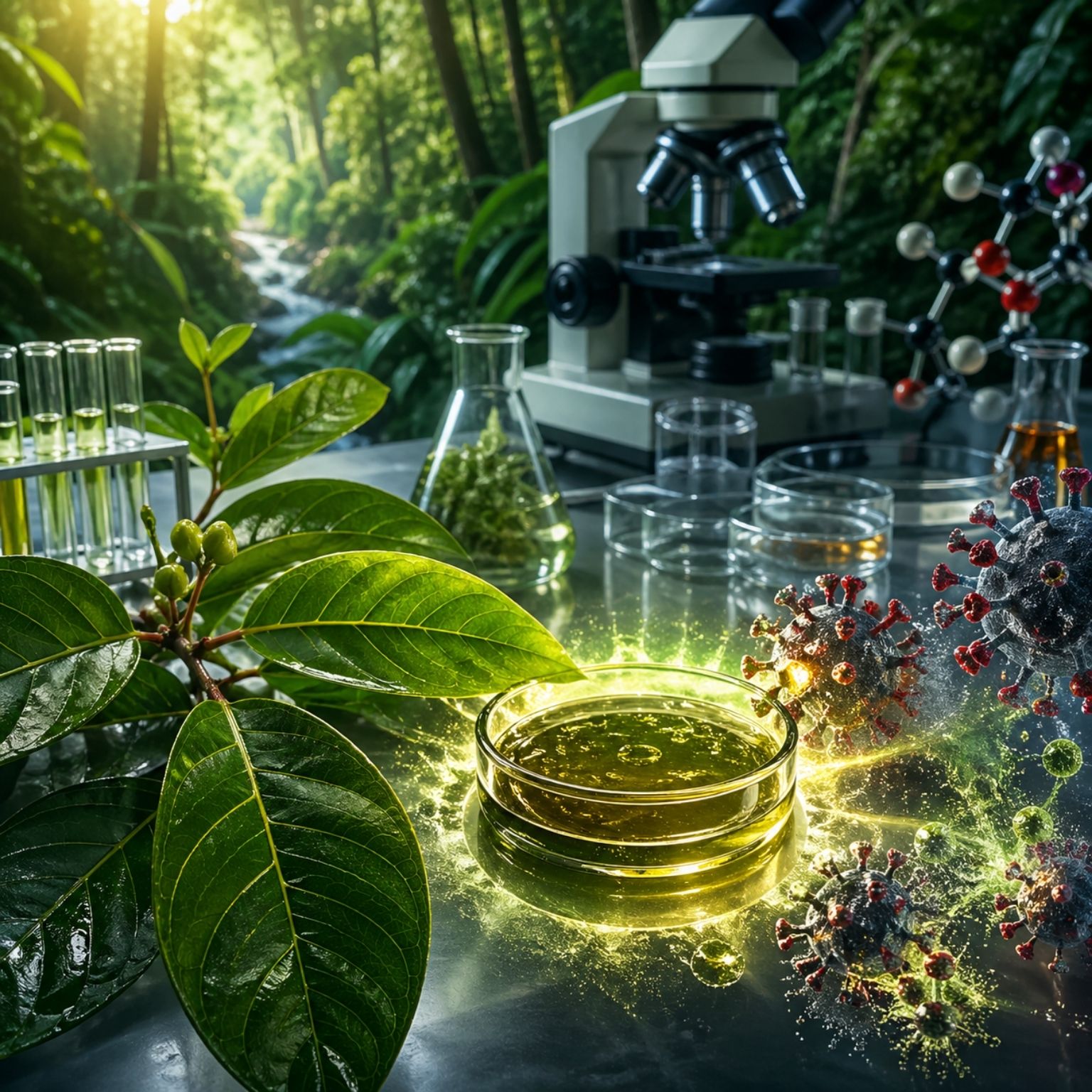

Atlantic Forest reveals new therapeutic potential with red copaiba compound against SARS-CoV-2, expands the bet on antivirals and reinforces Brazilian biodiversity.
The Atlantic Forest has returned to the center of science with a study that identified multi-target action against SARS-CoV-2 in compounds extracted from the leaves of the red copaiba, a tree endemic to Brazil found especially in this biome. The research showed that the substance acts on several fronts against the virus causing Covid-19, inhibiting viral entry into cells, pathogen replication, and viral protein expression.
The advancement draws attention because it brings together Brazilian biodiversity, international research, and an approach considered strategic in the search for new antivirals. The work was conducted by a team of scientists from different countries, supported by Fapesp, and was described in an article published in the journal Scientific Reports. In addition to the potential against the coronavirus, the authors emphasize that the study enhances the value of Brazilian flora as a reservoir of innovative therapeutic candidates.
What the study found in the red copaiba of the Atlantic Forest

The focus of the work was on the so-called galloylquinic acids, compounds extracted from the leaves of the red copaiba. According to the researchers, these substances showed strong antiviral action against SARS-CoV-2, which highlighted the species within the research on new drugs.
-
Nigerian Startup Converts Discarded Laptop Batteries and Broken TV Screens into Solar Lanterns for Off-Grid Areas

-
Young Innovators from Brazil Develop BioLuz: Generating Electricity from Plant Roots and Soil Microorganisms Using PET Bottles, Copper, and Zinc

-
Compact and Retro: Transparent Pocket Camera Weighs 65 Grams, Records in 4 Formats, and Costs 199 Yuan
-
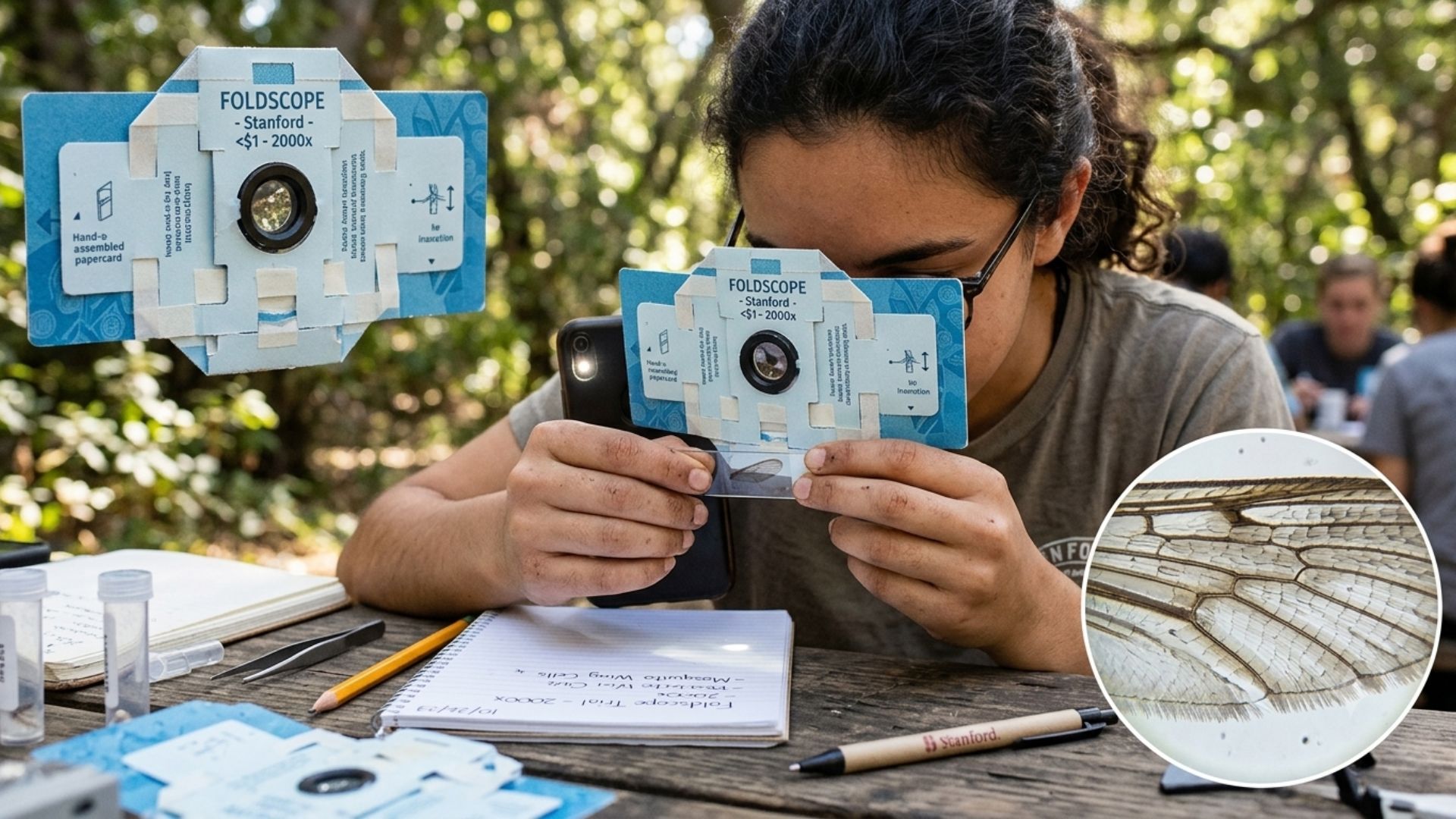
Bioengineer Develops Microscope That Magnifies Objects Up to 2,000 Times Using Just a Folded Sheet of Paper, a Tiny Lens, and Less Than $1, Bringing Lab Science Anywhere for Less Than the Cost of a Candy


The choice of the plant did not happen by chance. Pharmacist Jairo Kenupp Bastos, a professor at the Faculty of Pharmaceutical Sciences of Ribeirão Preto at USP, already had extensive experience in phytochemistry and pharmacology of Copaifera species. This background helped direct the investigation to a Brazilian tree already known for its relevant biological and pharmacological properties.
How the compound acts on several fronts against the coronavirus
One of the most important points of the study is precisely the multi-target nature of the substance. The results indicate that the galloylquinic acids were able to block different stages of the virus’s action, which increases scientific interest in this material.
In practice, the compound inhibited the virus’s entry into human cells, reduced pathogen replication, and decreased viral protein expression. Additionally, the scientists analyzed interactions with targets considered central in the SARS-CoV-2 cycle, such as the receptor-binding domain of the Spike protein, the papain-like protease linked to viral evasion, and RNA polymerase, an enzyme essential for virus replication.
Why the multi-target mechanism draws so much attention
The multi-target mechanism is regarded as one of the strengths of the discovery. According to Jairo Kenupp Bastos, many current antivirals act only on one viral protein, which favors the emergence of resistance. When a compound acts on several fronts at the same time, the likelihood of this problem tends to decrease.
This point helps explain why the research goes beyond a promising laboratory result. It opens up space for a strategy considered more robust in viral confrontation, especially in a scenario where mutations and adaptations can reduce the effectiveness of more limited approaches.
The tests that helped measure safety and antiviral action
To start the work, the scientists prepared and characterized fractions rich in galloylquinic acids derived from the leaves of the species. Then, they conducted cytotoxicity assays to verify the safety of introducing the substance into host cells.
The antiviral activity was evaluated through plaque reduction assays, a method used to quantify the ability of antibodies or antiviral compounds to neutralize viruses. It was from this stage that the researchers identified the strong action against SARS-CoV-2 and advanced in the analysis of viral proteins and the molecular targets involved.
What was already known about the compounds of the red copaiba
The research did not start on empty ground. Previous investigations had already reported biological and pharmacological benefits of galloylquinic acids, including antifungal and anticancer activities, both in vitro and in vivo, as well as broad-spectrum antiviral properties.
According to the researchers, derivatives of the substance also showed significant inhibition against HIV-1 in biochemical assays and cell culture, with lower toxicity than other molecules tested for this purpose. This background helps explain why the red copaiba came onto the radar as a promising candidate for new therapeutic applications.
What this means for more severe cases of Covid-19
Another relevant aspect highlighted in the study is that the anti-inflammatory and immunomodulatory activities of the substance may contribute to regulating the immune response of the infected individual. This is especially important in more severe cases, where the body’s inflammatory response can worsen the disease’s progression.
This data broadens the scientific interest in the compound. It appears not only as a substance with potential to directly target the virus but also as a possible ally in controlling the body’s own mechanisms that influence the severity of the infection.
Who participated in the research and why this increases the weight of the result
The study was conducted by an international team of scientists, with participation from researchers from Brazil, Egypt, Spain, and the Czech Republic. Among the names mentioned is Mohamed Abd El-Salam, a professor at Delta University for Science and Technology in Egypt, and Pompeu Fabra University in Barcelona, whose doctorate was completed at USP.
According to Abd El-Salam, the integrated approach allowed for understanding not only how the compounds work but also how they act at the molecular level. This type of international collaboration reinforces the weight of the result because it combines different specialties around a compound extracted from Brazilian biodiversity.
The next steps before becoming a medication
Despite the promising result, the authors themselves make it clear that there are still important steps before any transformation into a Covid-19 medication. Among the next steps are in vivo trials and clinical studies, essential for evaluating efficacy and safety in more advanced stages.
This means that the discovery does not yet represent a ready-made remedy. What it delivers now is a strong signal of therapeutic potential, enough to justify new phases of research and keep red copaiba on the pharmaceutical science radar.
Why the Atlantic Forest gains even more value in the race for new drugs
The study reinforces a strategic message for Brazilian science: national biodiversity continues to be a rich source for discovering compounds with medicinal potential. In the case of the Atlantic Forest, red copaiba appears as a concrete example of how native species can reveal relevant paths for pharmaceutical innovation.
This point is especially significant because it transforms Brazilian flora into a high-value scientific asset. The research shows that, beyond ecological importance, the Atlantic Forest can also offer real bases for the development of innovative therapeutic candidates, expanding the country’s role in the search for new medications.
What this discovery changes in practice
In the short term, the main change is the strengthening of a research line that connects biodiversity, natural product chemistry, and pharmaceutical development. The discovery puts red copaiba in a prominent position and shows that investigating native plants can yield results with international impact.
In the long term, the advancement may help consolidate the idea that Brazil is not only a territory of great biological diversity but also a strategic space for generating high-value scientific knowledge. When a compound from the Atlantic Forest shows action against the coronavirus on various fronts, the country gains another strong argument to invest in research, conservation, and innovation.
Do you believe that the biodiversity of the Atlantic Forest can still reveal many other compounds capable of becoming new medications in the future?