






 Portuguese
  Spanish


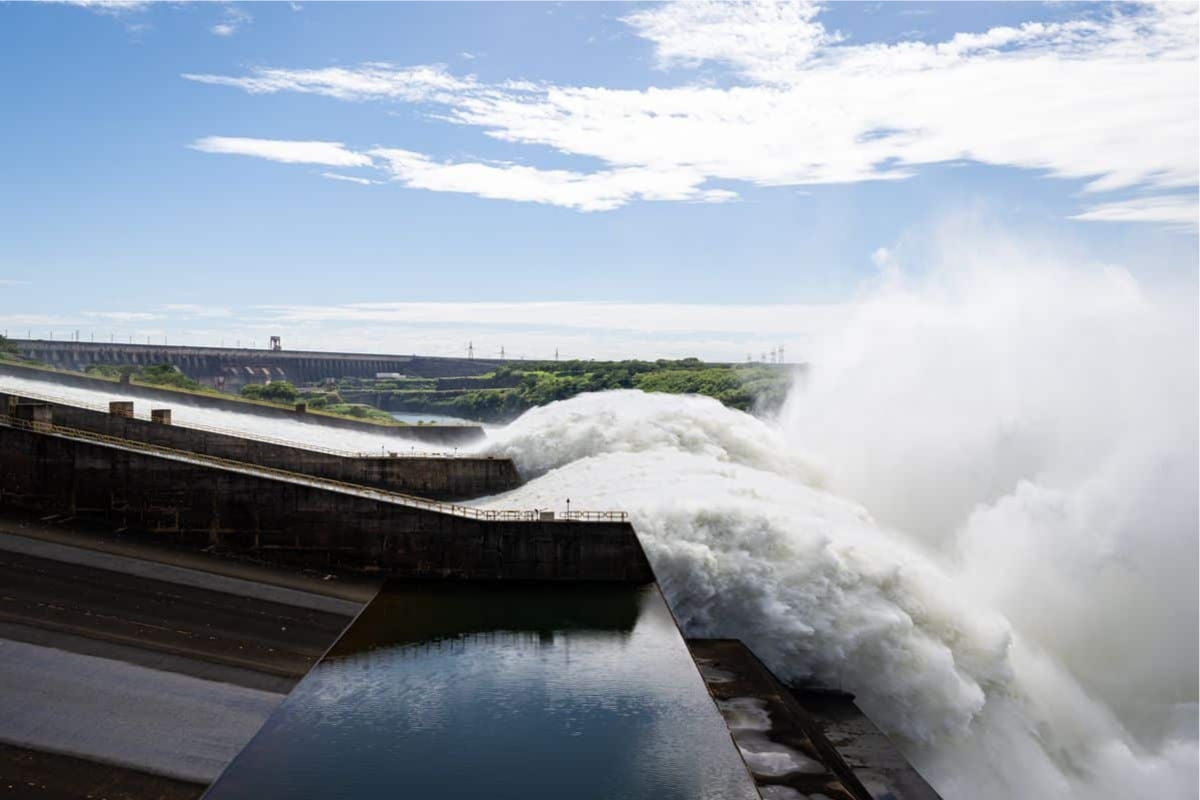


The Hydroelectric Plant on the Border Remains at the Center of the Debate on Energy, Tourism, and Regional Integration
When it comes to monumental works in South America, Itaipu Binacional almost always ranks at the top of the list. The plant is located on the Paraná River, in the Foz do Iguaçu region, and was born from a cooperation agreement between Brazil and Paraguay, which alone makes the project unique.
Decades after the start of operations, Itaipu continues to be mentioned for a simple reason: it keeps delivering energy on an industrial scale, with a direct impact on the electrical system of both countries. Additionally, the structure has established itself as a popular tourist destination and a showcase of engineering.
The Numbers That Explain the Dimension of the Project
The technical data help to understand why Itaipu is often described as an extraordinary undertaking. The reported installed capacity for the plant is 14 GW, distributed across 20 generating units of 700 MW each.
-
Giant 3,600-ton Crane Breaks Two World Records by Installing World’s Largest Single-Piece Forged and Welded Hydrogenation Reactor, Weighing 3,037 Tons, in Chinese Petrochemical Plant in Just Six Days

-
$80 Million Bridge in Brazil Cuts Travel Time from 30 Minutes to 1 Minute, but Audit Reveals Major Flaws
-
Man Builds Stone Bed with Granite Rocks and Hand-Sawn Cedar Beams, Home Extension Garners Over 437,000 Views on Bonus Bolts Channel

-
Brazilian Researcher Develops Color-Changing Roof Tile to Reduce Air Conditioning Use by Up to 15%




The dam, formed by different types of structures, has dimensions that draw attention. Among the data released about the facility are the total length and maximum height of the dam, as well as the water level differential used to move the turbines.

This package of numbers is not just marketing. It serves to illustrate the type of infrastructure necessary to maintain continuous operations, with heavy equipment, control systems, and ongoing maintenance, as well as specialized teams.
How Generation Is Shared Between the Two Countries
One of the most interesting aspects of Itaipu is its binational nature. This means that the project was designed to serve both Brazil and Paraguay, adhering to management rules and energy division outlined in agreements between the governments.
In practice, the operation involves joint planning and a dispatch logic that needs to consider demand, hydrological availability, and transmission capacity. The plant effectively functions as a strategic asset, especially during periods of higher consumption.
This type of model also attracts attention from other countries because it illustrates how an infrastructure project can be structured in partnership, with governance and shared responsibilities.
Effects on the Region and the Electrical System
The presence of Itaipu influences the local economy in different ways. The first is the obvious one, linked to energy generation and the direct and indirect jobs associated with operation and maintenance.
The second is tourism. The plant is treated as a permanent attraction and receives visitors, which stimulates services and increases traffic to the Foz do Iguaçu region, which is already internationally known for other tourist spots.

In the electrical system, Itaipu often appears as a central piece by offering firm generation on a large scale. In a country that experiences rainfall variations and has multiple sources in its matrix, having a plant of this size influences planning, transmission, and energy security decisions.
What Is Likely to Stand Out in the Coming Years
Even with decades of operation, Itaipu continues to be associated with discussions about equipment modernization, efficiency, and integration with new technologies. The logic is simple: large assets require continuous cycles of updates to maintain performance and reliability.
Another front is the environmental agenda and water resource management. In a context of extreme climate events, the debate over reservoirs, flows, and impacts is likely to become more prominent, including in public communication.
Itaipu is also expected to continue being used as a reference in discussions about critical infrastructure. The combination of scale, integration between countries, and direct effect on the daily lives of millions makes the topic return to the news whenever energy, industry, or logistics come into focus.




A água que sai pelo vertedouro gera energia?
Não. Não há turbinas ao entorno dos vertedouros.