






 Portuguese
  Spanish
  3 min of reading
  0 comments


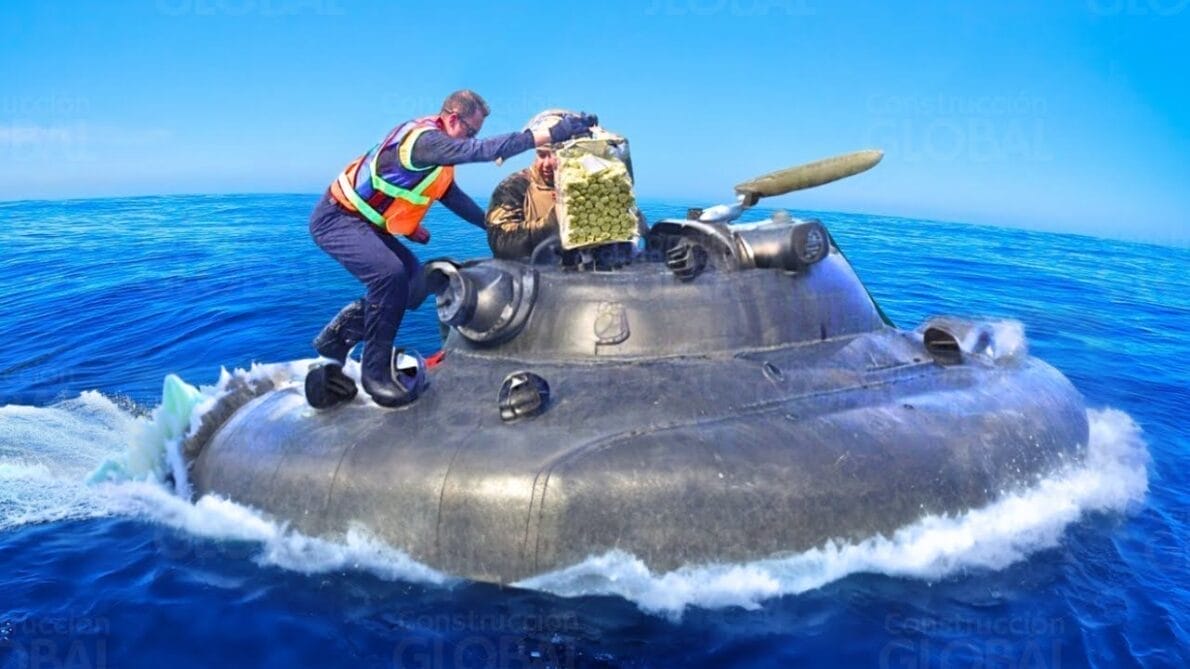
Did You Know That There Are Submarines Used by Drug Traffickers? These Called “Narcosubmarines” Have Reached a Level of Sophistication That Makes Them Almost Undetectable. Let’s Explore How They Work and What Life Is Like Inside These Submarines in the Middle of the Ocean.
Drug trafficking has evolved over the years. From planes used by cartels to underground tunnels between Mexico and the United States, traffickers always find ways to evade authorities. At sea, the story is even more intriguing with the emergence of narcosubmarines, vessels designed to transport drugs clandestinely.
Narcosubmarines began to appear in the late 1980s. Initially, they were simple rafts that evolved into sophisticated semi-submersibles. These early models could not submerge completely, but over time, they evolved into more advanced vessels, approaching conventional submarines.
Detecting These Submarines Is Extremely Difficult Due to Their Ability to Partially Submerge and the Vast Expanse of the Ocean
In 2006, the United States Navy captured the first narcosubmarine near Costa Rica, with four crew members and three tons of cocaine. Since then, authorities have intercepted an increasing number of these vessels.
-
While many ports want to grow, Barcelona has decided to do the opposite and will cut cruise terminals from 7 to 5 after pressure from residents, protests, and crowds.

-
The United States wants to tighten control over submarine cables that carry 99% of international internet, silently cross oceans, total more than 400 routes worldwide, and have become a strategic piece in the competition for data, technology, and suppliers.
-
European Union looks again at Brazilian seafood after a nearly 8-year ban and may unlock a coveted market for lobster, tuna, tilapia, and shrimp.
-
Voltalia secures 322 MW of electrical connection in Pecém and targets data centers with renewable energy, robust network, and dedicated wind projects in Ceará.


Most narcosubmarines are built in clandestine shipyards in Colombia. These shipyards are hidden in jungle areas, providing a safe and discreet place for construction. The submarines are made of fiberglass, making them almost invisible out of the water. They are designed to carry large quantities of drugs, with some models capable of carrying up to 10 tons of cocaine.
Life Inside a Narcosubmarine Is Extremely Complex
Crew members, usually consisting of two to four members, face journeys of 8 to 10 days in adverse conditions. Space is limited, with canned food and bottled water as the main supplies. The heat is unbearable, and the constant noise of the diesel engines makes the journey even more challenging.
Despite the risks, the profits are extremely high. A narcosubmarine carrying 5 tons of cocaine can generate up to 100 million dollars in the United States. The cost of building a narcosubmarine is relatively low compared to the profits obtained. Even with the risk of imprisonment, many take the gamble due to the substantial financial rewards.
Authorities Continue to Intensify Their Efforts to Combat the Use of Narcosubmarines
In 2023, one of the largest narcosubmarines ever captured was intercepted in the Pacific Ocean, transporting about 3 tons of cocaine. This submarine was 30 meters long, showcasing the growing sophistication of these vessels.
Narcosubmarines pose a significant challenge for authorities. With ongoing advancements in technology, these submarines are becoming increasingly difficult to detect. The battle between drug traffickers and authorities continues, with each side seeking new ways to outsmart the other.




-

-

2 people reacted to this.