Portuguese
  Spanish



Consortium Formed by Companies Will Participate in Bidding for the Naval Construction Project of the Antarctic Support Vessel (NApAnt), Which Will Replace the Oceanographic Support Ship Ary Rongel of the Brazilian Navy
After the Brazilian Ecovix Joined with the Chilean State-Owned Asmar, it is now time for Wilson Sons to also announce a partnership to compete in the bidding for the new Antarctic Support Vessel (NApAnt) of the Brazilian Navy. The company will join forces with Damen, a Dutch defense conglomerate, naval construction, and engineering company based in Gorinchem, Netherlands.
See Other News from Naval Construction
- Siem Offshore, Which Has Bases Located in Macaé, Signs Contract for Support Vessels with Total
- Recovery of Naval Construction: See the Orders Made and Which Shipyards Won Contracts
- As an Alternative to Naval Construction, Shipyard Under Ecovix Management Works with Livestock and Scrap Shipping
Last year, the Brazilian Navy launched a market survey regarding the possibility of constructing the NApAnt vessel, which will replace the Oceanographic Support Ship Ary Rongel. The proposal submissions are expected by the end of this year, with the final announcement of the winner slated for mid-2021.
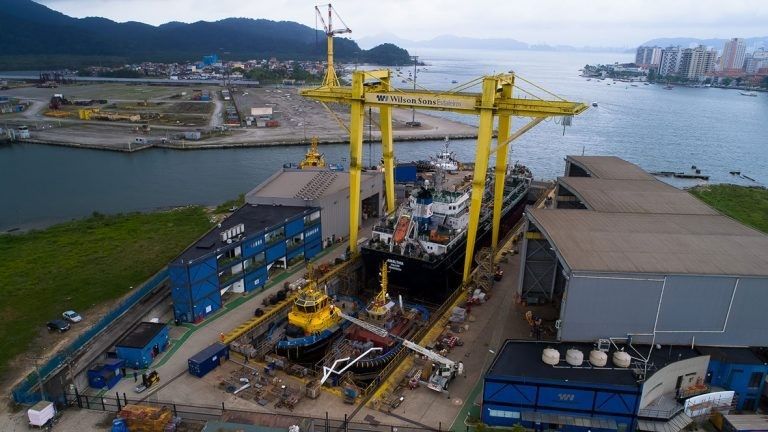
If the consortium of Wilson Sons and Damen wins the bid, the ship will be constructed at Wilson Sons’ shipyards in Guarujá, São Paulo. A minimum of 45% local content is required, and investments are estimated to be around R$ 750 million.
-
British Factory Transitions from Mechanical Parts to Producing 420,000 Electric Power Units Annually, Supplying 70% of Ford’s Electric Cars Sold in Europe

-
France Launches Network to Recycle 20 Million Cookware Pieces by 2027, Accepting All Brands for Aluminum and Coating Separation
-
Nuclear Submarine USS Alexandria Retired After 35 Years, Having Completed Over 1 Million Miles in Missions

-
MODEC Introduces New Hull Design for FPSO Gato do Mato to Produce Up to 120,000 Barrels of Oil Per Day in Brazil’s Pre-Salt Region


According to the CEO of Wilson Sons’ shipyards, Adalberto Souza, the company has partnered with Damen on 92 projects over the past decades and is optimistic about these demands due to the market experience, technical quality, and the history of on-time deliveries by both companies.
The Brazilian Navy is also assessing the possibility of constructing two Hydroceanographic Support Ships, Patrol Vessels, and Search and Rescue Boats in the medium term, in addition to the NApAnt bidding. These demands are also on the radar of the consortium formed by Wilson Sons and Damen.
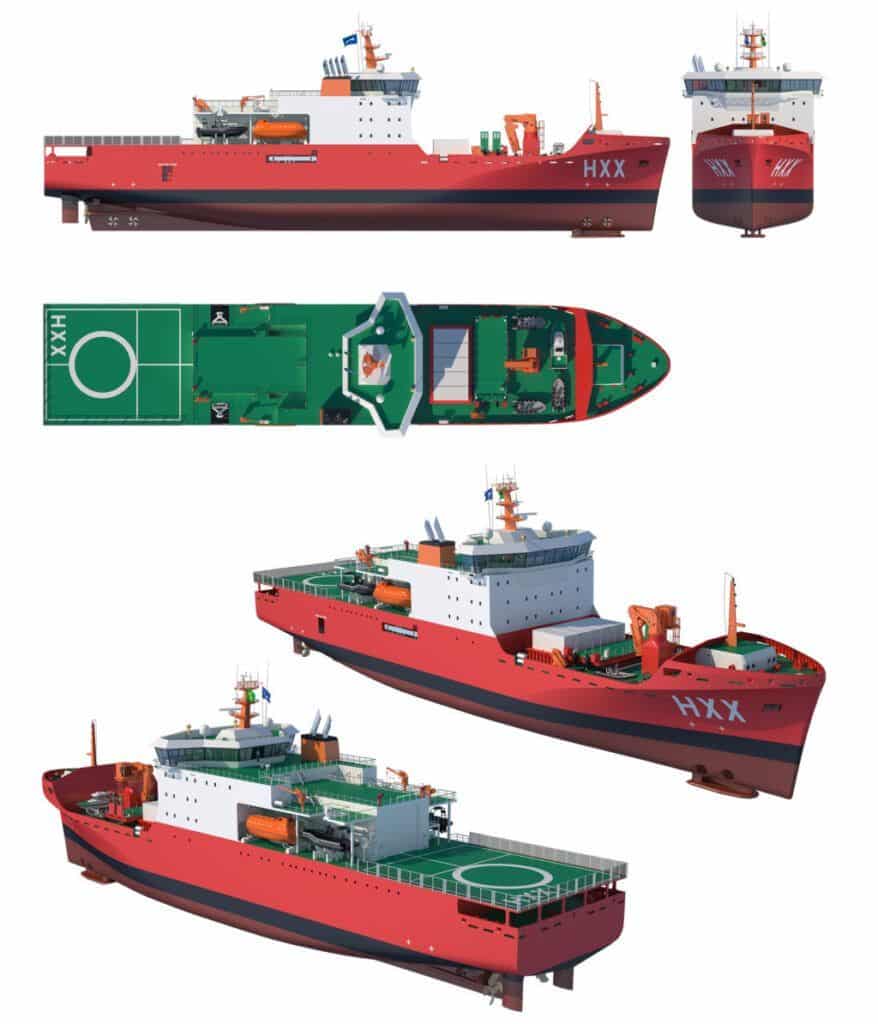
The NApAnt vessel will have the capacity to provide logistical support to the Antarctic continent, meeting specific naval construction requirements, transporting a significant volume of cargo and equipment, in addition to housing modern scientific laboratories, with comfort and safety for its crew.
The Project of the NApAnt Vessel of the Brazilian Navy
The new Brazilian station in Antarctica, Comandante Ferraz, was re-inaugurated on January 15 of this year, supported by Petrobras through the Brazilian Antarctic Program (Proantar) and operated by the Brazilian Navy, the facility is intended for scientific research in environmental, meteorological, biodiversity, and chemical areas, which is now a reality.
The project for the construction of the NApAnt aims at integrated logistical support and maintenance to logistically support Proantar, contributing to the safety of navigation in the Antarctic region through the conducting of hydrographic surveys.
The Navy emphasizes that the new vessel seeks modernity in terms of expanded logistical capacity and reduced crew, which facilitates the boarding of researchers. The NApAnt vessel will have the capacity to carry helicopters in a protected environment and will have adequate autonomy for its purpose.
*Information via Poder Naval