






 Portuguese
  Spanish




Renault Taliant Replaces the Logan in Emerging Markets with a 1.0 Turbo Engine and Consumption Below 6 L/100 KM, Bringing More Technology, Efficiency, and New Design.
Officially announced in 2021 and consolidated in market expansions throughout 2023 and 2024, the Renault Taliant has become the direct replacement for the Logan in several countries in Eastern Europe, the Middle East, and North Africa. Although it is not sold in Brazil, the model is relevant to the global automotive market as it represents Renault’s new technical and commercial orientation for compact sedans, particularly in regions where the Logan dominated for over a decade. Developed on the CMF-B modular platform, the same used by the new generation of Sandero and the European Clio — the Taliant introduces a significant advancement in safety, connectivity, and energy efficiency.
In markets like Turkey, Algeria, and Morocco, where compact sedans still account for a large portion of sales, the Taliant arrived with the proposal to fill the gap left by the Logan, offering more refined driving dynamics and a technology package aligned with global standards.
The choice of the CMF-B platform allows the sedan to incorporate driver assistance systems that were not available in the previous model, such as updated electronic stability control, hill start assist, and more accurate safety sensors.
-
Turbocharged Engines with Direct Injection: Why High-Performance Engines Over 130 HP/Liter and Turbines at 200,000 RPM Challenge Durability

-
Chevrolet’s Parent Company to Invest Billions in Brazil to Modernize Factories, Update Cars, and Accelerate Hybrid Launch by 2028

-
Practical Driving Tests in Brazil Surge by 23.5%, Exceeding 2.2 Million by 2026, as New Rules Make the Process Cheaper and Simpler
-
Brazil’s Lula Government Allocates $463 Million Quota for Electric Car Parts, Waives Import Tax Until December, Sparking Competition Among BYD, Automakers, and Unions as Consumers Question Impact on Prices and Local Industry


1.0 Turbo Engine and Energy Efficiency Below 6 L/100 KM
The key differentiator of the Renault Taliant lies in its mechanical package. In strategic markets — including Turkey and some countries in the Middle East, the model received the latest generation 1.0 TCe turbo engine, shared with Renault’s compact models in Europe.

It is a three-cylinder in-line, direct injection engine, with calibration optimized for consumption and low-end torque. Power varies according to local regulations and fuel configurations, but the more modern versions deliver around 90 to 100 hp, along with a torque of about 160 Nm.
The fuel consumption figures published by European authorities and replicated by Turkish regulatory bodies indicate averages below 6 L/100 KM in mixed cycles — the equivalent of around 16 to 17 km/l, depending on the measurement standard.
This performance positions the Taliant as one of the most economical compact sedans sold in that market, especially when compared to traditional naturally aspirated models still present in the region. This efficiency arises not only from the engine but also from the revised aerodynamics, new thermal management, and the overall reduced weight due to the CMF-B platform.
Redesigned Design and Interior Inspired by Higher Models
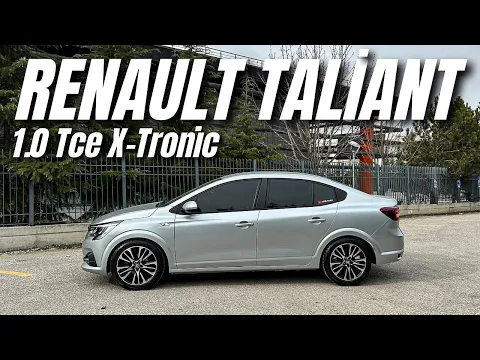
The design of the Taliant represents a significant departure from the Logan. The front adopts Renault’s latest visual language, with larger headlights, LED signature in an angular shape, and a wider front grille.
The rear also received deep changes, including horizontal taillights and more pronounced trunk curvature, giving the sedan a look closer to mid-size models.
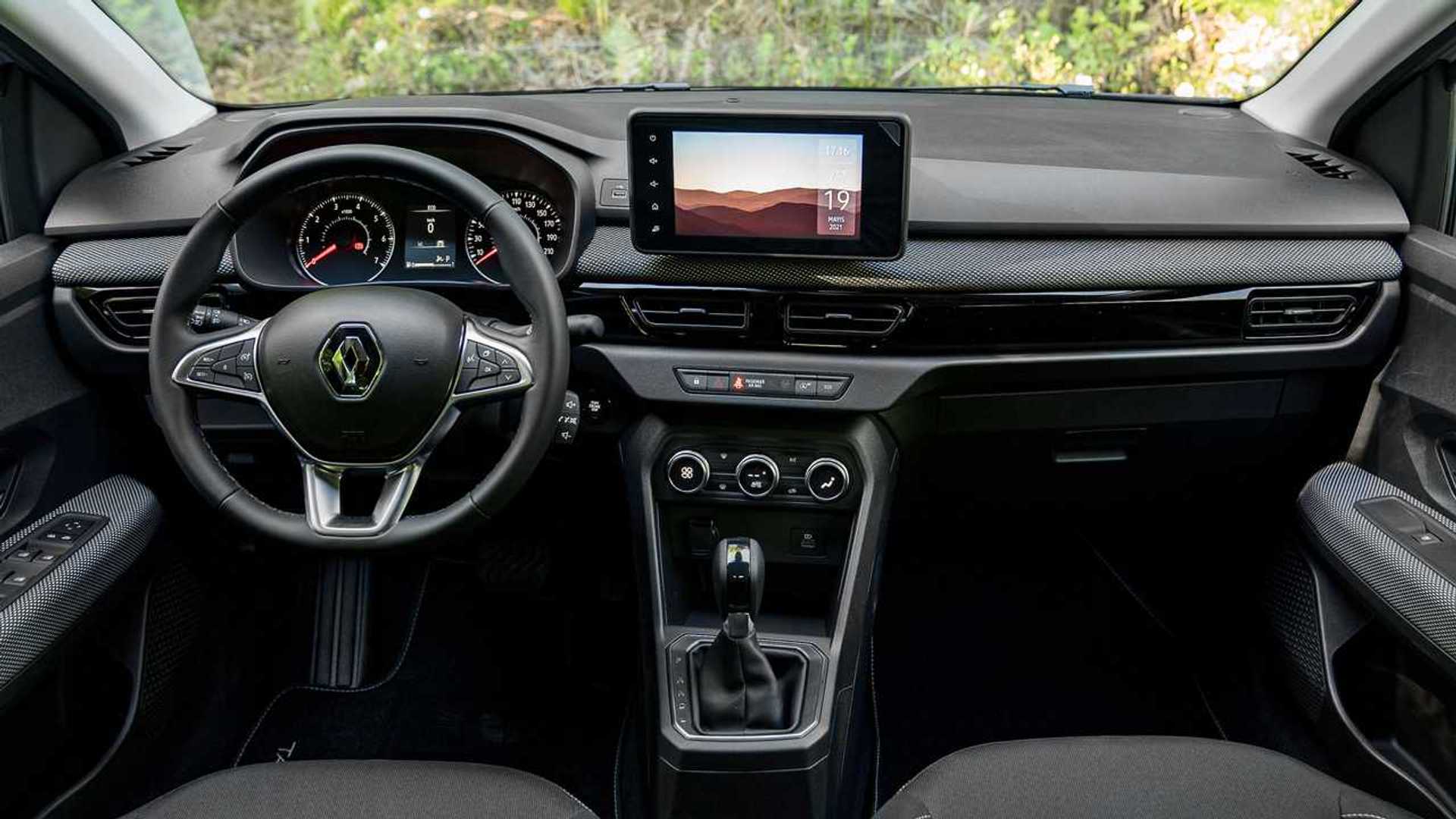
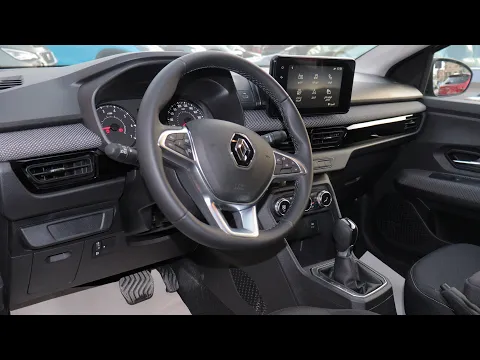
Inside, the leap is even greater. The dashboard has adopted cleaner lines, with larger central screens, improved ergonomics, and finishes that follow the standard of the brand’s compact models in the European market. The multimedia center, depending on the package, can reach 8 or 10 inches, with full connectivity via Android Auto and Apple CarPlay. Acoustic insulation has also been reinforced, a point traditionally criticized in the Logan — enhancing the driving experience on long trips.
The adoption of the CMF-B platform also allowed for the inclusion of more robust structural elements and more efficient deformation zones, elevating the model to higher standards of passive safety. In independent tests conducted by European agencies, the structure inherited from the platform showed good performance in frontal and side collisions, reinforcing the global character of the project.
Strategic Shift of Renault and Impact on Emerging Markets
The launch of the Taliant places Renault in a new phase of its international strategy. For years, the brand maintained distinct products for emerging markets, based on simplified platforms. With regulatory advances in several countries and the growth of Chinese competition, the manufacturer has begun to globalize platforms and align technology between middle and high-income countries.
The Taliant is part of this transition, serving as a bridge between the traditional segment of affordable compact sedans and the more sophisticated models that Renault intends to gradually introduce.
In countries like Turkey — one of Renault’s largest industrial hubs outside France, the sedan has become central to the market share strategy. Local production enables more competitive pricing and facilitates exportation to the Middle East and North Africa.
In many of these countries, the Logan was known as a “battle car” for its robustness and mechanical simplicity. The Taliant retains part of that identity but now with a technical package more aligned with current demands for connectivity, comfort, and energy efficiency.
The movement also has implications for competition. The compact sedan segment in emerging markets faces strong pressure from compact SUVs but still represents a significant share of total sales. By offering a modern model with reduced operational costs, Renault aims to preserve historic market shares while expanding its line of hybrids and electric vehicles in more advanced regions.
The Absence of the Taliant in Brazil and Why the Model Does Not Reach the Local Market
Although the Taliant represents a substantial evolution over the Logan, its arrival in Brazil is not part of Renault’s current planning.
The decision is explained by a combination of factors. The brand continues to prioritize compact models such as Kwid, Stepway, and the new line of SUVs, in addition to hybrid E-Tech versions. The compact sedan segment has shrunk in the country, and several manufacturers have reduced or ended their operations in this category.
Another point is regulatory adaptation. The CMF-B platform is being used in Brazil for the Kardian and other future models, but the investment required to localize a sedan of the Taliant’s size — including engine calibration, emissions testing, and development of a flex version — would make the project economically less viable.





A Renault vai pagar muito caro por uma política que tenta apenas o óbvio, deveria ter continuado com as novas gerações do Sandero e Logan da europa, claro, sempre com os motores e câmbios CVT da Nissan, tenho um Logan 2022 CVT e é um ótimo carro. Agora o Kardian e Boreal estão encalhados nas concessionárias, são caros e competem com outras marcas, sem falar no câmbio automatizado que gera desconfianças.
Boreal encalhado????? Mal começou as vendas não tem como afirmar isso