Portuguese
  Spanish


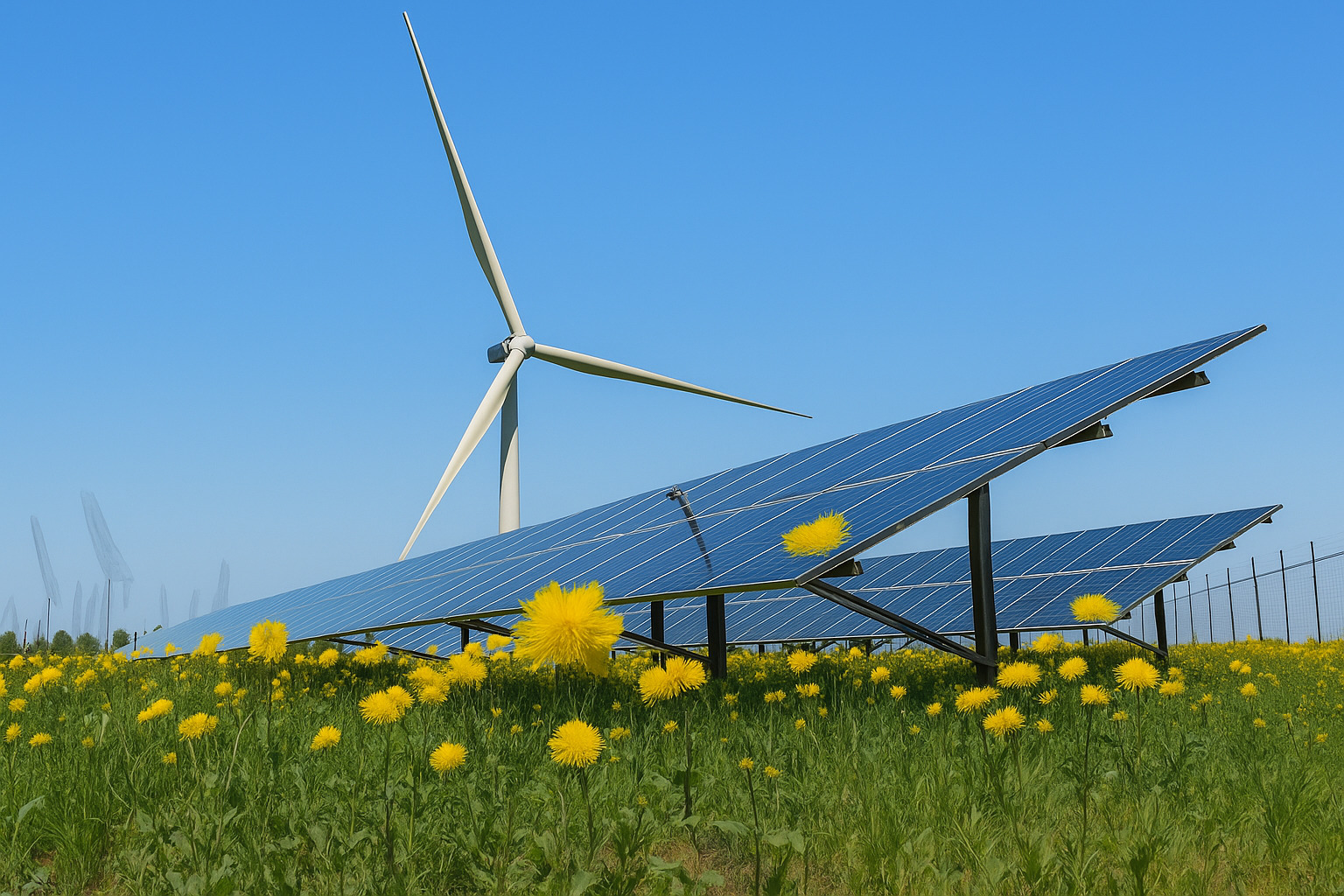


Increasing Cuts in Renewable Energy Generation Cause Companies to Suspend Solar and Wind Energy Projects, Affecting Investments and Sector Growth.
Brazil has undergone a significant transformation in the energy sector, mainly because the expansion of renewable sources, such as solar and wind energy, has grown significantly.
In recent decades, the country has achieved a prominent position globally in clean energy generation. Additionally, it has taken advantage of its extensive solar incidence and the constant winds in regions such as the Northeast and Southeast.
However, structural challenges and mandatory cuts in renewable energy generation have generated significant impacts. Many companies have decided to suspend solar and wind energy projects, thus threatening the sector’s progress.
-
Axia Energia Invests $280 Million in Q1, Increases Investments by 36%, and Turns Loss into $740 Million Profit

-
California Project Aims to Store Heat Underground in Former Oil Reservoir to Generate 100 kW of Electricity for Over 12 Hours
-
French Port Harnesses Industrial Waste Heat to Power Up to 30,000 Homes
-
Belgian Port to Install Shore Power for Cruise Ships by 2027, Cutting Dock Emissions by Up to 5% and Meeting EU Regulations



Historically, hydropower plants have dominated the Brazilian energy matrix, accounting for more than 60% of electricity generation for much of the 20th century.
This dependency brought advantages in terms of low operational costs; however, it exposed the country to vulnerabilities during prolonged drought periods.
Consequently, the search for diversification encouraged the expansion of solar and wind sources, which, in turn, complement hydropower generation and reduce risks associated with climate variability.
Moreover, the 2010s marked a rapid growth of renewable energy in Brazil. Government incentives, specific auctions for clean energies, and the decreasing cost of technologies such as photovoltaic panels and wind turbines stimulated new investments.
For this reason, private companies and international consortia seized these opportunities and began to multiply projects throughout the country.
Thus, the scenario seemed promising, with projections of continuous growth and the generation of thousands of jobs.
At the same time, society began to value sustainable initiatives more, pressuring governments and companies to invest in solutions that combat climate change.
Therefore, this historical context strengthened the solar and wind energy sector. However, it also highlighted the need for adequate planning to avoid financial and operational risks.
Impacts of Mandatory Cuts
However, recent progress has encountered significant obstacles.
The National Electric System Operator (ONS) imposed mandatory cuts in solar and wind energy generation, technically known as curtailments.
These cuts aim to balance electricity supply and demand while maintaining the stability of the National Interconnected System (SIN).
Despite the technical purpose, the financial effects have been severe.
For example, in 2024, the cuts reached up to 18.5% of the total generation from solar and wind sources, accumulating losses that already reach billions of reais and forcing companies to suspend solar and wind energy projects.
Additionally, the impact of these cuts particularly affects new plants that have not yet reached full operation.
Solar plants with less than a year of operation have seen up to 70% of their production reduced, compromising contracts with clients and suppliers, making continued investments unfeasible.
Moreover, states with great generation potential, such as Minas Gerais, Ceará, Rio Grande do Norte, and Pernambuco, face more frequent restrictions, thus creating a climate of uncertainty for national and international investors.
On the other hand, the financial losses also affect established projects because the reduction in production impacts energy supply contracts, often indexed to delivery targets.
This instability undermines the confidence of banks and investors, who have begun to demand additional guarantees or even halted financing for new projects.
Government Actions and Regulatory Challenges
Meanwhile, the Brazilian government and the National Congress are discussing measures to mitigate the impacts of the cuts.
Among them, projects to expand energy transmission capacity, promote storage auctions, and adjust distributed generation regulations stand out.
Furthermore, the Ministry of Mines and Energy (MME) has created working groups to analyze medium- and long-term solutions; however, many proposals are still under discussion, and concrete results may take time to materialize.
Thus, companies continue to face financial losses, reinforcing the decision to suspend solar and wind energy projects.
In addition to the immediate economic impact, the mandatory cuts threaten the country’s environmental progress, as Brazil has committed internationally to reducing greenhouse gas emissions and increasing the share of renewable energies in its energy matrix.
Therefore, the suspension of new projects delays this process, diminishing the country’s ability to meet climate targets and leverage the available natural potential.
In the long term, this could affect Brazil’s reputation as a leader in clean energy, reducing its attractiveness to foreign investors.
Another relevant challenge involves the integration of new technologies into the electrical system.
The growth of solar and wind energy requires generation forecasting mechanisms and operational flexibility to avoid energy waste.
The adoption of batteries, storage systems, and advanced management software demands high investments and implementation time.
Until these solutions are consolidated, the instability of the electrical system persists, reinforcing the scenario of mandatory cuts and the need for companies to suspend solar and wind energy projects.
Strategic Planning and Technological Solutions
Therefore, the current situation highlights the importance of an integrated energy planning that considers demand growth, renewable source expansion, and system stability.
The Brazilian historical experience shows that crises in the electricity sector generate lasting effects on the economy and society, as occurred during blackouts and energy rationing in the past.
Learning from these experiences and applying modern technological solutions, such as intelligent energy management systems and battery storage, ensures that solar and wind energy projects can thrive without interruptions.
The private sector, in turn, seeks alternatives to minimize risks.
Flexible contracts, strategic partnerships, and investments in storage technologies are among the initiatives adopted by companies that wish to continue investing in clean energy.
However, these measures do not completely eliminate the losses caused by mandatory cuts, reinforcing the concern that many projects may be suspended indefinitely, delaying sector development.
Furthermore, collaboration between government, the private sector, and universities proves essential for developing innovative solutions.
Research in generation forecasting, integration of smart grids, and new ways to store energy can reduce the impact of curtailments and allow solar and wind energy projects to operate continuously and efficiently.
Thus, the absence of these historically solidified solutions explains part of the difficulties currently faced, but it also represents an opportunity for the country to become a reference in clean energy technology.
Prospects for the Future of Renewable Energies
Despite the challenges, experts assert that Brazil has enormous potential to lead the global energy transition.
The combination of abundant natural resources, accumulated technical knowledge, and a growing renewable energy industry offers unique opportunities.
Thus, the key to unlocking this potential lies in the implementation of clear policies, expansion of infrastructure, and creation of mechanisms that allow companies to operate securely and predictably, avoiding the need to suspend solar and wind energy projects due to external factors.
In conclusion, mandatory cuts in renewable energy generation demonstrate that the sector’s growth depends on balancing supply, demand, and infrastructure.
Although solar and wind energy have transformed the Brazilian energy landscape, the continuity of this progress requires attention to structural and regulatory issues.
Only with strategic planning, investment in technology, and effective public policies will it be possible to prevent companies from suspending solar and wind energy projects, ensuring that Brazil continues to advance towards a cleaner, more sustainable, and resilient energy matrix.