






 Portuguese
  Spanish


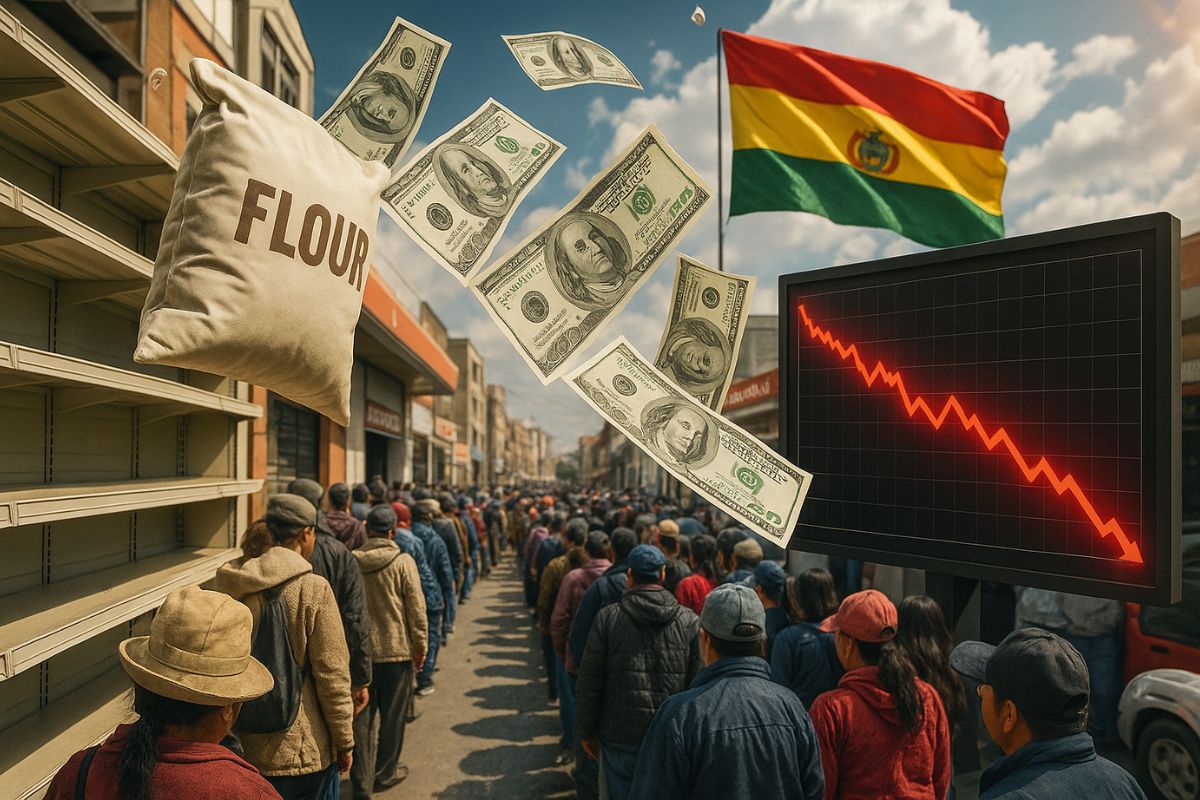


Economic Crisis Sinks Bolivia and Increases Lines for Bread, Gasoline, and Dollars. Without a Strong Currency and with Shortages of Basic Products, the Economic Crisis Sinks Bolivia and Places the Population in a Critical Situation in Daily Life, According to O Globo
The economic crisis sinks Bolivia and manifests in everyday scenes that reveal the gravity of the moment. In La Paz and other cities, residents scour bakeries for flour and bread, face long lines to fuel vehicles, and deal with the soaring dollar in the black market.
According to a report from the newspaper O Globo, the situation exposes the depletion of international reserves and the dependence on imports to secure fuels, wheat, and basic supplies. The shortage not only affects the tables of Bolivians but also compromises the productive stability of the country.
Dollars Are Lacking and Foreign Reserves Plummet
One of the biggest signs that the economic crisis sinks Bolivia is the collapse of international reserves. In 2014, the country had accumulated nearly US$ 14 billion in foreign currency, fueled by the natural gas boom. Today, there are less than US$ 2 billion left, of which only US$ 50 million is in foreign currency — an amount insufficient to sustain regular imports.
-
Brazil’s 2026 Tax Refund: Record 9.58 Million Filers in Largest Payout Ever, But a Key Detail on Priority Recipients Draws Nationwide Attention

-
Itaú Alters Hybrid Work Model, Increasing Office Days from 2028, Prompting Employees to Adjust to New Routine
-
Facing Labor Shortage, Japan Plans to Invest $34 Million to Attract Foreign Workers in Construction, Healthcare, Industry, and Commerce

-
Brazilian City Makes Remarkable Leap, Becomes 4th Wealthiest in the Country with GDP of R$ 134.1 Billion




With no dollars available, the parallel exchange rate has doubled in a short time, increasing the prices of basic products like medicines, food, and fuel. The consequence is immediate: families spend more, businesses reduce stocks, and commerce suffers shutdowns.
Shortage Affects Bread and Basic Food Items
The lack of flour has turned the traditional marraqueta bread into a symbol of the crisis. The product, which receives state subsidies, still maintains a controlled price, but other breads have increased sharply and become inaccessible for many families.
Reports show that the economic crisis sinks Bolivia to the point where workers spend hours searching for fresh bread. Annual inflation reached 24.8% in July, the highest since 2008, eroding wages and pressuring consumption.
Endless Lines at Gas Stations
At the gas stations, the scene repeats: drivers arrive at dawn and wait hours to refuel. The government imports gasoline and diesel, but the lack of foreign currency interrupts external purchases and causes frequent shortages.
The economic crisis sinks Bolivia also on the energy side, as natural gas exports, the main source of dollars, have plummeted. In 2024, the country earned only US$ 1.6 billion from hydrocarbons, against a liability of US$ 5 billion in debts and imports.
Inflation and Risk of Hyperinflation
Economists warn that the economic crisis sinks Bolivia into a scenario close to hyperinflation. Between 2023 and 2024, the amount of local currency in circulation increased by 20%, without backing in reserves. This movement has further weakened confidence in the boliviano, leading to cascading price increases.
A study by the Jubilee Foundation indicates that real poverty already affects 44% of the population, above the 36% officially reported. For experts, without drastic changes in subsidies and loss-making companies, the trend is for even greater deterioration.
Historical Context: From Boom to Collapse
In the early 2000s, Bolivia benefited from the commodity cycle, especially natural gas. The economic crisis that now sinks Bolivia contrasts with this period of prosperity, when the country sustained high reserves and continuous growth.
The lack of new investments in the energy sector and the maintenance of subsidized spending have led to the current depletion. With low productive diversification, the country has become vulnerable to external shocks and its own dependence on imports.
The reality shows that the economic crisis sinks Bolivia and directly impacts the daily lives of the population, whether in lines for bread, in the scarcity of fuel or in the lack of dollars to keep the internal market functioning.
And for you: how should a country react when facing a shortage of strong currency and basic products? Do you believe that emergency measures are sufficient or is it necessary to deeply change the economic model? Leave your opinion in the comments — we want to hear your views on this scenario.








