Portuguese
  Spanish




Tear Gas And Pepper Spray Can Harm Health For A Long Time
The state of Minnesota became the epicenter of an unprecedented humanitarian and political crisis in 2026. Under the leadership of Secretary of Homeland Security Kristi Noem, the Department of Homeland Security (DHS) is conducting the largest immigration enforcement operation in U.S. history. However, what was supposed to be an administrative action has turned into an urban battlefield, where gases banned in international warfare are being fired at children, passersby, and peaceful protesters in the snow.
Tear Gas And Pepper Spray Can Harm Health For A Long Time
Although the government justifies the use of tear gas and pepper spray as “control” tools, the visual and physical impact on the streets of Minneapolis tells a different story. Masked federal agents have been using chemical substances that, although banned by international war treaties, have been widely permitted against American civilians for decades.
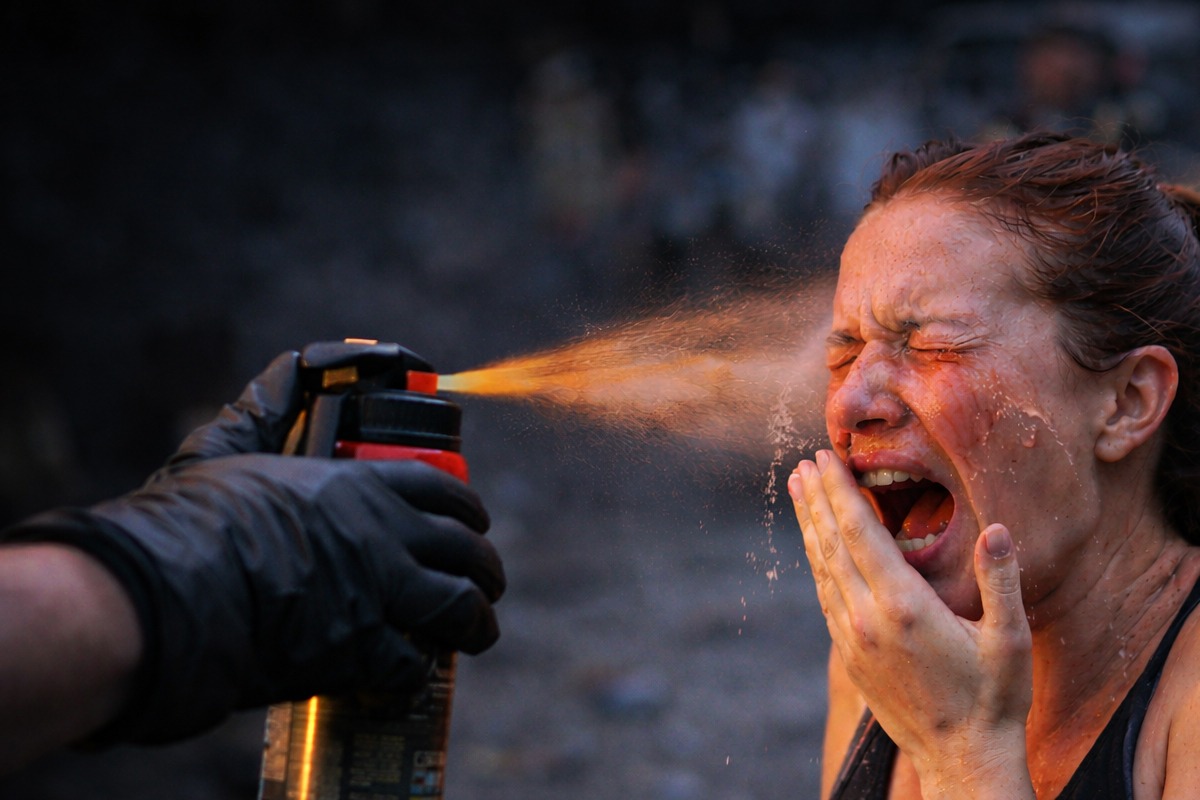
Pepper spray, often identified by its vibrant orange color, and tear gas (CS gas) are designed to cause immediate debilitating pain. However, in 2026, the scientific community raises alarm: what we call “control agents” are, in fact, chemical weapons with effects that can last for months or years.
-
Pyramid-Shaped Apartment Building in China Stands Out with 18 Floors, 45-Degree Inclined Facade, and Terraced Design Inspired by Traditional Rice Paddies

-
When Do Brazil and Japan Face Off in the World Cup?

-
Three-Year-Old Fulfills Dream of Joining Garbage Collectors in Brazil, Captivates Thousands Online with Heartwarming Video

-
Nikon Project Uses Dog’s Heartbeat to Capture Photos, Revealing What Truly Makes Dogs Happy




Invisible Risks
For epidemiologist Asha Hassan from the University of Minnesota, the use of these substances near children is alarming. “We know that tear gas causes tears, but it also causes much more severe problems, including death,” she states.
The lack of national regulation in the U.S. allows manufacturers to omit the exact composition of these products. Experts like Rohini Haar from UC Berkeley warn that police forces have access to even more potent variants of CS gas, known as CX and CR, whose long-term effects on the human body are practically unknown.

The Long-Term Systemic Impact
Recent research indicates that exposure to these chemicals does not end when the gas cloud dissipates. According to Anthony Szema from the American Thoracic Society, the repercussions can affect vital organs in lasting ways:
- Respiratory System: Chronic lung injuries and chemical-induced asthma.
- Cardiovascular System: Extreme stress that impairs blood pumping.
- Reproductive Health: Preliminary studies suggest that systemic exposure may affect the ability to generate life.
The Political And Social Context Of 2026
The crisis in Minnesota reflects a growing tension over the limits of federal power and civil rights. While the DHS claims the need for “order” to process thousands of detainees, images of children fleeing cars engulfed in tear gas in sub-zero temperatures generate a wave of global outrage.
Science is now racing against time to document these damages. The use of these compounds in densely populated urban areas is creating a generation of civilians with permanent physical and psychological trauma, turning public safety into a pressing and neglected public health issue.
The Opacity Of Chemical Formulas
One of the biggest challenges for emergency doctors in Minneapolis is treating victims without knowing exactly what was deployed. Since there is no requirement to disclose the concentrations of PAVA (the synthetic version of pepper spray) or other irritants, treatment is often based on trial and error. This “black box” of chemicals prevents epidemiologists from associating specific risks with specific substances, leaving the population at the mercy of a real-time chemical experiment.