






 Portuguese
  Spanish


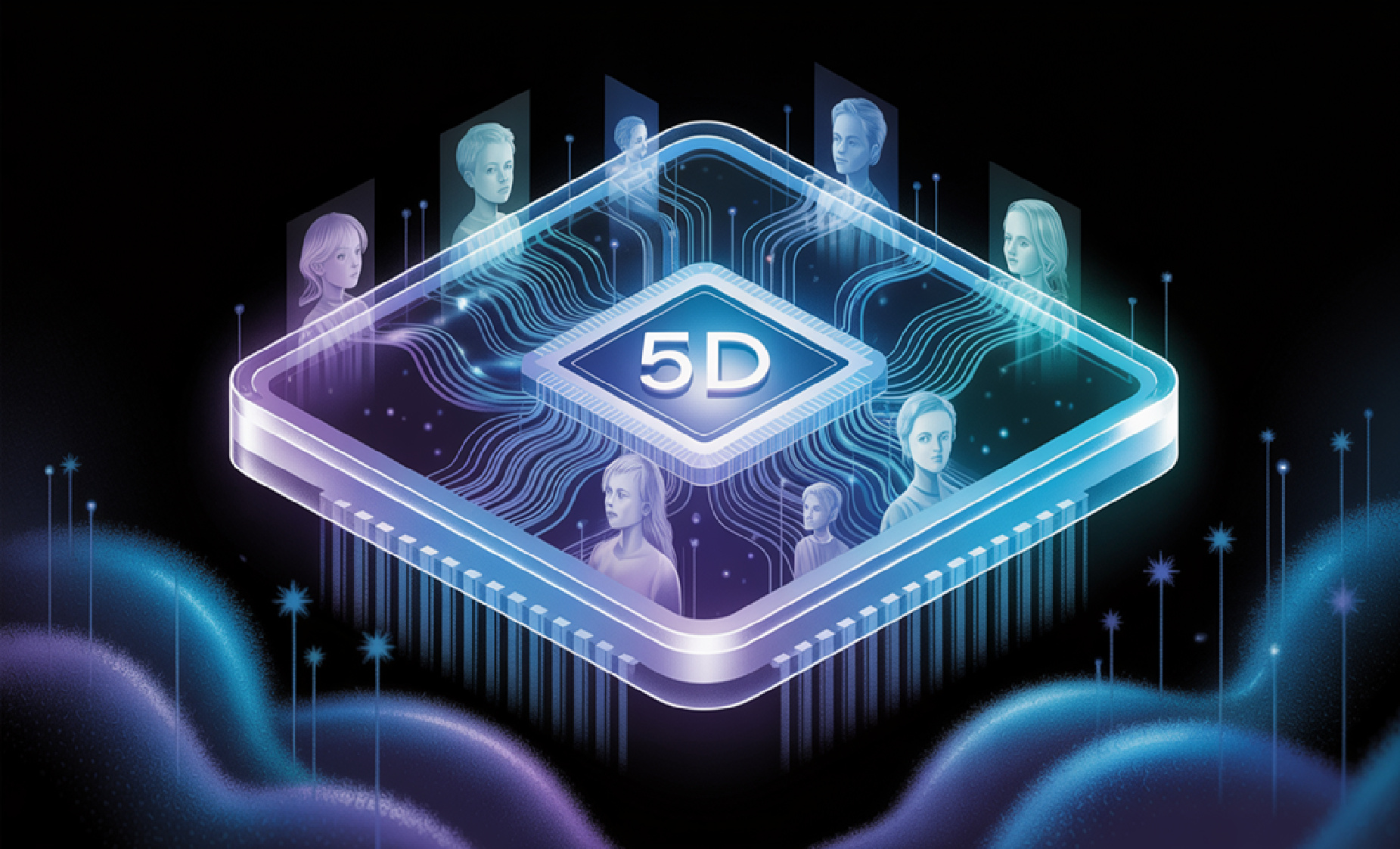


British Technology Stores Human Genome in Material Resistant to Heat, Impact, and Radiation, and is Preserved as a Legacy of Modern Civilization
An extremely innovative and surprising technology could change the course of humanity! The technology known as 5D Memory, discovered by scientists and researchers at the University of Southampton in the United Kingdom, can store the complete human genome inside a silica crystal, which can withstand high temperatures, radiation, and impacts, ensuring impressive durability!
This innovation could transform the way human history is preserved. Check out the details below!
Technology Resistant to Time and Space
The so-called 5D Memory Crystal was created at the Optoelectronic Research Centre (ORC) of the university. It consists of microscopic layers of material where data is recorded with ultrafast lasers. The recordings are spread across five dimensions: three spatial and two optical, allowing for the storage of up to 360 terabytes of information with complete stability.
-
Qatar Commissions World’s Largest Gas Ship, a 344-Meter Giant Now Under Construction

-
Expert Challenges Alarmism Over El Niño in Brazil: Atmosphere Yet to Respond to Warm Pacific, Advises Farmers Against Selling Cattle or Delaying Planting Before September
-
In a Degraded Atlantic Forest Area, a São Gonçalo Resident Transforms Land into a Living Eco-Museum, Now a Model for Environmental Education

-
World’s First Lithium-Sulfur Battery Factory Launches, Promising to Double Range Without Relying on China



The structure resembles fused quartz, one of the most resistant materials known. It can withstand impacts of up to 10 tons per square centimeter and temperatures above 1,000 °C, in addition to resisting cosmic radiation — making it ideal for survival in inhospitable environments or even outside of Earth.
A Time Capsule in Crystal Form
In addition to the human genome, the crystal contains information about the universal elements of life, such as hydrogen, carbon, oxygen, and nitrogen; the DNA bases; the shape of the double helix; and even diagrams about the positioning of genes on chromosomes. The goal is to ensure that a future intelligence — human or not — can understand the basic structure of life on Earth.
The data has been stored inside a salt cavern in Hallstatt, Austria, as part of the “Memory of Humanity” project, created to preserve modern knowledge and culture in secure and hard-to-access locations.
Long-Term Vision for an Uncertain Civilization
Professor Peter Kazansky, who leads the research, states that the 5D memory crystal could serve as a “backup” of humanity. “Even if civilization collapses, this crystal could be found by a form of life in the future, providing clues about who we were and what we knew,” he explains.
The team has also left visual references inscribed in the crystal similar to the plaques of the Pioneer space probes, launched by NASA in the 1970s, containing information about Earth and humanity.


