






 Portuguese
  Spanish


Understand The Greatest Crisis Of The Cuban Industry: The Collapse Of Sugar. See How This Crisis Is Impacting The Economy And The Production Of Rum. Learn More About The Challenges Of The Sugar Industry In Cuba
There are countries that depend on their exports, and Cuba is one of them. What was once the pride of the country and the engine of the economy is now at historic lows with little hope of recovery from the sugar sectors. Sugar is vital for Cuba not only to meet domestic demand and export, but also to feed another very important industry: rum.
There was a popular saying that went “without sugar, there is no country,” and it is something that is sadly coming true in recent years.
The Impact Of The Soviet Union
Südzuicker is the leading company in sugar production. It is a German giant with nearly 6,500 employees and had a revenue of 4.2 billion euros in 2023. The figure we are interested in is the production of 4.1 million tons produced last year. Well, Cuba used to produce eight million tons of sugar in 1990. However, the good days ended with the collapse of the Soviet Union in 1991.
-
France Revamps 530 Social Housing Units with Large Balconies and Glass Facades Without Demolishing Existing Buildings

-
10-Year-Old Max Makes History with Paris Fashion Show, Launches Own Brand, Hires Staff, and Sets World Record as Youngest Runway Designer

-
Bolivian Female Construction Workers Form Association to Combat Discrimination and 38% Pay Gap in the Industry
-
Near Amsterdam, residents buy land and discover they must also build streets, manage drainage, handle waste, and grow food on half their plot.




Production was good, but exports were not that high due, among other things, to the U.S. blockade, and little by little the industry began to decline. Between 2002 and 2004, Cuba reduced the number of refineries from 156 to 61, which led to the elimination of more than 100,000 jobs and, on top of that, reduced the cultivated area from a stunning two million hectares to just 750,000 hectares. In 2010, total production was 1.1 million tons.
Pandemic And Blockades Affect The Sugar Industry
After years of hardship, President Raúl Castro decided to eliminate the Ministry of Sugar – MINAZ – so that a new business group, AZCUBA, would take control of both cane production and its byproducts. The intention was to modernize the production process and reorganize a crisis-hit sector, but it seems that the remedy was worse than the disease. The pandemic hit the sugar industry hard, but the blockade the United States continues to impose on the country is creating a grim economic picture.
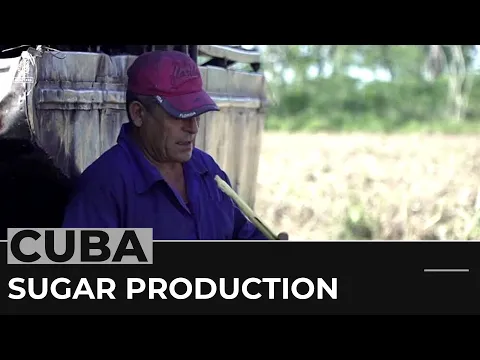
Miguel Guzmán, from the Yumurí sugar cooperative, not only complains about his salary to the BBC, stating he cannot buy almost anything due to skyrocketing inflation, but also about the lack of materials. “There are not enough trucks and the fuel shortage (due to prices five times higher since March 1) means that sometimes several days go by before we can work.” This absolutely delays the entire process and is something that (combined with other factors) is harming production.

Last Disastrous Harvest
In 2019, there was some recovery, with a production of 1.3 million tons, but since then it has been downhill. 2020 was a lost year due to the pandemic, but 2021 was not much better: 800,000 tons, marking the lowest figure since 1908 and being 10% of the eight million tons from the 1990s.
Things were no better last year, with a production of only 350,000 tons. Dionis Pérez is the Communications Director of the state-owned AZCUBA and admits that there are hardly any refineries operating at this moment. Workers complain about outdated materials and rusty tools that cannot ensure good production. For his part, Juan Triana, from the Cuban Economic Studies Center, states that “it’s a disaster. Nowadays, Cuba’s sugar industry hardly exists.”
Importing Sugar To Support Other Industries
Traditionally, Cuba consumed 700,000 tons and exported the rest, but with current production, the situation has changed radically. Juan points out that they are producing the same amount of sugar that they were producing in the mid-19th century, when it was not an actual industry, and partly blames the aggressive trade policies of Trump that Biden has not revoked. However, there are not just problems caused by the U.S. government.
In April of this year, with a harvest yet to finish, only 71% of the 412,000 tons projected had been produced, which means a little less than 300,000 tons. We will see where this figure stands in the current harvest, but voices like Omar Everleny, a Cuban economist, say that “we will have to import and, of course, less sugar means less alcohol for various industries and, of course, less rum.”
And this fatigue in Cuban sugar production is a massive snowball. If there is no sugar, domestic demand cannot be met, but it also cannot be exported to generate money. If there is no sugar, the other national pride, rum, cannot be produced. Therefore, as the popular saying goes, if there is no sugar, there is no country.
Images | Forest & Kim Starr, Rufino Uribe







.jpg)