Portuguese
  Spanish


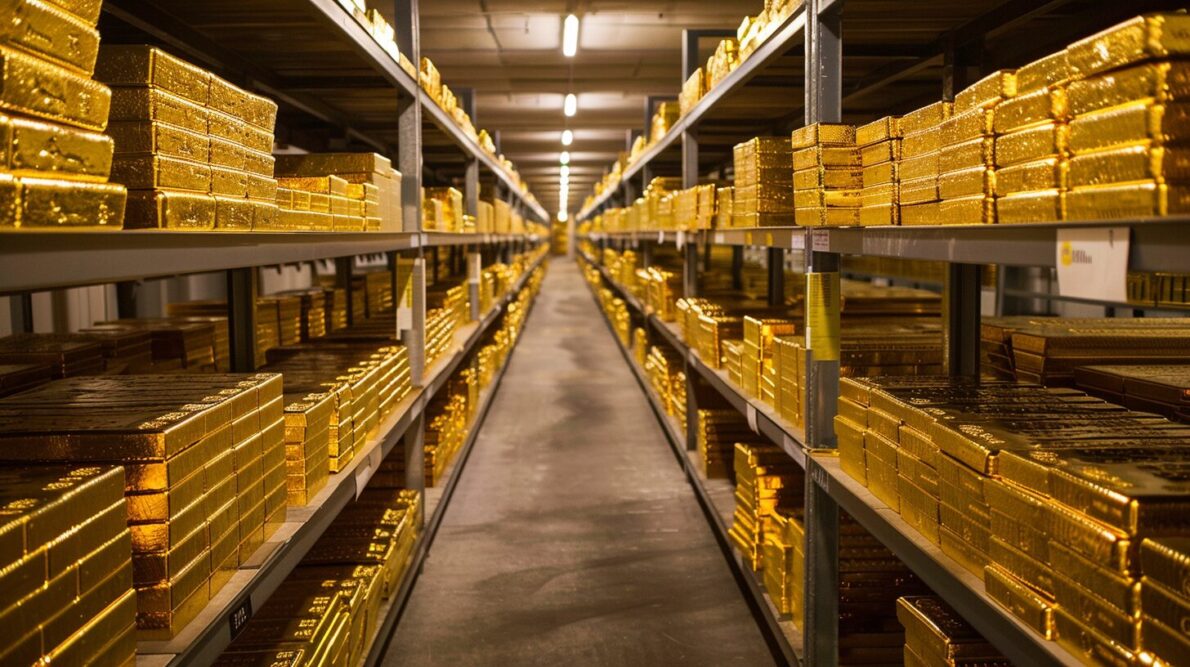

With More Than 8,000 Tons of Precious Metal, the Largest Gold Reserve in the World Has Been Consolidated in the U.S. for Years, Ensuring Its Position as a Global Leader. Check Out the Details!
With more than 8,000 tons of valuable metal, the largest gold reserve in the world has been anchored in one place for years: the United States. The country not only leads in quantity but also in influence over the global gold market. The history and strategy behind this accumulation of wealth are fascinating and show how gold has become a pillar in the American and global economy.
Country with the Largest Gold Reserve in the World


Largest Gold Reserve in the U.S.: Since 2017, the United States has held the first place with the largest gold reserve in the world, possessing over 8,000 tons of gold in its vaults. Following is Germany, with over 3,000 tons of gold, and Italy, with more than 2,000 tons.
During the economic system of Bretton Woods, the U.S. offered to store gold in exchange for dollars. There are reports that at least 95% of the world’s gold reserve was stored with the Americans. Years later, it was found that the largest gold reserve in the U.S. was consolidated precisely during that time, as more than 75% of foreign reserves remain in U.S. vaults.
-
France Revamps 530 Social Housing Units with Large Balconies and Glass Facades Without Demolishing Existing Buildings

-
10-Year-Old Max Makes History with Paris Fashion Show, Launches Own Brand, Hires Staff, and Sets World Record as Youngest Runway Designer

-
European Parliament Approves Digital Euro, Aiming to Challenge Visa and Mastercard’s Dominance and Transform Payments Across Europe by 2029
-
Bolivian Female Construction Workers Form Association to Combat Discrimination and 38% Pay Gap in the Industry




In contrast, we have Russia as the largest buyer of gold, with over 224 tons, according to research by GFMS, a consulting firm specialized in metal market analysis. The year 2018 saw strong gold demand, according to the World Gold Council (WGC). The WGC found that demand in the first quarter of 2018 rose by about 42%, with total purchases of 116.5 tons of gold.
The Strategy of Central Banks
Since 2010, central banks of various countries have changed their strategies, becoming more sellers than buyers of gold. In 2018, this trend grew by 36%, with 366 tons sold, a considerable increase compared to previous years. Today, the scenario remains similar, with gold maintaining its value and being one of the most traded metals globally.

Since 2017, the United States has been the country with the largest gold reserve in the world, housing more than 8,000 tons. Second place goes to Germany, with over 3,000 tons, followed by Italy, with more than 2,000 tons.
During the Bretton Woods economic system, the U.S. offered to store gold from other countries in exchange for dollars, resulting in about 95% of the world’s gold reserve being stored in the U.S. This system solidified the U.S. position as the world’s largest gold guardian, and currently, more than 75% of foreign reserves remain in American vaults.
The Global Demand for Gold
In contrast to the U.S., Russia stands out as the largest buyer of gold, with over 224 tons acquired, according to GFMS consulting. In 2018, the World Gold Council (WGC) observed strong demand, with a 42% increase in the first quarter, totaling 116.5 tons purchased.
Ranking of Countries with the Largest Gold Reserves
- United States: 8,000 tons
- Germany: 3,381 tons
- Italy: 2,451.8 tons
- France: 2,435.7 tons
- China: 2,257 tons
- Russia: 970 tons
- Switzerland: 1,040 tons
- Japan: 765.2 tons
- Netherlands: 612.45 tons
- India: 557.3 tons
The Role of the U.S. in the Gold Market
The U.S., with its more than 8,000 tons of gold, holds about 74.9% of the international reserves in precious metal. This volume not only symbolizes wealth but also the economic influence of the United States. The gold is stored in highly secure locations, such as the famous Fort Knox and the Federal Reserve Bank of New York.
The history of U.S. gold accumulation began long before the Bretton Woods system. During the Great Depression, the American government bought large quantities of gold to stabilize the economy. In 1933, President Franklin D. Roosevelt signed Executive Order 6102, which prohibited private ownership of gold coins, bars, and certificates within the United States. This resulted in a significant increase in government reserves.
Bretton Woods and American Supremacy
The Bretton Woods system, established in 1944, consolidated the U.S. position as the guardian of the world’s gold. At the Bretton Woods conference, it was agreed that the U.S. dollar would be the global reserve currency backed by gold. This meant that other countries could convert their dollars into gold at a fixed rate of $35 per ounce. This system worked well until 1971 when President Richard Nixon “closed the gold window,” suspending the direct conversion of dollars into gold, marking the end of the Bretton Woods system.
Fort Knox, one of the most well-known locations where American gold is stored, is famous for its impenetrable security. The facility, located in Kentucky, features granite walls coated with reinforced concrete, steel doors weighing several tons, and is surrounded by armed guards and high-tech security systems. Although the gold in Fort Knox is rarely seen by the public, it symbolizes the economic stability of the U.S.
The Federal Reserve Bank of New York
Another important location for gold storage in the U.S. is the Federal Reserve Bank of New York. The gold vault of the Federal Reserve is located 25 meters below street level and 15 meters below sea level. This vault not only contains U.S. gold but also gold from many other countries that trust the security and stability offered by the Federal Reserve.
The large gold reserve of the U.S. has a significant impact on the global economy. Gold is viewed as a safe asset, especially in times of economic uncertainty. When the global economy faces crises, investors tend to buy gold, driving up its price. This, in turn, strengthens the U.S. position as a global economic leader.
The Future of Gold Reserves
Although the amount of gold in U.S. reserves has remained relatively stable in recent decades, the future may bring changes. Fluctuations in gold prices, changes in global economic policies, and the discovery of new sources of gold could influence the amount of gold that the U.S. and other countries hold. However, it is likely that the U.S. will continue to be one of the leading gold holders in the world due to its history and robust storage infrastructure.
The United States, with its more than 8,000 tons of gold, not only leads in quantity but also in global influence. The history of the U.S. gold reserve is a saga of economic strategy and financial power. From the era of Bretton Woods to the present day, gold has been a central pillar of the American economy, ensuring stability and confidence in times of uncertainty. As the world watches, U.S. gold remains a lasting symbol of wealth and economic power.
For investors and economists, the U.S. gold reserve offers a valuable lesson about the importance of the precious metal as a safe and stable asset. And for the future, the story continues to unfold, with gold maintaining its prominent place at the heart of the global economy.