Portuguese
  Spanish


In The Silent Depths Of The Mediterranean Sea, A Secret Kept For More Than Three Thousand Years Has Finally Been Revealed.
Recently, a team of explorers from the energy company Energean, which operates off the coast of Israel, discovered the remains of an ancient trading ship.
Submerged over 1,500 meters below the surface, this transport vehicle, dated to the 14th or 13th century BC, reveals a fascinating glimpse into the Bronze Age and its maritime trading practices.
The find was made about 90 kilometers off the northern coast of Israel. According to the Israel Antiquities Authority (IAA), in a statement published last Thursday (20), the explorers identified hundreds of ancient amphorae, containers used during the Bronze Age to transport wine and oil.
-
Brazilian Students Repurpose Clay Tea Cups to Create Cooler That Lowers Room Temperature by Up to 10°C Without Air Conditioning or Fans

-
353-Year-Old Mystery Deepens as Archaeologist Arrested with Teeth and Bone Fragment Possibly Linked to d’Artagnan, the Real Musketeer Behind Alexandre Dumas’ Inspiration

-
16-Year-Old Invents CoolTowel, a Fitness Towel That Stays Cold for Up to 2 Hours, Wins Global Alibaba Competition with Over 15,000 Participants, Earning $1 Million

-
Brazil to Install First Operational Quantum Computers in the Northeast and Establish New Center to Boost Technological Sovereignty




This discovery not only reflects the trading practices of the time but also unveils hidden aspects of our maritime history.
The Importance Of The Wreck For Maritime Archaeology
Jacob Sharvit, head of the IAA’s maritime unit, suggests that the ship likely met its end due to a storm or a pirate attack, a common threat at the time.
This discovery offers a unique opportunity to study not only the cargo but also the ancient navigation techniques that allowed for expansive voyages without the need for constant sight of the coast.
According to the entity, historians and specialists are fascinated by the advanced astronomical and geographical knowledge that these ancient navigators possessed.
Navigation In The Open Sea In Ancient Times
According to the IAA, Bronze Age sailors had remarkable knowledge to navigate the vast ocean.
In this regard, Sharvit states that it is likely these ancient navigators used the positions of the stars and the sun to orient themselves in open waters.
These navigation techniques demonstrate the advanced astronomical knowledge of the time and continue to impress modern historians.
The Discovery Of The Wrecked Ship
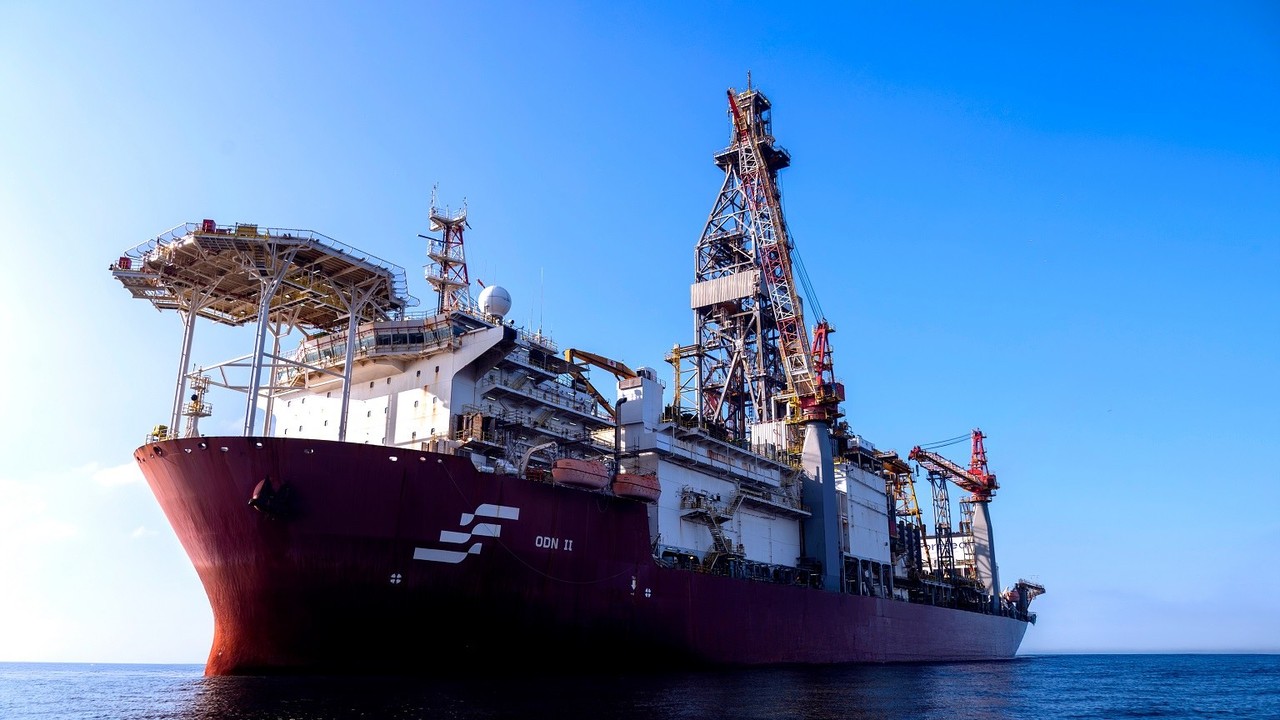
Energean, operating in natural gas fields in Israeli deep waters, uses an underwater robot to explore the seabed.
According to the company, about a year ago, this robot found the ship, measuring 12 to 14 meters in length, buried in the muddy seabed, nestled among hundreds of jars.
In an article published by the AFP news agency, Karnit Bahartan, the environmental director of Energean, reported that when the company sent “the images to the Antiquities Authority, the discovery proved sensational.” “Far beyond what we could have imagined”, she remarked.
For now, the ship has not yet been recovered, but Energean has collaborated with the IAA to bring two amphorae to the surface, likely used for transporting oil, wine, or fruit.
The containers were identified as belonging to the Canaanites, a people who dominated part of the Middle East about 4,000 years ago, in regions that today correspond to Lebanon, Israel, Jordan, and Syria.
The Impact Of The Discovery On Current Studies
This wreck is more than just remains on the seabed: it is a time capsule that connects us directly with the ancient navigators and traders of the Mediterranean.
In this sense, it is evident that the discovery enhances our understanding of ancient maritime trade, allows for the study of Bronze Age shipbuilding techniques, and contributes to the history of navigation and the primitive use of astronomical orientation systems.
Some of the artifacts recovered from this wreck will soon be available to the public, as announced by the authorities. This allows people around the world to view and learn more about a crucial period in human history, which laid the foundations for the trading and navigation practices we know today.
For specialists, making discoveries like this not only contributes to our understanding of maritime history but also inspires current and future generations to explore and preserve our collective past. The integrity of the objects found at this extraordinary depth serves as a fascinating reminder of what the world was like over three thousand years ago.