Portuguese
  Spanish


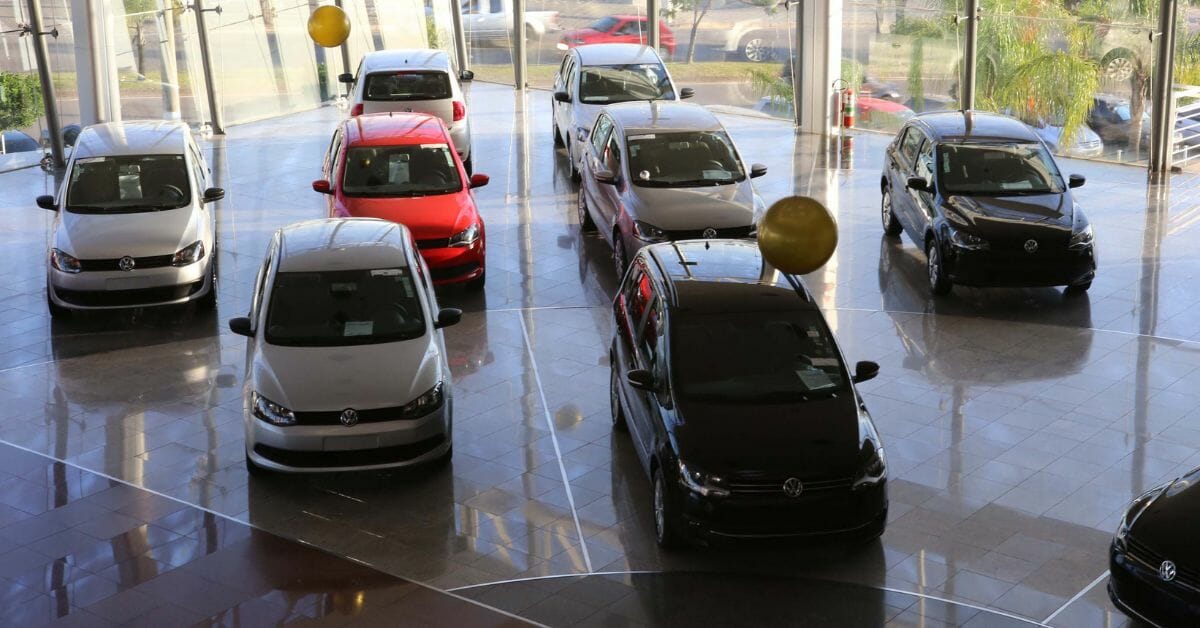

New Federal Government Project Aims to Reduce Vehicle Prices and Stimulate the Economy
Cachoeirinha, June 29, 2023 – Announced in May 2023, the Federal Government’s plan to lower the price of vehicles costing up to R$ 120,000 aims to attract new consumers and support the automotive market. The so-called “popular car,” however, has generated a flurry of questions. What does this new plan really mean?
Unveiling The Project
According to Deisi Diel Weber, a professor in the Administration course at Cesuca University Center, the project is a government strategy to give new impetus to the Brazilian economy. Seeking to address pressures from the automotive industry, which has been suffering from successive sales declines, the government intends to reactivate incentives in the sector through tax reductions and the granting of credits to manufacturers. The goal is to stimulate sales in this segment, once responsible for generating approximately 130,000 jobs in Brazil.
The measure was put into practice through Provisional Measure 1,175, launched on June 6. The MP grants tax credits to manufacturers of cars, buses, and trucks, securing around 101,000 direct jobs and more than 1.2 million indirect jobs, according to Weber.
-
99Food Under Investigation by Brazilian Consumer Protection Agency for Lack of Price Transparency, Faces Potential $2.8 Million Fine

-
Race for data centers in Brazil increases pressure on critical energy

-
Growth without profit has become one of the most costly management mistakes in Brazil.

-
Anvisa blocks batch of antibiotic after unexpected discovery in sealed vial and also suspends clindamycin with impurities and saline solution used in intravenous application




The program’s funding will be carried out through tax credits granted to manufacturers, who have committed to passing the difference on to consumers. Weber details: “A value of R$ 1.5 billion is expected to finance the program, of which R$ 700 million will come from tax credits for the sale of trucks, R$ 500 million for cars, and R$ 300 million for vans and buses. The program lasts for 4 months, during which manufacturers plan to sell an additional 120,000 units. Discounts range from R$ 2,000 to R$ 8,000 for models costing up to R$ 120,000 (between 1.6% and 11.6% of the old price).”
The Issue Of Discounts
The Ministry of Development, Industry, Commerce, and Services (MDIC) announced that 11 manufacturers and 34 models in 232 versions have joined the discount program for popular cars. Renault Kwid and Fiat Mobi are at the top of the list with discounts of R$ 8,000, the program’s ceiling. However, manufacturers can include other models at any time, as long as they notify the MDIC.
The percentage reduction stipulated by the government depends on three criteria: social (lower price), environmental (less polluting vehicles with greater energy efficiency), and industrial density (percentage of parts produced in Brazil).
Weber explains that “flex vehicles with energy consumption below 1.40 MJ/km, costing less than R$ 70,000 and with more than 75% of their parts being national, are eligible to receive the largest part of the discount of R$ 8,000.”
The term “popular car,” as noted by the professor, is commonly used to describe low-cost vehicles accessible to the general public. Today, the simplest model sold in Brazil is the Renault Kwid, priced at R$ 69,000.
In conclusion, Deisi states: “Encouraging the production and purchase of popular vehicles in Brazil has been a strategy of several governments to stimulate the automotive industry and make personal transportation more accessible. This occurs through fiscal policies, such as tax reductions and incentives for the production of low-cost cars.”