Portuguese
  Spanish


Capsule created in Germany combines thermal insulation, solar energy, sensors, and automatic alert to protect homeless people during nights of intense cold, functioning as an emergency shelter when hostels and traditional structures are not used or not within reach of those in need.
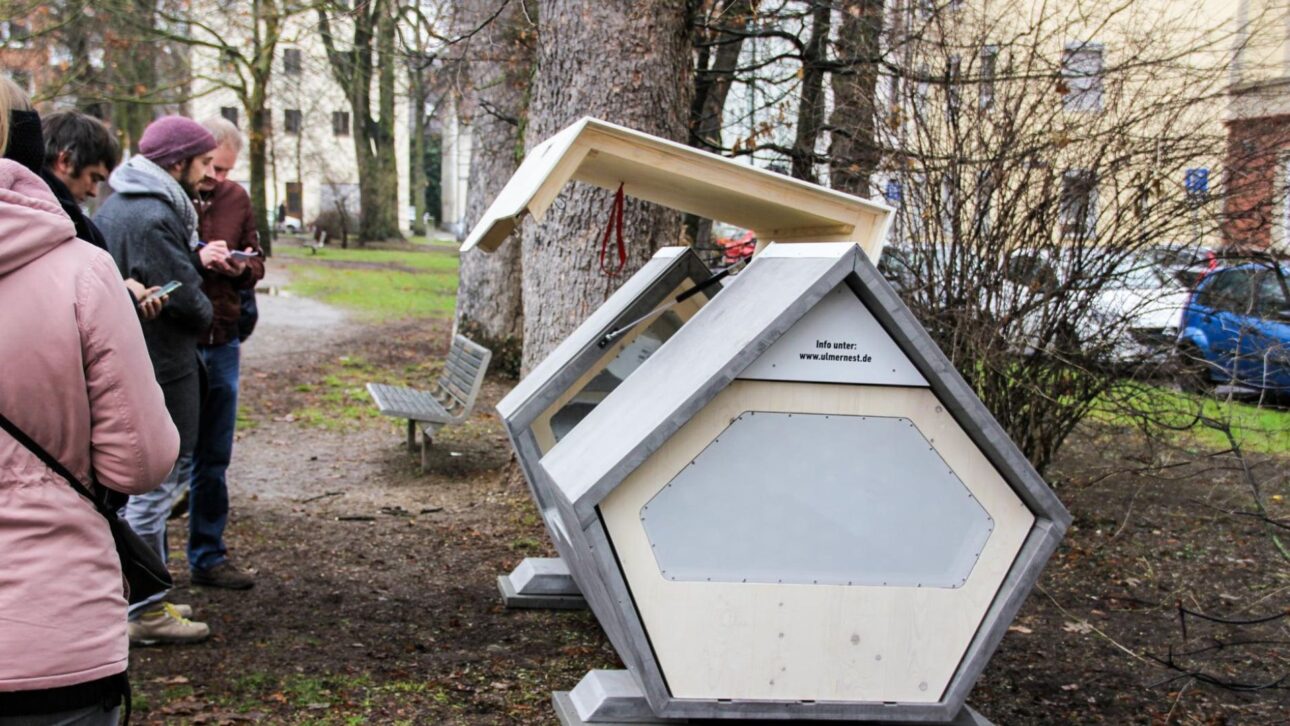
A compact capsule of wood and metal, created in Ulm, in southern Germany, has begun to be used as an emergency shelter against the cold for homeless people who cannot or do not accept sleeping in hostels and conventional accommodation structures.
Called Ulmer Nest, the equipment was developed to reduce exposure to wind, humidity, and dangerous temperatures during winter nights, without being presented by those responsible as a substitute for permanent housing, social services, or public housing policies.
Solar capsule for homeless people
With an urban capsule shape, the shelter was designed to protect a person during the night through thermal insulation, ventilation, and internal sensors, in addition to resources powered by solar energy to support the functioning of the technical system.
-
Woman Claims to Have Spotted a Technical Pattern in Recent FIFA Tournaments, Predicts Possible World Cup Winner

-
Chevrolet Offers Chance to Win a 2026 Sonic RS for Free via WhatsApp
-
Earthquake vs. Tsunami: Which Causes More Destruction and Why One Can Be Even More Dangerous
-
Hospital Cook Discovers 1,700-Year-Old Pot of 52,503 Roman Coins Using Metal Detector in Field


According to information from the project and Designboom, the structure combines solid wood with coated metal parts, used mainly in areas that require more frequent cleaning in equipment installed in public spaces and used in a shared manner.
Wood was chosen by the developers for its strength, viable cost, and thermal insulation capacity, while the external surface is treated to withstand rain, humidity, and climate variations without compromising the purpose of emergency protection.
In parts where cleaning needs to occur more frequently, the project uses metal with powder coating, a solution adopted to facilitate cleaning and increase the durability of points subject to direct contact and constant maintenance.
The capsule also gathers technical resources aimed at safety, operation, and maintenance, with a heat exchanger for air circulation, motion sensors, GPS, smoke alarms, and monitoring mechanisms for the equipment’s condition.
According to those responsible for the initiative, these systems allow monitoring of use and internal conditions without the installation of cameras, maintaining the proposal of temporary protection with more privacy for those using the shelter during the night.
Alerts help social teams after use
When someone uses the Ulmer Nest, the system allows the responsible teams to know that the capsule has been occupied, which helps organize cleaning, maintenance, and potential contact with social assistance professionals after use.
This notification also creates a point of contact with people who, in certain situations, remain outside traditional support networks due to fear, distrust, entry rules, or practical difficulties reported during the project’s development.
Among the reasons mapped by those responsible are the fear of violence in collective shelters, concern for personal belongings, and the difficulty of separating from companion animals during the night in formal support structures.
These factors were considered in the design of the solution, which came to be treated as a last-resort alternative for situations where staying in benches, parks, sidewalks, or open areas increases exposure to the cold.
Emergency shelter against extreme cold
The Ulmer Nest was presented from the beginning as an emergency resource, not as a structural response to homelessness, because the capsule offers temporary protection only when other alternatives are not used or are unavailable.
According to the proposal released by the developers, the equipment functions as a physical barrier against nights of intense cold, without replacing shelters, assisted housing, social support, housing policies, or permanent support services.
This differentiation guides the use of the project in Ulm, as the structure meets an immediate need for climate protection, while long-term support depends on public policies and broader social networks.
Even so, the model gained international attention for combining design, technology, and social assistance in a small-scale structure, installed in an urban area and associated with a recurring problem in cities with harsh winters.
Protection against wind, humidity, and low temperatures
The enclosed structure was designed to reduce the exposure of those sleeping outdoors to the effects of wind, humidity, and low temperatures, factors that increase the risk faced by homeless people during the European winter.
Inside, the space was conceived as an emergency resting place, without housing characteristics, as it does not provide a structure for prolonged stay nor services equivalent to those of a complete housing unit.
The ventilation system with a heat exchanger helps renew the internal air and preserve part of the temperature, while smoke sensors and motion detection integrate the equipment’s safety and monitoring set.
In addition to these resources, GPS helps to locate and monitor the capsule installed in the city, allowing responsible teams to identify the equipment and track its operation without relying solely on in-person inspections during the early hours.
Multidisciplinary team created the Ulmer Nest
The project was developed by an interdisciplinary team linked to the city of Ulm and local companies, with participation from professionals in product design, interface, software, hardware, and other areas related to the shelter’s operation.
Among the names associated with the initiative are Patrick Kaczmarek, Florian Geiselhart, Falko Pross, Manuel Schall, Dirk Bayer, and Kathrin Uhlig, mentioned in publications about the development of the Ulmer Nest and its operating systems.
The multidisciplinary composition is reflected in the operation of the shelter, which relies not only on the physical structure but also on communication, monitoring, cleaning, maintenance, security, and activation of the teams that oversee its use.
Before establishing itself as a functional prototype, the proposal went through tests and evaluations in a real environment, as well as conversations with people who might use this type of shelter and professionals involved in social care.
Technology as support for shelter services
The impact of the Ulmer Nest is related to the application of technology to an immediate need for protection against the cold, especially in situations where a person remains outside conventional shelters during the night.
At the same time, the proposal shared by those responsible makes it clear that the capsule acts as an emergency complement, while housing policies, permanent shelter, social support, and access to basic services continue to be necessary.
In practice, the equipment occupies an intermediate space between the street and formal shelter, offering temporary physical protection when existing alternatives fail, do not arrive in time, or are refused by the homeless person.
For those facing low temperatures without adequate protection, a temporary structure like this can reduce exposure to the weather until social teams perform cleaning, maintenance, and, when possible, a new care approach.
Project gained attention outside Germany
The image of a technological capsule installed in a German city circulated in international publications for combining social function, compact design, and monitoring systems in equipment aimed at people experiencing homelessness.
Although it has an appearance associated with futuristic design solutions, the Ulmer Nest addresses an old urban demand: protecting people who continue to sleep outdoors during periods of severe cold in cities with shelter infrastructure.
The case also shows that the existence of formal services does not, by itself, prevent part of the homeless population from remaining outside these networks, whether due to operational rules, perceived insecurity, or individual difficulties.
Therefore, the debate about the Ulmer Nest remains linked to the combination of emergency measures and permanent responses, as the capsule can reduce risks on extreme nights but does not replace safe housing or long-term public policies.