






 Portuguese
  Spanish


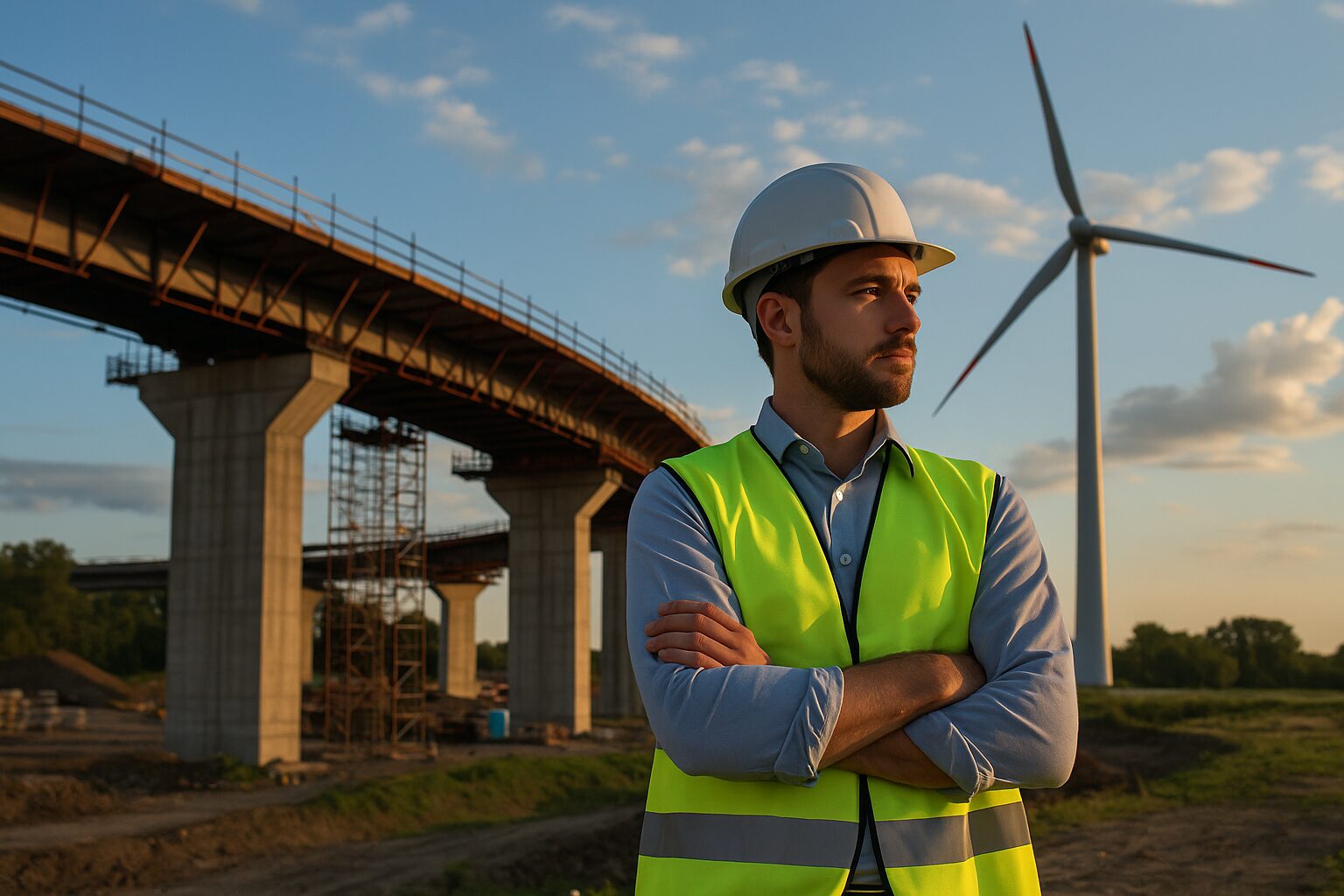

Sustainability Has Become a Requirement in Civil Construction: Projects Focused on Environmental, Social, and Governance Are Gaining Space and Shaping the Future of Infrastructure in Brazil and the World
Civil engineering is changing. And fast. Driven by environmental goals, investor pressure, and new social requirements, the infrastructure of the future has already started to come to life. Projects focusing on sustainability have moved from being a trend to becoming the norm.
A report by McKinsey & Company, published in 2024, revealed that 68% of global investments in infrastructure projected for the next five years are linked to environmental commitments.
The order now is clear: those who do not follow ESG (Environmental, Social, and Governance) criteria will be left behind.
-
$134.7 Million Project in São Paulo Installs Over 5 Kilometers of Pipes, Creates New Underwater Crossing to Boost Water Supply for Over 450,000 People

-
At 61, Former Homeless Wheelchair User Receives Key to Container Home in Brazil, Declares Independence
-
São Paulo Highway to Receive Over $260 Million in Upgrades, Including 90 Kilometers of Service Roads and New Infrastructure, by 2027
-
Couple Transforms Abandoned Seaside Public Restroom Bought for £33,000 into £295,000 Beach House After a Decade of Renovations




New Requirements for Construction
Civil engineer Felipe Girardi, a reference in sustainable engineering in Brazil, states that the sector is experiencing an irreversible transformation. “This is no longer just a future trend; it is a present reality. Projects that are not based on the pillars of sustainability are doomed to obsolescence,” he said.
According to Girardi, ESG criteria already influence all stages of construction. From the selection of suppliers to project designs, everything now includes concerns about the environment, social impact, and efficiency.
He explains that today building a bridge or overpass goes beyond technical calculations. “Today, designing a bridge or an overpass, for example, requires much more than structural calculations: it involves assessing the impact on the ecosystem, carbon emissions during execution, and even how that asset will contribute to the local community,” he emphasizes.
Practical Example in Brazil
Even with regulatory and financing hurdles, Brazil has taken important steps. One case cited by Girardi is the Linear Park of Rio Verde in Goiânia. The project used bioengineering techniques, environmental recovery, and sustainable urban drainage. For him, the country is starting to take on a leading role, even if still discreetly.
Ecological Materials Are Gaining Space
Another important advancement is in the materials used. Concrete with lower carbon emissions, engineered wood structures, and permeable pavements are already appearing in various projects.
Data from the World Green Building Council indicates that sustainable buildings can cut energy consumption by half and also reduce generated solid waste.
“When we include these solutions at the project phase, the gains are exponential,” says Girardi. He also emphasizes the long-term financial benefits and the enhancement of the company’s image in the market and society.
Investors Are Attentive
The transformation in the construction sector does not happen in isolation. Major international funds play an important role. BlackRock, one of the largest asset managers in the world, announced that it will only invest in projects with clear environmental commitments. In other words, those who do not adapt will find themselves without resources.
The research Deloitte Engineering & Construction Outlook 2025 reinforces this. According to the survey, 72% of executives in the sector already view ESG criteria as a competitive advantage.
A New Type of Engineer
For Girardi, this new phase also requires a new type of professional. Today’s engineer needs to master technologies such as BIM (Building Information Modeling), have a systemic view, and social sensitivity. “Engineering can no longer be just technical — it needs to be human,” he states.
This change, according to him, also involves universities. “We already have the technology. The challenge now is to train people with purpose and an integrated vision,” he concludes.
With information from Diário do Vale.


