






 Portuguese
  Spanish
  6 min of reading
  0 comments


International study shows that the risk of heatwaves goes beyond thermometers and increases when combined with poverty, low tree coverage, expensive energy, and poor urban infrastructure
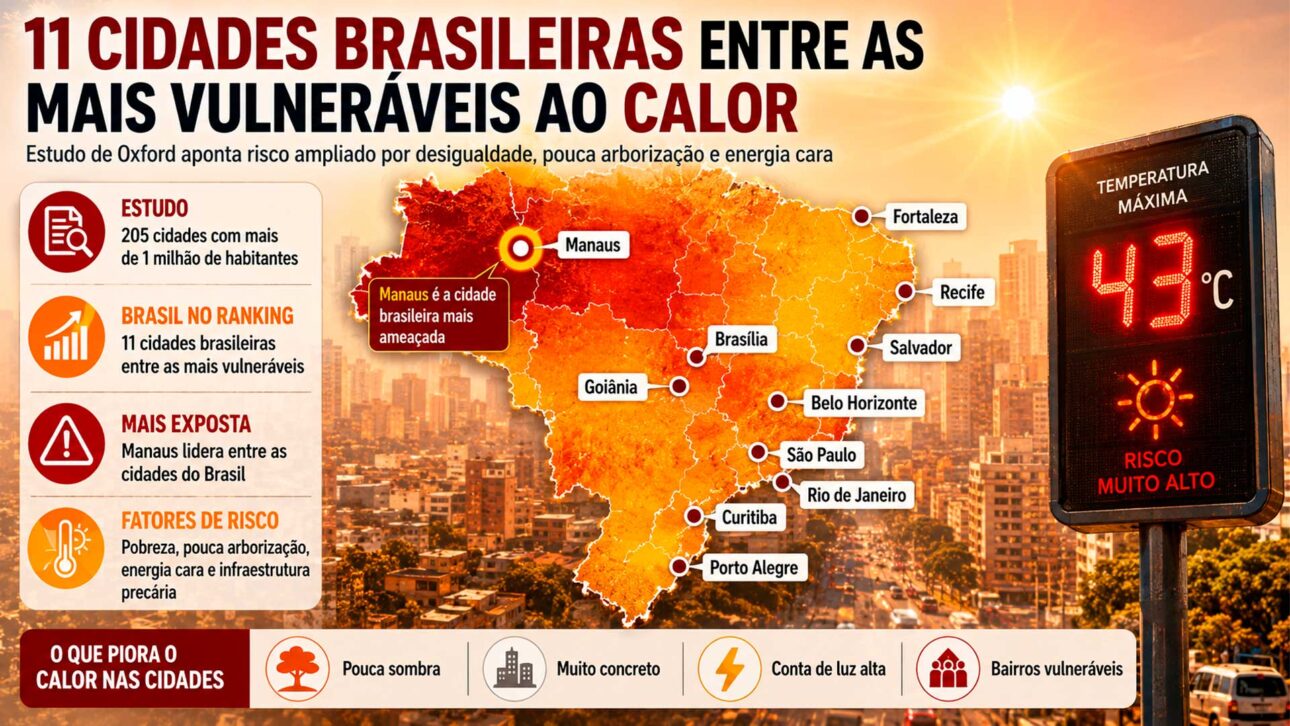
Eleven Brazilian cities appear among the world’s most vulnerable urban centers to extreme heat, according to a study by the University of Oxford published in the journal Sustainable Cities and Society. The list includes Manaus, Goiânia, Belo Horizonte, Fortaleza, São Paulo, Rio de Janeiro, Brasília, Recife, Salvador, Curitiba, and Porto Alegre.
The survey analyzed 205 cities with more than 1 million inhabitants and did not only measure temperature. Researchers cross-referenced heat exposure, social conditions, population response capacity, and urban factors, such as access to energy, presence of green areas, and cooling infrastructure.
Among the Brazilian cities, Manaus appears as the most threatened, in the 27th position of the global ranking. The capital of Amazonas also occupies the third place among the most vulnerable cities in Latin America and the Caribbean, behind Barranquilla, in Colombia, and Port-au-Prince, in Haiti.
-
Why do some drivers put a white cloth on the car?

-
While the world looks at forests, the UN warns that the Earth is also threatened by the silent degradation of natural grasslands and savannas, ecosystems that cover half of the planet, support billions of people, and can exacerbate water, food, and climate crises.

-
Small pygmy hippopotamus is born in Germany, surprises veterinarians with healthy growth and steals the show at the Berlin Zoo

-
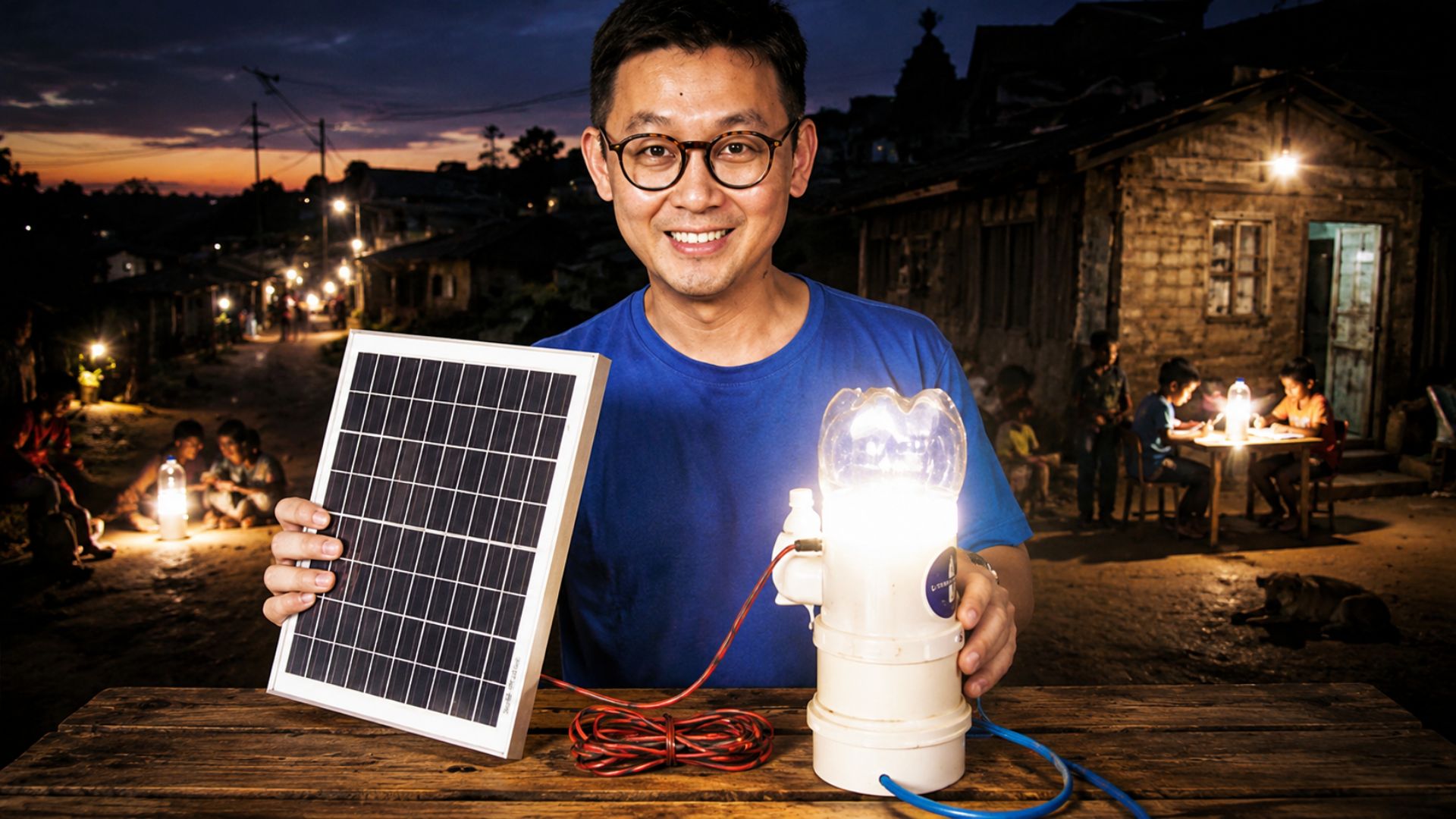
Brazilian mechanic invented a lamp made from a PET bottle during the 2001 blackout, the idea turned into an NGO present in 30 countries and has already illuminated 40,000 people in 200 communities without electricity in Brazil.


The alert comes at a time when extreme heat is no longer treated merely as climatic discomfort. In large cities, it has become a public health issue, urban planning, energy, housing, and social inequality.
Manaus leads the Brazilian list and reveals the weight of urban vulnerability
According to information from the University of Oxford, the city of Basra, in Iraq, leads the global ranking of risk to extreme heat. The list is dominated by urban centers in India, Pakistan, Nigeria, and Ghana, countries where high temperatures combine with rapid urban growth and lower adaptation capacity.
In Brazil, the sequence starts with Manaus in 27th place, followed by Goiânia in 46th position, Belo Horizonte in 66th, Fortaleza in 67th, São Paulo in 77th, Rio de Janeiro in 83rd, Brasília in 88th, Recife in 89th, Salvador in 93rd, Curitiba in 119th, and Porto Alegre in 120th.
The case of Manaus draws attention because the city combines heat, humidity, urban expansion, and infrastructure inequalities. In areas with little shade, poorly ventilated homes, and limited access to cooling equipment, the heat sensation can quickly turn into a real health risk.
The presence of cities from different Brazilian regions shows that the problem is not limited to the North or Northeast. Capitals from the Southeast and South also appear in the survey, which reinforces that extreme heat in Brazilian cities depends both on the climate and on how the urban space was constructed.
Poverty, concrete, and little shade increase the danger in the outskirts
The Oxford study reinforces a central point for understanding the climate crisis in cities: extreme heat does not affect everyone in the same way. Two people can live in the same city, face the same heatwave, and have completely different risks depending on the neighborhood, income, housing, and access to basic services.
In the outskirts, the problem is often worsened by streets with little greenery, excess asphalt, heat-accumulating roofs, poorly ventilated houses, and the absence of public facilities prepared for periods of high temperatures. In wealthier neighborhoods, the presence of trees, parks, better-planned buildings, and access to air conditioning reduces part of the exposure.
According to WRI Brasil, the risks of heat in Brazilian cities vary between neighborhoods and individuals, especially when considering social factors and characteristics of the built environment. The organization also highlights that many cities still lack sufficient data to guide more precise public policies.
This difference creates what experts call thermal inequality. In practice, those with lower income often live in the hottest places, work more exposed to the sun, and have less ability to pay for cooling solutions.
Extreme heat already weighs on Brazilian public health
The impact of heat goes beyond discomfort, decreased productivity, or increased electricity bills. According to the Ministry of Health, heatwaves are periods of temperatures well above what is expected for a particular region and time of year, and can last for days or weeks.
The agency warns that urban areas are especially sensitive due to the heat island effect. This phenomenon occurs when concrete, asphalt, and buildings retain heat during the day and release part of this energy at night, hindering the natural cooling of the city.
Children, the elderly, pregnant women, people with heart, kidney, respiratory diseases, diabetes, and the homeless population are among the most vulnerable groups. Warning signs include weakness, dizziness, nausea, headache, cramps, dehydration, and worsening of pre-existing conditions.
A study conducted by researchers from Fiocruz and the Federal University of Bahia estimated that around 120,000 deaths in Brazil between 2000 and 2019 were associated with heatwaves. The analysis also pointed to an increase in hospitalizations for respiratory, kidney, and gastrointestinal diseases during periods of extreme temperatures.
Expensive energy turns fans and air conditioning into a privilege
Another point highlighted by the study is the population’s response capability. It’s not enough to have fans or air conditioning available in stores if a family cannot afford the daily use of these devices during a series of very hot days.
The electricity bill weighs precisely when cooling becomes most necessary. For low-income families, using air conditioning for many hours can mean giving up other basic expenses, such as food, transportation, or medication.
Moreover, the excessive dependence on air conditioning creates another problem for cities. The equipment removes heat from inside buildings but releases part of it to the external environment and increases energy demand, putting pressure on electrical grids that may already suffer during peak periods.
Therefore, researchers advocate for a combination of solutions. Natural ventilation, shading, cooler roofs, reflective materials, tree planting, and early warnings can reduce risks without relying solely on expensive and high-energy-consuming devices.
What cities can do before the next heatwave
According to the United Nations Environment Programme, cities are already adopting measures such as climate shelters in public spaces, drinking fountains, cooling centers, expansion of green areas, early warning systems, and urban materials that absorb less heat.
These solutions may seem simple, but they can have a direct impact on daily life. A shaded square, an adapted school, a prepared health post, or a bus stop with adequate coverage can reduce the exposure of children, the elderly, workers, and passengers during the most critical times.
In the Brazilian case, adaptation needs to consider local inequalities. Planting trees only in central areas or revitalizing already valued neighborhoods does not solve the problem if the hottest and most vulnerable regions continue without shade, water, ventilation, and public infrastructure.
The priority, according to specialists, should be to map the most exposed neighborhoods, cross health and temperature data, reinforce electrical grids, create protocols for schools and health units, and plan housing less dependent on artificial cooling.
Oxford alert places urban planning at the center of the climate crisis
The entry of 11 Brazilian cities into the Oxford ranking does not mean that all will face the same type of risk. Each capital has its own climate, terrain, infrastructure, average income, vegetation cover, and challenges.
Even so, the study’s message is direct. Extreme heat will increasingly be a test for mayors, state governments, health networks, the electricity sector, public transportation, and housing policies.
In Brazil, where a large part of the population lives in urban areas, climate adaptation cannot be treated as a luxury or distant project. It involves everyday decisions about sidewalks, trees, roofs, buses, schools, health posts, housing, and access to energy.
The controversy is that many cities still prioritize visible and short-term projects, while measures against heat often seem less urgent until the arrival of a new wave of extreme temperatures. But when the thermometers rise, the difference between tree-lined neighborhoods and concrete peripheries can turn into a difference between protection and risk.
Do you believe that Brazilian city halls are treating extreme heat with the necessary urgency, or will they only act when the crisis becomes impossible to ignore? Leave your opinion in the comments and say if your city already feels this difference between more tree-lined neighborhoods and areas dominated by concrete.




Be the first to react!