Portuguese
  Spanish


SpaceX’s Earth-to-Earth Transport System Promises to Revolutionize International Travel with Reusable Rocket Technology; Understand the Technical Details.
Imagine crossing the planet in minutes, not hours. Elon Musk’s new project, named Earth-to-Earth, plans to use SpaceX rockets to reduce international travel to mere urban commutes. The proposal could connect São Paulo to Paris in 35 minutes, the same duration as a trip between neighborhoods in the São Paulo capital. The technology behind the idea is already being tested and could redefine the future of travel.
HOW THE SPACE X EARTH-TO-EARTH SYSTEM WORKS
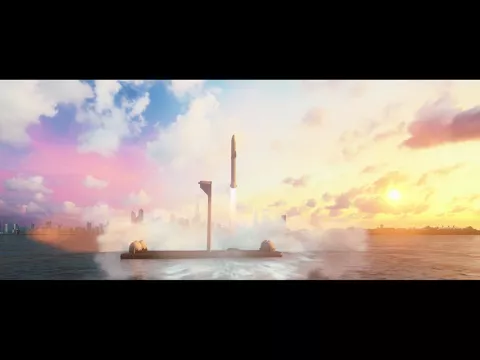
The project relies on the Super Heavy rocket and the Starship spacecraft, both developed for orbital travel. The spacecraft can reach speeds of up to 27,000 km/h in low Earth orbit, allowing for intercontinental journeys in record time.
For landings, SpaceX proposes floating platforms or stations in major cities, with full reuse of the launch system – a key to reducing costs.
-
World Cup Ball Chip Uses Technology to Detect Invisible Touches, Confirms Offside, Secures Portugal’s Victory Over Croatia

-
36-Meter Hydrogen-Powered Superyacht Arrives in Brazil to Debut German Engines and Showcase Future of Clean Navigation

-
Indian Students from Jaipur Win Top Prize at World’s Largest Science Fair with EcoFog, an Affordable Mesh to Harvest Fog Water Without Energy

-
Italy Sinks Massive 11-Story Concrete Structures in the Ligurian Sea to Create a 6.2 km Barrier, Clearing the Way for 400-Meter Ships in Genoa



TECHNICAL AND BUREAUCRATIC CHALLENGES OF ELON MUSK’S NEW PROJECT

Despite successful tests in 2023, Earth-to-Earth faces obstacles. Starship still needs safety approvals for passenger transport, and each flight would require specialized infrastructure in participating cities. Additionally, SpaceX prioritizes lunar and Martian missions, delaying massive investments in the land transport system.
If implemented, the project would allow direct flights between any point on the planet in under an hour. Journeys like Rio de Janeiro-Tokyo (currently 26 hours by plane) would take 45 minutes. The spacecraft, capable of carrying 100 passengers, would also reduce the impact of jet lag, as most of the journey would occur in space.