






 Portuguese
  Spanish


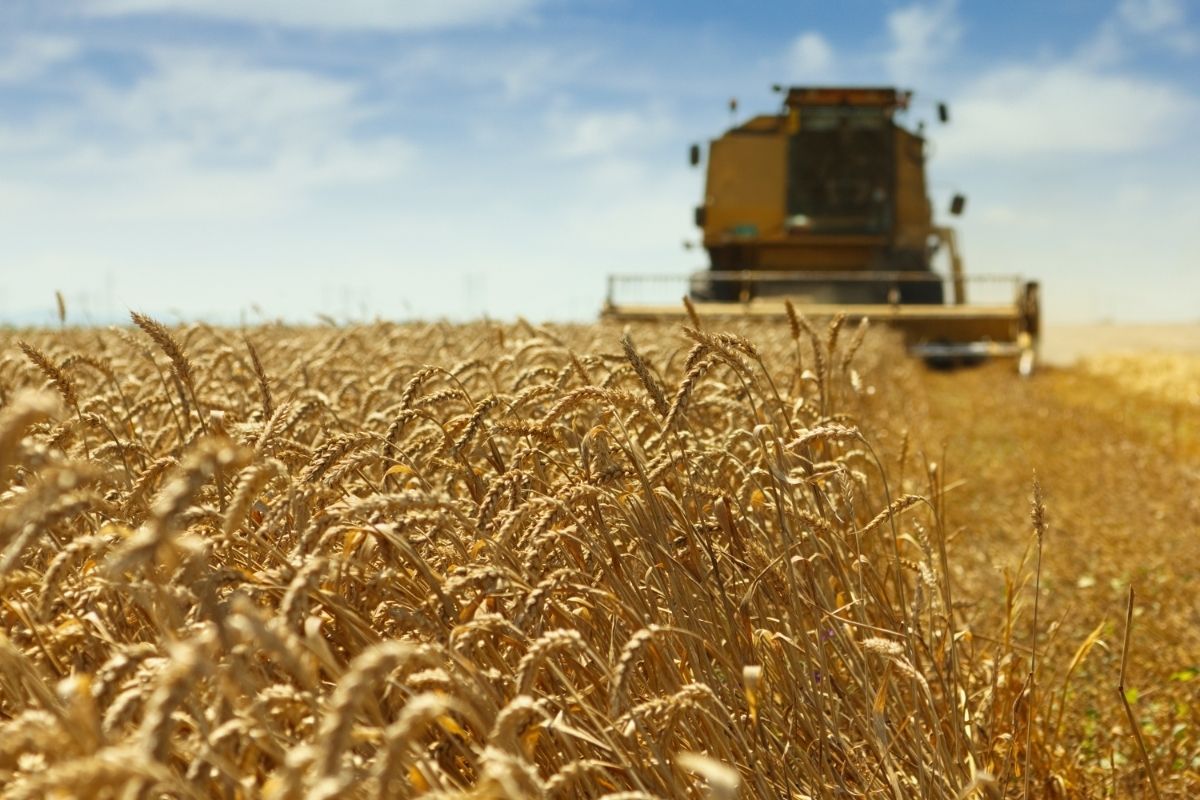
Researchers From Embrapa Announce The Results Of Their Recent Study And Point Out That Brazil May Have Wheat Production Of More Than 13 Million Tons
Studies conducted by the team of researchers from the Brazilian Agricultural Research Company (Embrapa) have brought promising results and indicate that Brazil may become independent in wheat production within the next 10 years. This amounts to a total of 13 million tons produced nationally, mainly with the expansion of tropical wheat.
Currently, more than 50% of the wheat consumed in Brazil is of international origin, but this may change in the next 10 years, according to Embrapa. The announcement of the study results was made during a public hearing convened by Senators Chico Rodrigues (União-RR) and Acir Gurgacz (PDT-RO) to discuss the production of tropical wheat, which means expanding it to the North and Northeast regions.
Learn More About The Possibility Of Self-Sufficiency In Wheat Production In Brazil


Embrapa Received Budget Amendment Of More Than Half A Million To Continue Developing The Study
Senator Chico Rodrigues directed half a million reais in budget amendment for Embrapa to stimulate the development of studies. In addition, he stated that he will seek even more resources to meet the demands of the state of Roraima.
-
Petrobras and Engeko’s New Investment Plan Promises Billions and Thousands of Jobs, Capturing Market Attention

-
India’s Sugar Export Cuts and Ethanol Shift Amid El Niño Threat Could Impact Global Prices and Stocks
-
Quarantine Pest Threatening Palm Trees Puts Brazilian Authorities on Alert, Prompts Monitoring at University of Taubaté and Potential Control Measures Across São Paulo
-
Global Alert: Report Finds 159 Pesticides in Coffee Beans Sold in Europe, Posing Serious Risks to Millions of Farm Workers



“Researchers will achieve exceptional results, providing rural producers with conditions to implement the wheat culture and expand. We have fantastic potential; we are confident that the result will be as expected”
Senator Chico Rodrigues (2022), in an interview with the Senado Notícias portal
However, Senator Carlos Fávaro emphasizes that national wheat production and Brazil’s independence in this sector is of utmost importance due to the price increases due to the war between Ukraine and Russia.
Northeast And North States Are New Targets For Wheat Production In Brazil, The “Tropical Wheat”
Currently, most of Brazil’s wheat is produced in the Southern region, which accounts for about 90% of national production. However, according to Embrapa’s studies, the states of Roraima, Ceará, Piauí, and Maranhão are considered new targets for tropical wheat production.
Jorge Lemainki, General Head of Embrapa, states that Brazil’s current wheat consumption reaches 12.7 million tons, with the Southeast and Midwest regions having the highest demand. Furthermore, Júlio Albrecht, a researcher at Embrapa, stated that the new direction is the cerrado for wheat production.
“We have 204 million hectares in the Cerrado that we can explore without cutting down trees, only cultivating in degraded areas. Embrapa has always believed in wheat in this region. We have the potential to achieve self-sufficiency and even export wheat in less than 10 years”
Júlio Albrecht, researcher at Embrapa (2022), in an interview with the Senado Notícias portal
Breaking this new barrier for the production of this national grain brings many benefits, as wheat is second only to oil in import quantity. Moreover, the plant helps improve sleep quality and reduces worm infestation and the development of diseases.
Today we can produce almost 3 tons per hectare, but we have already recorded 9 tons per hectare from just one national producer. This translates into a very promising result.
Roraima May Be One Of The Main New Poles Of Wheat Production In Brazil, According To Embrapa
From the North and Northeast regions, the state of Roraima has garnered the most attention. After all, it has more than 2 million hectares suitable for wheat production. However, many challenges need to be overcome, such as issues related to low and high latitudes, high temperatures, and variations in relative humidity.
The increase in wheat production in Roraima will contribute to greater food security in the region, serving as a plant that recovers the soil after soybean cultivation. Additionally, the production of this grain attracts more investments to the region, contributing to its development.
Global Wheat Situation Is A Dilemma Due To The War Between Ukraine And Russia
Wheat production worldwide reaches impressive numbers, averaging 779 million tons of wheat. However, a significant amount comes from Russia and Ukraine, and the conflict there brings uncertainty to the global supply of this resource.
According to a technical advisor from the Brazilian Confederation of Agriculture and Livestock (CNA), Tiago Pereira, Russia and Ukraine provide as much as 30% of the world’s wheat, and the war causes prices to rise dramatically. Furthermore, Pereira states that Brazil has already achieved 7.7 million tons, and the trend is to increase in the coming years.
However, he states that greater industrialization is necessary to meet the goal of 13 million tons. Moreover, it is essential to plan a logistics chain capable of meeting the demands of the national market.




Be the first to react!