Portuguese
  Spanish


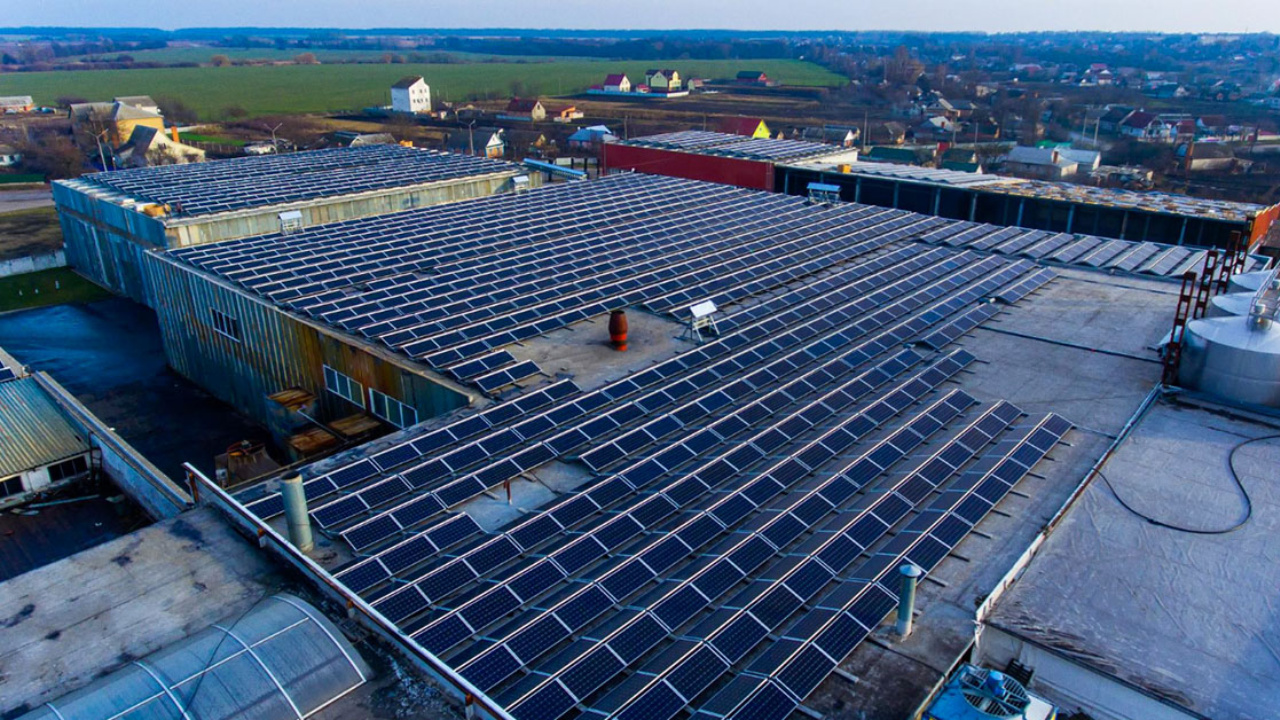

More Than 217 Thousand Companies Have Started Using Solar Energy in Brazil in 2025. Investments Exceed R$ 9 Billion and Boost Own Generation with 2 GW in New Photovoltaic Systems.
Solar energy established itself, in 2025, as one of the main vectors of transformation of the energy matrix of the Brazilian productive sector.
In just ten months, more than 217 thousand companies have adopted their own photovoltaic generation systems, highlighting a structural change in how commercial, service, and industrial companies manage their costs and environmental impact.
The data is part of a mapping conducted by TTS Energia, a company specialized in engineering and construction of solar plants in Brazil.
-
Solar energy reaches 55 GW, becoming the second largest power source in Brazil’s energy mix

-
Solar energy can increase property value by up to 10% and become a selling point.
-
Solar and wind energy surpass natural gas for the first time in the world and accelerate energy revolution

-
Africa has about 500,000 cell towers and most still burn diesel to operate, while companies rush to cover antennas with solar energy and avoid signal blackouts.




The survey was prepared based on official reports from the National Electric Energy Agency (Aneel) and reveals that, between January and October 2025, about 2 gigawatts (GW) of installed capacity were added exclusively to meet business operations.
Billions in Investments Boost New Corporate Solar Plants
In addition to the growth in the number of adoptions, the advancement of solar energy in companies can also be measured by the volume of resources invested. According to the study, corporate investments in small solar plants exceeded R$ 9 billion over the analyzed period.
This amount enabled the installation of approximately 56 thousand new photovoltaic installations, distributed among systems installed on rooftops, coverings, carport structures, and also ground-mounted plants.
The units serve companies located in more than 4,300 Brazilian municipalities, reinforcing the reach of solar energy and its accessibility across different regional realities.
At the same time, this movement indicates a decentralization of energy generation, with companies taking a more active role in producing their own electricity consumption.
States Lead the Expansion of Solar Energy among Companies
The survey also details where corporate solar energy advanced most intensively in 2025. Minas Gerais leads the national ranking, with 102 thousand new companies adopting photovoltaic generation and an increase of 334 megawatts (MW) of installed capacity.
Next is São Paulo, which registered 32 thousand new establishments with solar energy and added 277 MW to its corporate photovoltaic park. The performance in São Paulo reflects both the state’s economic strength and companies’ quest for predictability in energy costs.
Shortly after, Paraná recorded 21 thousand corporate adoptions, with 194 MW incorporated. Mato Grosso follows, with 15.4 thousand companies and 206 MW added, while Bahia rounds out the group of the five leading states, with 7 thousand new companies using solar energy and 63 MW installed.
Emblematic Projects Show How Solar Energy is Applied in Practice
Alongside the consolidated data, TTS Energia also highlights projects developed throughout 2025 that help illustrate how solar energy has been incorporated into business routines. One example is the plant installed on the rooftop of Aggreko’s operations center, a global supplier of energy solutions and equipment.
Located in Jaguariúna, in the interior of São Paulo, the system has 130 photovoltaic modules and an installed capacity of 79.3 kilowatts-peak (kWp), enhancing the electrical supply of the unit with clean and own generation.
Another relevant project involves Henkel’s first technology center in Latin America. The project was carried out in partnership with Athié Wohnrath, a company specialized in sustainable constructions.
The initiative included the installation of more than 580 photovoltaic modules, organized into two mini-plants: one located on the building’s slab and another on the parking lot roof, in a carport model. Together, the structures total approximately 360 kWp of installed capacity.
Solar Energy is Now Seen as a Business Strategy
For Jacques Hulshof, CEO of TTS Energia, the expansion of solar energy in the corporate environment goes beyond environmental concerns and reflects a profound change in business logic. “Solar energy has ceased to be just a sustainable alternative and has become a concrete opportunity for operational modernization, cost reduction, and strengthening environmental governance,” he comments.
According to him, by investing in photovoltaic systems, companies increase their energy autonomy and gain greater financial predictability. “Companies that invest in solar generation enhance their autonomy, gain financial predictability, and reinforce commitments that are now critical for their reputation and competitiveness,” he concludes.