






 Portuguese
  Spanish
  3 min of reading
  0 comments



Scientific Discovery Reveals Deposit With Millions of Tons of ‘White Hydrogen’, With Potential to Transform the Global Energy Market.
Jacques Pironon and Philipe De Donato, renowned research directors at the French National Center for Scientific Research, were conducting an assessment of methane presence in the underground of the Lorraine coal basin when, at a depth of 1,250 meters, they made a remarkable discovery. They found a significant concentration, estimated at 20%, of ‘white hydrogen’, suggesting the possible existence of a vast reservoir of this element beneath the Earth’s surface.
Reservoir Could Contain “Infinite” White Hydrogen
According to the scientists’ calculations, the expectation is that the deposit could contain between 6 million and 250 million metric tons of hydrogen, which could make the site one of the largest white hydrogen deposits ever discovered, according to Pironon.
The discovery has contributed to boosting an already rising interest in the gas. White Hydrogen is naturally produced or present in the Earth’s crust. When burned, this fuel produces only water, making it very attractive as a potential source of clean energy for industries such as aviation, shipping, and steel production.
-
Illiterate or semi-literate grandmothers were trained to repair solar systems, open rural workshops, and light up homes that still depended on kerosene.

-
The world has bet on green hydrogen as the fuel of the future, but now faces the side effect: producing 1 kilogram requires about 9 liters of ultrapure water, and the largest projects on the planet are precisely in the driest regions of the Earth, where water is already scarce for people.

-
Africa has about 500,000 cell towers and most still burn diesel to operate, while companies rush to cover antennas with solar energy and avoid signal blackouts.
-
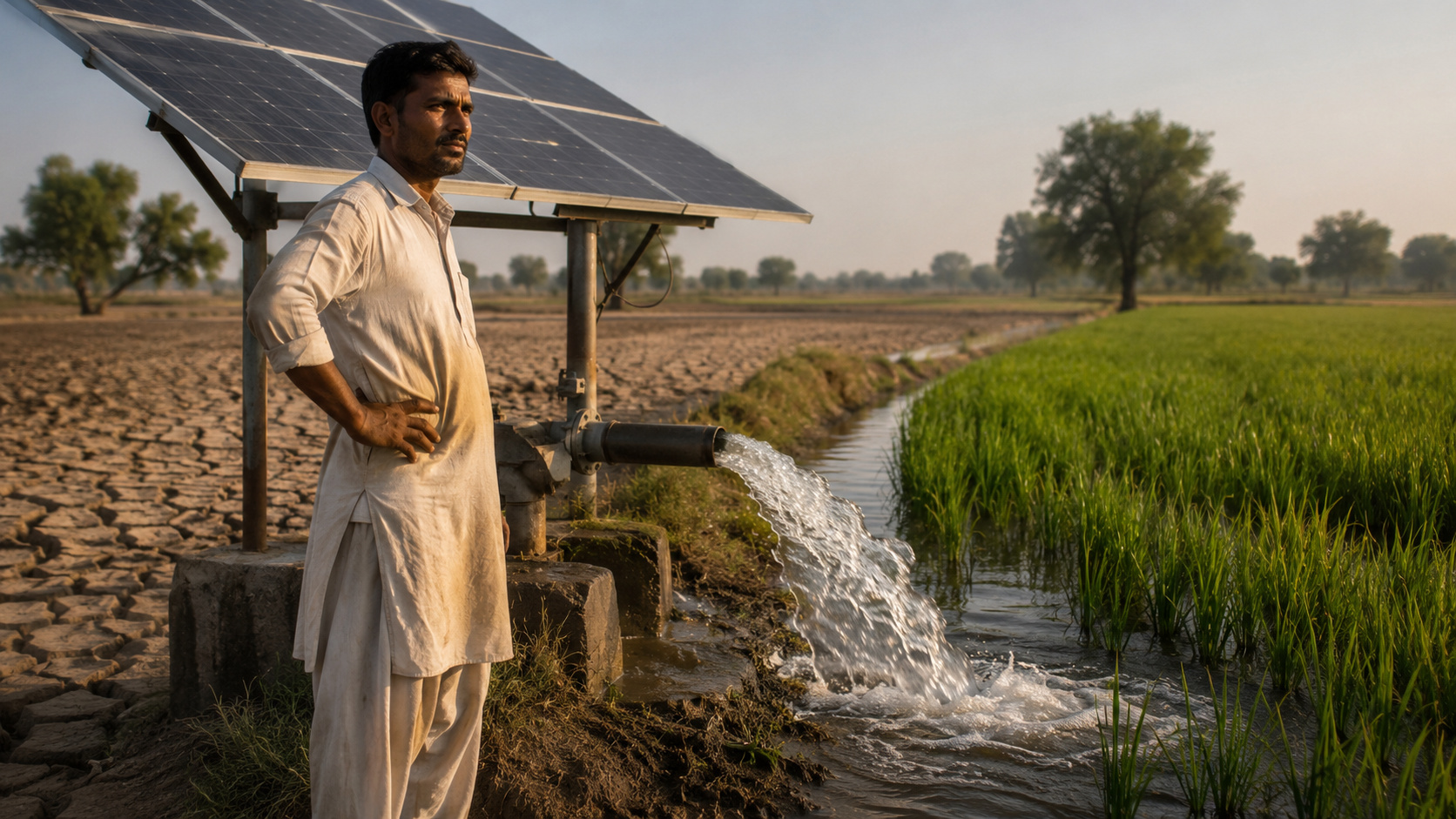
Farmers swapped diesel for solar panels in Pakistan, powered irrigation pumps almost cost-free, expanded rice fields, and now groundwater has become a red alert in the countryside.



However, currently, commercial hydrogen is generated in an energy-intensive process almost entirely powered by fossil fuels. There are various types of hydrogen, but the most promising to be the fuel of the future from a climatic perspective is green hydrogen, which is produced using renewable energy to separate water.
The recent discoveries by scientists are encouraging for Geoffrey Ellis, who has been working as an oil geochemist since the 1980s. He witnessed the rapid growth of the shale gas industry in the U.S., which revolutionized the energy market. For Ellis, the world is now in what he believes is likely a second revolution.
It Is Estimated That There Could Be Tens of Billions of Tons of ‘White Hydrogen’ Around the Globe, A Revolutionary Potential for the Energy Sources of the Future
White hydrogen is quite promising, according to Isabelle Moretti, scientific researcher at the University of Pau et des Pays de l’Adour and Sorbonne University and an expert in white hydrogen. Now, the question is no longer about resources, but rather where to find large economic reserves.
Hydrogen deposits have been found by scientists worldwide, in the U.S., Eastern Europe, Russia, Australia, Oman, Mali, and France. Some were discovered by accident, others through searches for clues.
Ellis estimates that globally there could be tens of billions of tons of white hydrogen. Much more than the 100 million tons of hydrogen currently produced each year and the 500 million tons projected to be produced annually by 2050, according to him.
The vast majority of this will almost certainly be in accumulations that are either very small or very far from shore, or simply too deep to be economically produced. However, if only 1¢ can be found and produced, it would provide 500 million tons of hydrogen for 200 years.
Green Hydrogen Promises to Move Billions of Dollars

The green hydrogen market is expected to generate US$ 350 billion globally by 2030, according to a study by the consulting firm Thymos Energy. In Brazil, the expected investment in the chain is US$ 28 billion, which is approximately 8% of the total amount.
A large portion of this value should come from the green production route of this energy source. The H2V supply market is significantly influenced by two factors: the availability of renewable electricity potential and the supply of water resources.
Brazil has both in abundance, thus it should concentrate half of the Latin investments and 8% of global investments, a quite relevant amount considering all the continents and countries involved.







Be the first to react!