Portuguese
  Spanish


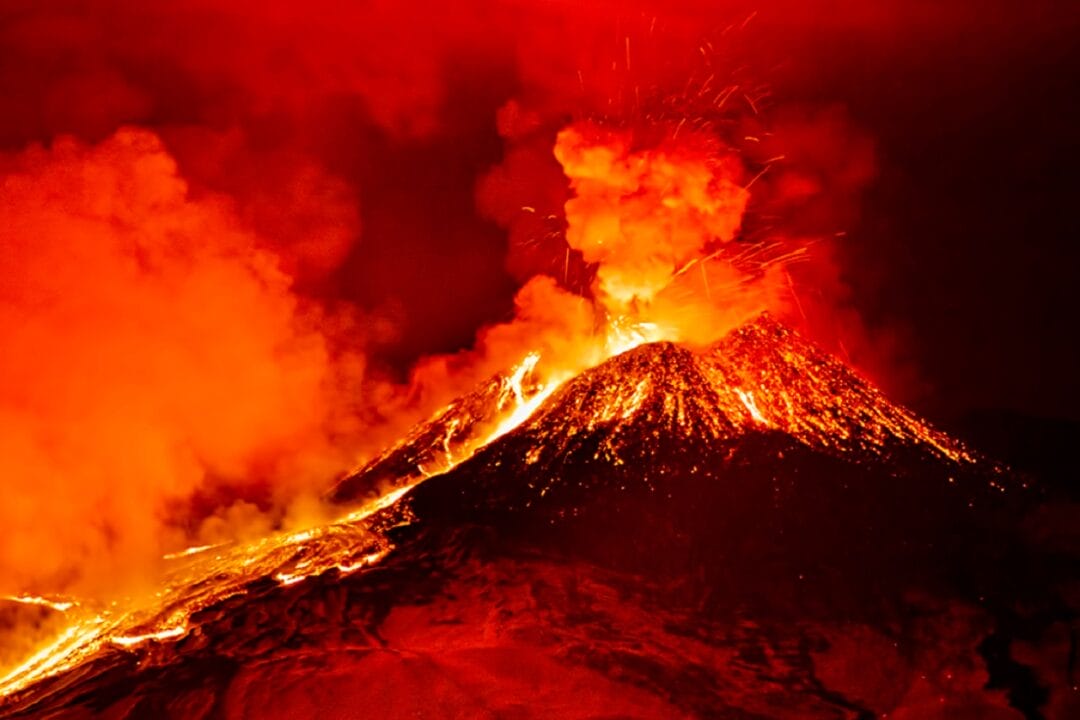

Research Team in Iceland Plans to Drill a Magma Chamber Near a Volcano. The Goal of the Initiative Is to Seek an Unlimited Energy Source and Anticipate Possible Eruptions.
Iceland, an island nation widely recognized for its use of geothermal energy, is on the brink of an unprecedented scientific endeavor. Led by Hjalti Páll Ingólfsson and his colleague Björn Þór Guðmundsson from the Geothermal Research Cluster (GEORG) in Reykjavík, the country is set to begin a drilling project in a magma chamber near a volcano. This milestone represents a significant advancement in geothermal research, aimed at exploring the possibility of infinite energy generation and obtaining valuable insights about the liquid rock hidden deep within the Earth.
Infinite Energy Project in Iceland Set to Begin by 2026
Scientists are studying the possibility of drilling into a volcano in Iceland with the aim of finding an unlimited infinite energy source. The project is expected to begin by 2026 and aims to use magma to heat water and generate electricity.
The project is led by the Krafla Magma Testbed (KMT), an organization that studies geothermal energy. KMT stated on its website that it seeks a future where the world is powered by the infinite energy of magma, the secrets hidden beneath the volcanoes are revealed, and catastrophic volcanic eruptions can be predicted.
-
Nigeria Dumps 120 Million Tons of Sand into Atlantic to Build Massive City with 8.4 km Sea Wall for Protection Against Ocean Waves and Erosion

-
German Engineer Developed Diesel Engine Running on Vegetable Oil Decades Before Electric Cars Became Popular; Can This Forgotten Idea Work in 2026?

-
James Webb Telescope Uncovers Unexpected Clues on Mysterious Moon, Potentially Redefining Planetary Origins

-
$1.5 Billion Sleipnir Vessel Transforms Ocean into Floating Construction Site with 12 Hybrid Engines and Capacity to Lift 20,000 Tons


Volcanic regions have long been utilized to generate energy in Iceland, but this experiment could be the first to drill into a magma chamber near a volcano directly to harness energy.
In an interview with Newsweek, David Pyle, a professor of earth sciences at the University of Oxford, pointed out that the experiment will face various technical challenges, including the creation of equipment that can withstand high temperatures. Pyle states that if the drilling of the magma chamber is successful, the next steps will be to discover the best way to extract the heat.
Discovery of Magma Chamber in Iceland Opens Doors for Research
The temperature of magma has never been measured directly; however, lava that erupts on the surface can reach up to 1,200 °C, so the experiment will also allow for the study of magma chambers, their structure, and what triggers eruptions.
The discovery of a magma chamber near the Krafla volcano in northeastern Iceland has opened new doors for geothermal research. Krafla, one of the most active volcanoes in the world, is located along the mid-Atlantic ridge where the Eurasian and North American tectonic plates diverge.
It has erupted 29 times since the 9th century, with the most recent activity occurring between 1975 and 1984. This period, known as the Krafla Fires, was extensively studied by volcanologists. These studies led to the identification of a potential magma chamber beneath the Icelandic volcano, estimated to be between 3 to 7 km deep.
KMT Was Established in 2014
The Icelandic Deep Drilling Project (IDDP), a consortium of industrial and governmental entities, began drilling in 2000 to explore the potential of harnessing supercritical water for geothermal energy.
However, in 2009, at a depth of approximately 2,104 meters, the drill unexpectedly penetrated a magma chamber, evidenced by the sudden ease of drilling and the discovery of obsidian in the samples from the borehole.
This accidental encounter was not the only one; similar events occurred in the Menengai caldera in Kenya and in the Kilauea volcano in Hawaii, demonstrating the viability and safety of drilling into magma chambers without triggering eruptions.
The Krafla well was subsequently used for power generation for nine months, reaching a wellhead temperature of 450 °C before being shut down due to overheating issues.
Based on these experiences, the KMT project was established in 2014. Its main mission is to drill the magma chamber for scientific exploration, with plans to start drilling in 2026 and generate infinite energy.