Portuguese
  Spanish


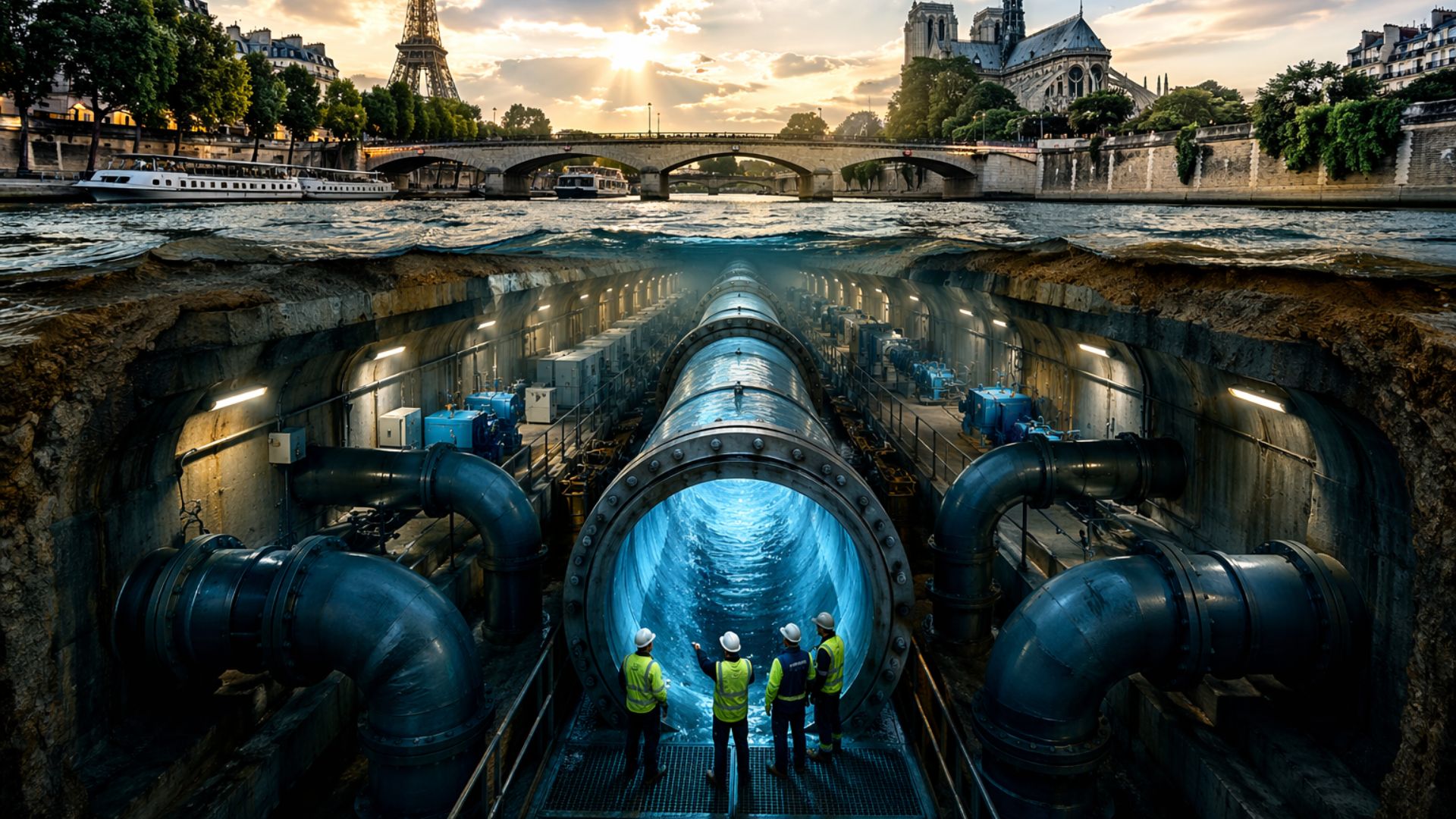

Underground infrastructure connects the river, buildings, and technology to cool Paris collectively and continuously, reducing equipment in buildings and using renewable energy on a large scale, with a direct impact on urban comfort and the preservation of historical and cultural spaces.
Paris has consolidated an urban cooling network that shifts the air conditioning of some buildings to a collective infrastructure installed beneath the streets, connecting technical centers, pipelines, and delivery points that supply properties of different profiles with cooling energy.
The operation is conducted by Fraîcheur de Paris, the public service concessionaire, and combines centralized production, network distribution, and the use of local resources, including water from the Seine as part of the system.
This model reduces the dependence on autonomous equipment in each building and transforms cooling into a shared service, something particularly relevant in a dense, historic city limited by heritage restrictions and lack of technical space.
-
Mother discovers she may have won £12 million in the lottery but faces an agonizing wait after the shopkeeper threw the ticket in the trash.

-
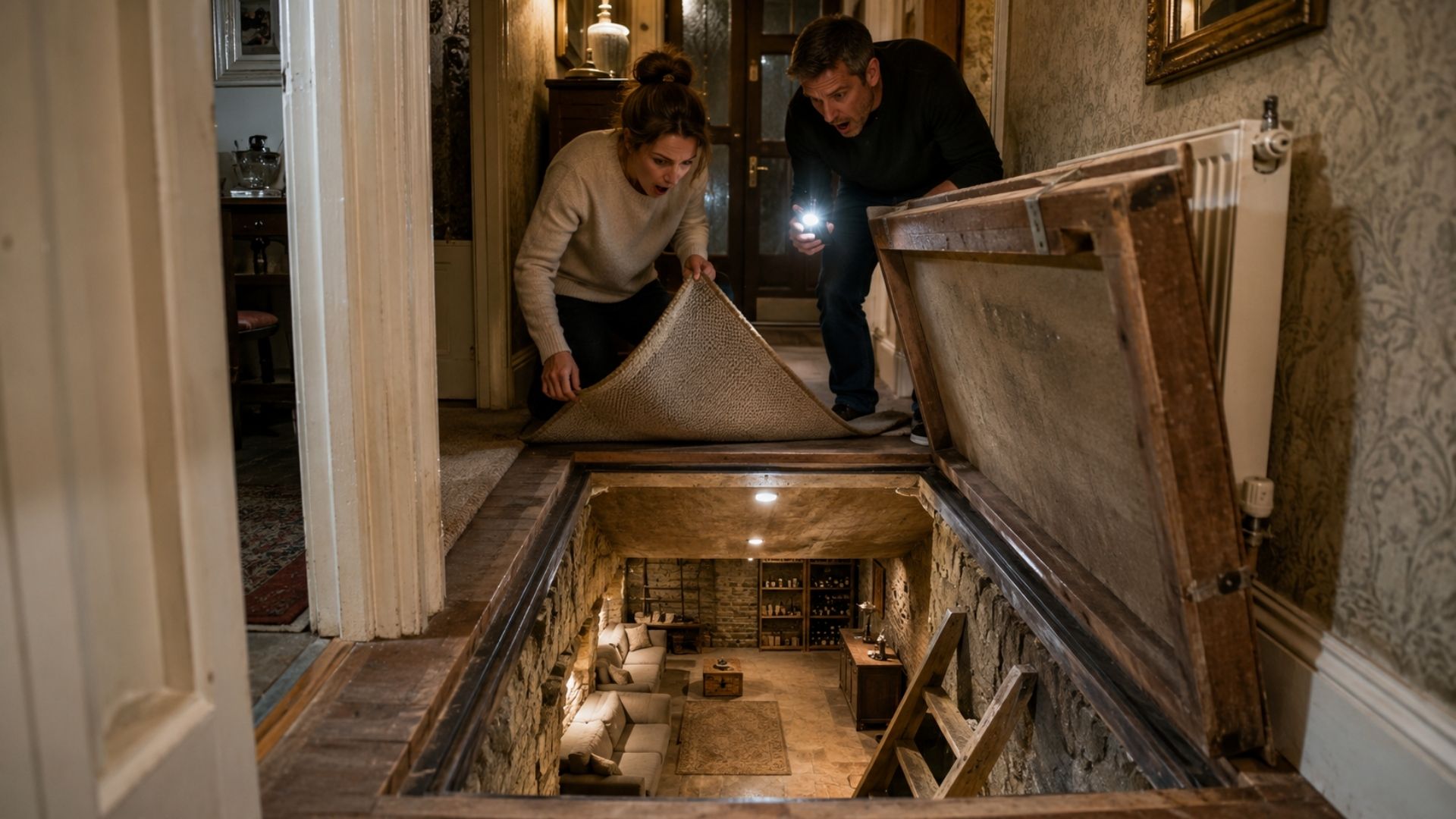
A couple bought a house in Sheffield and, when removing the carpet from the hallway, found a trapdoor leading to a secret 23 m² basement with a 2-meter ceiling height, a discovery that eliminated the need for an expensive extension and, according to them, added £70,000 to the property’s value.

-
A nurse bought for 20,000 a 1955 house abandoned by a hoarder in Texas, and months later, rain revealed a buried pool in the backyard valued at $160,000, which he restored himself for about $10,000, a fraction of the cost of building a new one.
-
The United Kingdom is transforming dog feces left on trails into gas to light a streetlamp through an unlikely and surprising project that shows how even one of the most rejected wastes in cities can generate energy.



Instead of installing large machines on rooftops and facades, buildings receive chilled water through the network and use a delivery point installed in the technical area of the property.
Use of the Seine River in the urban cooling system
The Seine River is not brought into the environments nor circulates directly through the air-conditioned buildings.
In practice, its water is used in part of the plants as support for cooling the industrial process that produces the chilled water distributed to the network, allowing a local resource to participate in the thermal infrastructure of the French capital.
One of the most cited cases by the operator is the Bercy plant, created to supply the Paris Rive Gauche area, in the region of the National Library of France.
According to Fraîcheur de Paris, this plant has an installed capacity of 44 MW and, like the Canada and Tokyo plants, is cooled by water from the Seine.
The scale of the system helps explain why the subject has shifted from an engineering curiosity to urban policy for heat adaptation.
Public data from the France Chaleur Urbaine platform indicates that the network recorded 903 delivery points in 2024, with 401 GWh of cooling provided, 459 GWh of total production, and 438 MW of installed capacity.
The cooling network serves museums, hospitals, and commerce
The operator reports that the service serves offices, hotels, restaurants, cultural venues, public establishments, shopping centers, retail, and hospitals.
This diversity shows that the network was not designed for a single type of building but to absorb varied thermal demands throughout the day and across the seasons.
Behind the scenes, the system operates with chilled water production centers that reduce the temperature of the distribution circuit from 12°C to 4°C.
Then, this cooling energy travels through underground pipes to the connected properties, where the cold is transferred to the building’s internal system through the equipment installed on-site.
The connection process also follows an industrial logic.
Fraîcheur de Paris describes a sequence that includes a prior feasibility study, design study, power recommendation, obtaining public domain construction permits, and executing the branch to the building, with the installation of the delivery medium and subsequent commissioning.
After the connection, the utility claims to maintain supply even during periods of intense heat, operate the plants and delivery points from a 24-hour control center, and include maintenance and renewal of facilities at the end of the contractual lifespan.
The company also reports conducting a five-year analysis to verify if the contracted power remains compatible with actual consumption.
Climate Control of Museums and Large Urban Spaces
The utility of the network becomes more apparent when observing the properties already connected.
At the Musée du Quai Branly, the operator states that the cooling needs are permanent due to the intensity of the lighting and the requirement to preserve the works at constant temperature and humidity, a decisive condition for the preservation of the collection.
At the Musée de l’Orangerie, the connection to the system is associated with the climate control of a space that houses a central part of Claude Monet’s collection and other reference works.
The Petit Palais was connected during the major renovation completed in 2005, when the building received a solution compatible with the preservation of the architectural ensemble.
The same reasoning applies to buildings with high foot traffic.
Fraîcheur de Paris reports that the shopping center Beaugrenelle, in the 15th arrondissement, uses the network to cool approximately 45,000 m², balancing thermal comfort for the public with energy efficiency criteria in a high-traffic space.
The list of symbolic clients reinforces that this is not a test restricted to a few blocks.
In the utility’s institutional material, examples include the Bibliothèque nationale de France, the Philharmonie de Paris, the Park Hyatt Paris-Vendôme, the Louvre, the Assemblée nationale, the Forum des Halles, and the Quinze-Vingts hospital.
Reduction of Space and Impact on Buildings
One of the central arguments of the service is the freeing up of usable space within buildings.
According to the operator, the delivery point connected to the network occupies, on average, five to seven times less area than a standalone cooling installation, and also eliminates the need for emergency coverage or facade.
This gain is particularly significant in Paris, where heritage restrictions, protected facades, and intensive land use make it more difficult to install large standalone equipment.
The company also claims that the delivery method does not generate noise, visual, or vibrational disturbances in the building, which reduces interference for occupants, neighbors, and sensitive activities.
In addition to the physical aspect, the network changes the operational logic of air conditioning.
Instead of each building managing its equipment in isolation, part of the technical and regulatory risk is transferred to the public infrastructure, with centralized operation, maintenance incorporated into the service, and reduced exposure for the user to unforeseen expenses related to system renewals.
Environmental impact and use of renewable energy
The environmental dimension is explicitly reflected in the regulatory data of the system.
The France Chaleur Urbaine platform, based on the decree of April 11, 2025, regarding the year 2023, reports for the Paris network a content of 8 gCO2/kWh and an LCA content of 16 gCO2/kWh, considering the average from 2021 to 2023.
In the commercial material of Fraîcheur de Paris, the company also states that the energy supplied is produced with 100% guaranteed renewable origin electricity.
The concessionaire associates the expansion of the system with the utilization of local resources, energy efficiency, and the limitation of environmental impacts related to the proliferation of independent installations in a city already pressured by more frequent heatwaves.
Under this logic, the Seine ceases to fulfill only a landscape function and becomes part of an urban infrastructure that helps maintain libraries, museums, hotels, hospitals, and shopping centers in stable thermal operation.
What once seemed like a science fiction image now operates as a continuous public service, buried beneath the city and connected to some of the most iconic addresses in Paris.