






 Portuguese
  Spanish
  5 min of reading
  0 comments


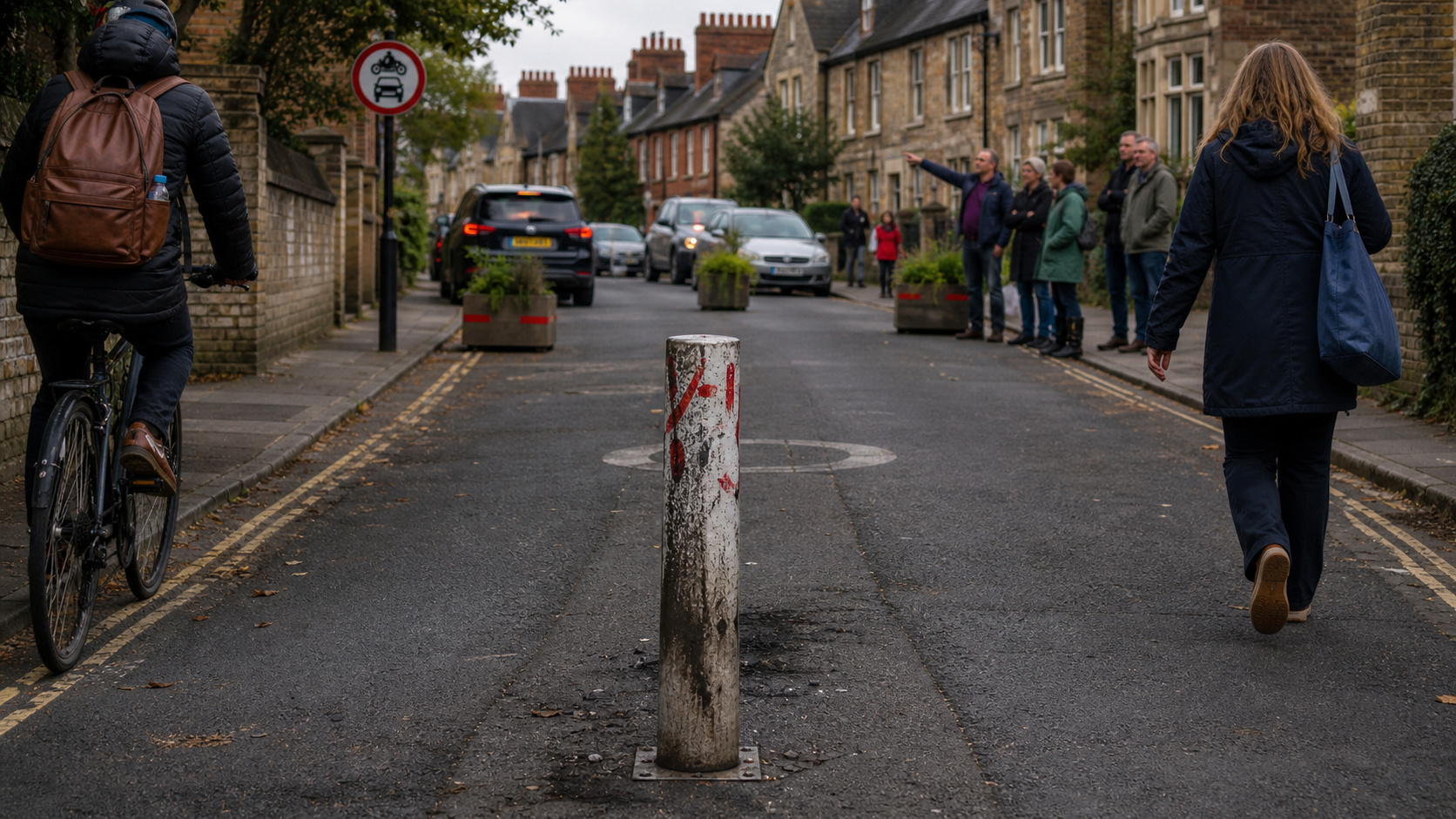
A bollard in Oxford became a symbol of urban conflict after blocks against cars in residential streets, with vandalism, tension among residents, criticism of diverted traffic, fear of impact on commerce, and debate about 15-minute cities
England’s most hated bollard blocked cars in Oxford and ended up being targeted by theft, vandalism, and fire. The bollard was part of the Low Traffic Neighbourhoods, areas created to prevent vehicles from using residential streets as shortcuts.
The investigation was published by The Guardian, a British newspaper of news and reports. The case gained traction because a simple street object came to represent a larger dispute over traffic, safety, local commerce, and 15-minute cities.
The proposal was to reduce cars on neighborhood streets, improve safety, and encourage walking and cycling. But the reaction was harsh. Opposing residents accused the blocks of pushing traffic onto main roads, harming businesses, and hindering emergencies.
-
Federal Police involved in the case to identify the person responsible for hacking the Civil Defense system, which sent ten false alerts, frightened residents of different capitals, and turned messages about real risks into notifications with “misanthropy” and even alien attacks.

-
Extreme drought causes ghost village to reappear at the bottom of the reservoir that supplies Athens, revealing houses, a school, and ruins swallowed since the 1980s as the lake shrinks and exposes the water crisis threatening the capital of Greece.

-
An entire village lay asleep at the bottom of a lake for 3,000 years: divers suction sediments in Italy and reveal more than 600 wooden stakes, bronze tools, and traces of a Bronze Age settlement hidden underwater.
-
They call it the “Shopee house” and even cardboard, but the R$ 20,000 house is a certified Wood Frame from Alea, financed by Minha Casa Minha Vida: understand if it’s worth more than masonry.




What is a bollard and why did this post become a symbol of revolt in Oxford
A bollard is a short post placed on the street to prevent the passage of cars. It is often used to protect sidewalks, control access, and prevent vehicles from entering certain sections.
In Oxford, the bollard entered a much larger discussion. It wasn’t just a street blocker. For some residents, it became the symbol of a forced change in the path of cars.
Low Traffic Neighbourhoods were built to make residential streets calmer. The idea was to prevent shortcuts, reduce noise, and make the space safer for pedestrians and cyclists.


Even so, the measure divided residents. On one side, there were those who advocated for streets with fewer cars. On the other, there were those who saw the change as detrimental to daily routines, commerce, and circulation.
Streets blocked by bollards and planters changed residents’ routines
The blocks in Oxford used bollards, planters, and physical barriers to prevent cars from cutting through residential streets. The change seemed simple, but it affected daily commutes.
For those in favor, the streets became quieter and safer. Reduced traffic also created space for children, cyclists, and pedestrians to move around more peacefully.
For those against it, the blocks created another problem. The central complaint was that cars stopped passing through the neighborhood and ended up concentrated on busier main roads.
This point became one of the biggest criticisms of Low Traffic Neighbourhoods. The dispute made it clear that changing the path of cars also changes the lives of those who live, work, or sell in the area.
Theft, vandalism, and fire transformed the bollard into a national character
The Oxford bollard became known as England’s most hated bollard because it became a direct target of attacks. It was stolen, knocked down, vandalized, and even set on fire.
The situation drew attention because the object was common. It wasn’t a major work, nor a new law, nor a complex construction. It was just a short post in the middle of the street.
Even so, the bollard became a character in a national dispute. The case showed how a mundane urban item can concentrate frustration, fear, and irritation.
The result was real wear and tear. There was maintenance cost, tension between neighbors, attacks on the blocks, and pressure against urban mobility policies.
Theories about 15-minute cities added more fuel to the controversy
The conflict in Oxford also merged with the debate about 15-minute cities. The expression is often used to refer to neighborhoods where basic services are close to people’s homes.
The idea involves facilitating access to commerce, school, health, leisure, and work without relying so much on cars. In theory, this makes daily routines simpler and reduces long commutes.
But part of the discussion took another turn. Opposing groups began to associate traffic blocks with theories about circulation control and alleged climate lockdowns.
As a result, the bollard ceased to be just a traffic fixture. It became a symbol of a dispute over freedom, car use, trust in authorities, and the future of cities.
The Guardian showed residents defending calmer and safer streets
The Guardian, British newspaper of news and reports, recorded residents who defended the blocks, seeing streets as safer, quieter, and more sociable after the measures were installed.
Al Kinley Jones told The Guardian, British newspaper of news and reports: “Since the measures were introduced in the area we live in, it has become much quieter. It feels much safer.”
This statement shows the other side of the discussion. For some residents, the reduction in cars brought relief and a sense of protection, especially on paths used by families and children.
The division, however, remained strong. The same object that represented safety for some came to represent restriction and detriment for others.
Demos report recorded attacks and threats in similar conflicts
A report by Demos, a public policy research organization, recorded that the reaction against similar measures escalated from common complaints to episodes of vandalism and intimidation.
In Rochdale, planters were set on fire. In the town of Enfield, councillors received death threats. In Oxford, extremist groups also appeared in protests related to the issue.
These cases show that the dispute went beyond a conversation about traffic. The debate entered a field of social tension, with attacks, fear, and wear and tear for local authorities.

The real impact appeared on several fronts. There was vandalism, community tension, maintenance cost, threats to local politicians, and weakening of the debate on mobility.
The Oxford case shows how a simple object can turn into a cultural war
The case of the bollard in Oxford draws attention because it transformed a small urban measure into a far-reaching dispute. A short post became a symbol of fear, irritation, defense of safety, and rejection of traffic changes.
The story also shows that mobility policies need good explanations. When the population doesn’t understand the change or feels unheard, the reaction can, thus, grow quickly.
In the end, the most hated post in England didn’t become famous just for blocking cars. It gained prominence because it revealed a bigger fight over streets, commerce, emergencies, freedom of movement, and 15-minute cities.
Do you think blocks like this make neighborhoods safer or just push traffic to other streets? Leave your comment and share this publication with those who follow urban mobility, traffic, and changes in cities.





Be the first to react!