Portuguese
  Spanish



Technology Advancement Promises Cheaper and More Efficient Batteries, Revolutionizing the Automotive Sector
The electric car industry faces one of its biggest challenges: the high cost of batteries. They account for about 50% of the total value of an electric vehicle, making the prices of these vehicles considerably higher than their fossil fuel-powered counterparts. However, researchers at the Georgia Institute of Technology in the United States are working on a solution that could drastically change this scenario.
The development of a new low-cost solid-state cathode promises to improve battery efficiency while reducing costs, impacting not only the electric vehicle market but also the large-scale energy storage sector, according to the Olhar Digital website.
The Impact of the Battery on the Price of Electric Cars
Lithium-ion batteries, widely used in electronic devices such as smartphones and laptops, are also the primary power source for electric cars. However, when applied in vehicles, these batteries need to store much more energy, which significantly increases their production costs. Precious metals, such as cobalt and nickel, are critical in the composition of current batteries, further raising the final product’s price.
-
2027 Toyota Corolla Cross Unveiled: New Design, Enhanced Fuel Efficiency, Reduced Maintenance Costs, Advanced Technology, Connected Services, and Up to 10-Year Warranty

-
Fiat Cronos Precision 2018: Affordable Sedan with Spacious Trunk and Reliable Maintenance
-
Volkswagen to Cut Production by 1 Million Cars by 2030, Reducing Jobs and Platforms, Focusing on More Profitable Models

-
Toyota Launches First 100% Electric Car in Brazil: bZ4X with 343 HP, All-Wheel Drive, 361 km Range, Priced at $419,990 BRL, Limited to 99 Units






Currently, batteries represent half of the total cost of an electric car, a factor that prevents wider adoption of these vehicles. Georgia Tech’s research, however, offers a promising alternative: the use of iron chloride, a material much cheaper than traditional components, as a solution to reduce battery manufacturing costs.
Innovation in Solid-State Cathode Development
The cathode is one of the most critical components in a lithium-ion battery, directly influencing its efficiency, lifespan, and energy storage capacity. The Georgia Tech team developed an iron chloride cathode that, in addition to being significantly cheaper than traditional materials, offers similar or even superior performance compared to the more expensive cathodes on the market.
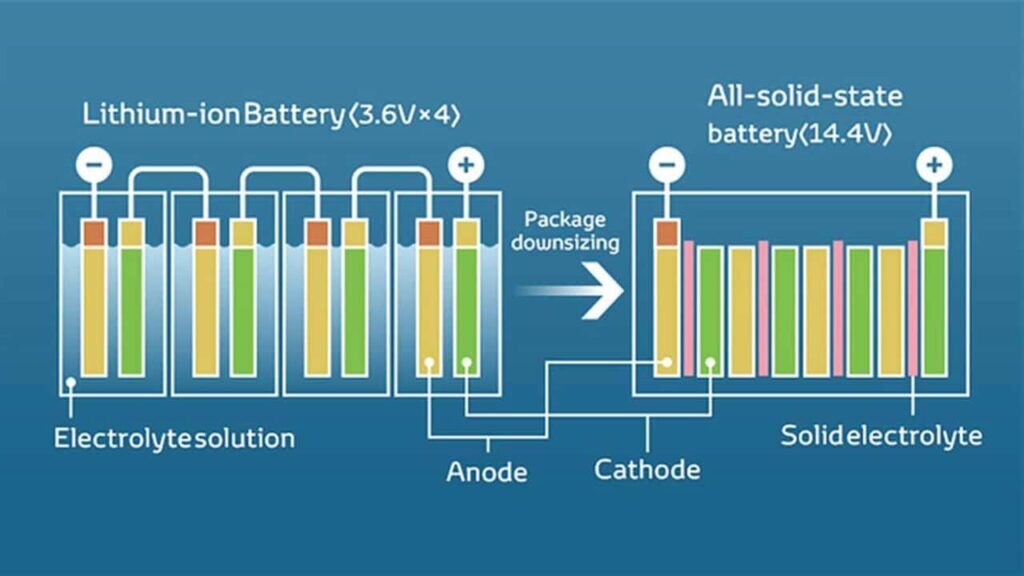
This cathode uses solid electrolytes instead of liquids, to store and release energy. Solid-state batteries offer considerable advantages over traditional ones, such as greater safety and efficiency. The use of liquid electrolytes in conventional batteries can lead to leaks or fires, problems that are minimized with the solid version. Furthermore, the new cathode allows for a higher operating voltage, making it ideal for applications in electric vehicles.
Cost Reduction and Impact on the Electric Vehicle Market
According to the researchers, the new cathode composition could reduce battery costs by up to 70%, representing between 30% and 40% of the value of conventional lithium-ion batteries. This means that, in addition to making electric cars more affordable, the innovation could accelerate the transition to vehicles powered by clean energy, offering a cheaper and more efficient alternative.
Hailong Chen, the lead researcher, highlighted the benefits of the new technology for the automotive sector and beyond:
“This innovation can not only make electric cars much more accessible than internal combustion vehicles, but also provide a promising new form of large-scale energy storage, increasing the resilience of the electric grid. In addition, our cathode contributes to sustainability and improves the stability of the supply chain in the electric market.” – Hailong Chen, Lead Researcher.