Portuguese
  Spanish


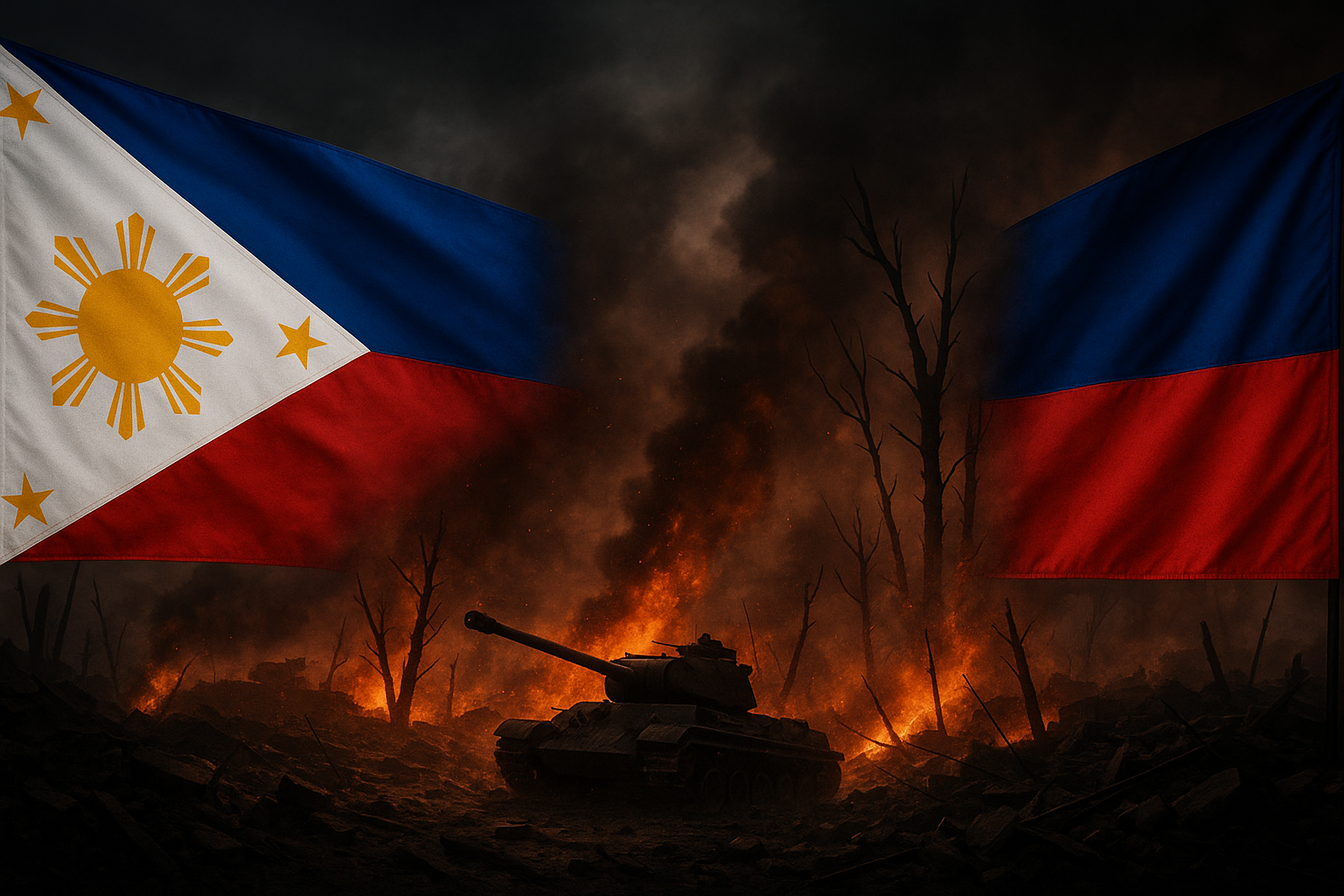


Unlike Other Countries, The Philippines Have Two Official Versions of Their Flag — And the Change Signals Something Very Serious: War
The flag of the Philippines has a detail that makes it unique in the world. Unlike most countries that adopt only one version of their official flag, the Philippines has two. And the difference between them is more than aesthetic — it carries a deep meaning.
The most common version of the Philippine flag displays three main colors. The blue, positioned at the top, represents national unity and the ideals of the people.
The red, at the bottom, symbolizes the blood, bravery, and courage of those who fought for the country’s independence. The white, in the shape of a triangle on the side of the flagpole, represents purity and peace.
-
California Teacher Converts Moving Truck into Spacious, Light-Filled Mobile Home to Overcome Zoning Restrictions and Cut Costs

-
Daughter of a Construction Worker and a Baker, Bruna Achieves Dream of Studying Medicine at Brazil’s Prestigious USP at 21

-
City Provides Disposable Cameras to Residents to Capture Downtown, Uncovering Hidden Value Beyond Appearances
-
São Paulo Expands Healthcare and Housing in Southern Region with New Health Center, 374 Apartments, and Over 2,300 Property Titles





Inside the white triangle, there is a drawing of a golden sun with sixteen rays. Eight of those rays are wider and represent the eight provinces that rebelled against Spanish rule: Batangas, Cavite, Laguna, Manila, Nueva Ecija, Pampanga, and Tarlac.
Three five-pointed stars complete the triangle, symbolizing the major geographical regions of the country: Luzon, Visayas, and Mindanao.
Version for Times of War

But there is a second version of the flag — used in times of war. In this case, the red rises to the top and the blue moves to the bottom. The change in positions indicates that the country is in conflict.
This feature places the Philippines in a unique position among the nations of the world.
Other flags also have curiosities. Paraguay’s flag, for example, is the only one with different sides. Mozambique has a flag that includes a modern rifle, and Afghanistan was the country that changed its flag the most in the 20th century. But none have two official versions as symbolic as those of the Philippines.
With information from AS.