






 Portuguese
  Spanish


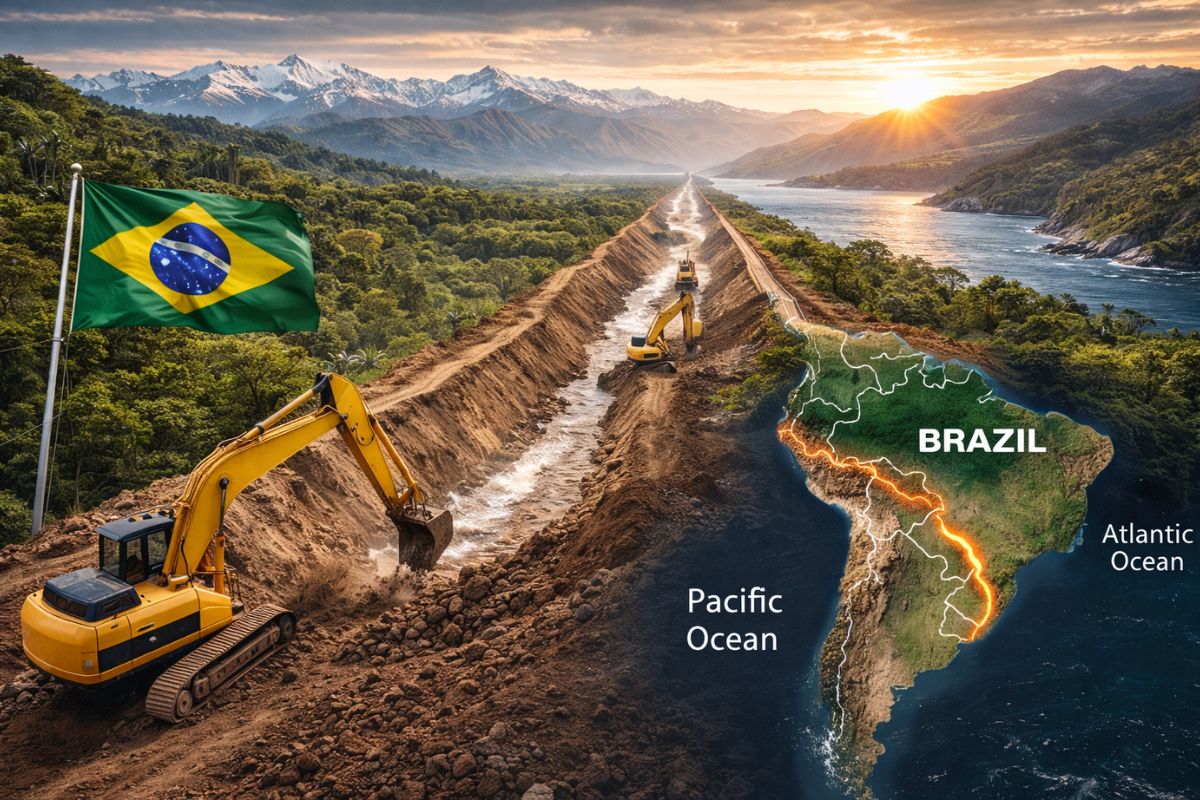


The Continental Corridor of the Bioceanic Route Advances With Works in Four Countries, International Bridge Over the Paraguay River, Highway Reengineering in the Chaco and Andean Crossing, Promising to Connect the Midwest of Brazil to the Pacific With Up to 17 Days Less and 30% Logistical Reduction for Agricultural and Mineral Freight.
The Continental Corridor of the Bioceanic Route Has Entered a Phase Where the Debate Shifts From Mere Promises to Timelines, Engineering, and Actual Operating Capacity. The Strength of the Proposal Lies in Shortening Economic Distance, Not Just Physical Distance, Between Brazil’s Productive Interior and the Pacific.
Instead of Maintaining the Historical Logic of Flowing Through the Atlantic With Longer Journeys Toward Asia, the Route Projects a Horizontal Axis of 2,400 km Crossing Brazil, Paraguay, Argentina, and Chile. The Estimated Impact Presented is Direct, With Up to 17 Days Less in Maritime Transit and a Compression of Approximately 30% in Total Logistical Costs.
The Economic Pressure That Pushes the Bioceanic Route

The Support Base for This Project is Economic and Operational. The Reported Data Shows Brazil’s GDP Above R$ 12.6 Trillion, Agribusiness Around 29% of the Economic Engine, and the Sector’s Exports Above US$ 169 Billion in a Single Year, With a Strong Emphasis on China in Absorbing Soy, Pulp, and Beef.
-
Danish Island Uses Seaweed for Durable, Centuries-Old Roofing Solution

-
U.S. Organization Builds Sixth Micro-Home Village with Comprehensive Support to Aid Homeless Veterans

-
Engineer from Brazil Develops Eco-Friendly Insulation from Palm Waste, Supporting Quilombola Communities

-
Brazil Constructs 6.5 km Tunnel to Overcome Toughest Stretch in São Francisco River Water Transfer, Delivering 20,000 Liters per Second to Semi-Arid Northeast




When Travel Time and Freight Erode Margins, Infrastructure Becomes a Competitive Advantage.
This Scenario Helps Explain Why Mato Grosso do Sul Appears as the Land Funnel of the New Route.
The Geographical Position and the Logistics Function of Redistribution Place the State at the Center of the Continental Corridor, Especially in the Seasonal Flow of Soy and Corn, Where Delays of Days Can Alter Financial Costs, Shipping Schedules, and the Rhythm of Exports.
How the Continental Corridor is Organized in Four Stages

The Operational Logic Described for the Continental Corridor is a Chain of Four Macro-Phases. The First Concentrates Collection, Storage, and Pre-Processing of Cargo in the Midwest, With Convergence Through Road Branches to BR267 and Campo Grande as the Core of Redistribution.
This Design Reduces Logistical Dispersion Before the Border and Prepares Larger Volumes for a More Continuous Crossing.
The Second Stage Crosses the Pantanal and Connects Brazil and Paraguay Via the International Bridge Over the Paraguay River. The Third Runs Along Route PY15 in the Paraguayan Chaco in Predominantly Straight Alignments.
The Fourth Ascends Through the Argentine Network Towards the Andean Passes and Descends to Antofagasta, Angamos, and Iquique, Inserting Exports Into the Maritime Network of the Pacific.
BR267 and the Change in Logistical Function in Brazil

The Brazilian Fraction is the Smallest in Territorial Extension Among the Four Countries, but Concentrates the Strategic Function of Capturing and Organizing a Large Part of the Flow From the Midwest Towards the Pacific.
The Structuring Axis is BR267, Which Has Received Deep Interventions to Support the Projected Increase in Heavy Traffic, Especially During Peaks of Agricultural Flow. The Structural Reinforcement Between Alto Caracol and Porto Murtinho Exceeds 100 km of Continuous Restoration With a Complete Redesign of the Asphalt Package.
According to the Reported Data, the Base and Subbase Layers Have Been Recalculated to Support B-Trains of Up to 74 Tons of PBTC in an Almost Uninterrupted Regime. There Was an Expansion in the Resilience Modulus of the Pavement to Reduce Plastic Deformations and Additional Thickness in the Top Coating to Withstand the Concentrated Effort of Rear Axles During Periods of Intense Heat.
BR267 Ceases to Function as a Regional Road and Starts Operating as an Export Corridor in Brazil.
The 13.1 km Access and the Geotechnical Challenge in the Pantanal
The Most Sensitive Stretch of Brazilian Engineering in the Continental Corridor Appears in the 13.1 km of New Access That Directly Connects BR267 to the Head of the International Bridge. The Route Was Designed to Prevent the High Flow Capacity of the Bridge From Creating an Immediate Bottleneck on National Soil.
With Federal Investments Reported Between R$ 472 Million and R$ 74 Million Via PAC, the Work is Described as Being in an Advanced Stage, With Land Infrastructure Over 90% Completed and Progressive Advancement of Pavement.
The Local Geotechnics Explains the Complexity. The Pantanal Soil Contains Saturated Organic Layers and Clays of Low Bearing Capacity, Requiring Large-Scale Stabilization. More Than 757,000 m³ of Soil Were Compacted and Treated, Using Bidirectional Polymer Geogrids and a Preload Method to Accelerate Settlement Before Final Paving.
In Areas Subject to Permanent Water Depth, Rock Fill, Reno Mattresses, Deep Drainage, Main Viaduct, Six Bridges, and Underground Wildlife Passages Were Incorporated to Maintain Water Flow and Reduce Environmental Barriers.
The Stayed Bridge That Materializes the Brazil-Paraguay Link
The International Bridge Over the Paraguay River is the Structural Piece That Transforms Political Integration Into Physical Connection Within the Continental Corridor. The Structure Was Designed With a Total Extension of 1,294 m and a Width of 21 m for the Deck, With Travel Lanes, Technical Shoulders, and a Segregated Bike Path.
The Staid Central Segment Adds Up to 632 m, With a Main Free Span of 350 m Between Towers Reaching 125.42 m in Height and Preserving Navigation Without Pillars in the Active Bed.
The Construction Scale Follows This Challenge. The Reported Base Registers More Than 60,000 m³ of High-Strength Concrete, 1,020 Tons of Passive Structural Steel, 300 Tons of Prestressing Steel, and 680 Tons of Stay Cables, Along With 302 Piles, 29 Pillars, and 52 Structural Blocks Completed.
The Symmetrical Successive Balance Method Allows Advancing Through Segments Without Central Shoring, and the Global Physical Progress Exceeds 84%, With Approximately 101 m Remaining for the Closure Segment of the Central Span Before Fine Tuning the Stays and Dampers.
The Paraguayan Chaco and the Engineering of Continuous Rhythm on PY15
The Crossing of the Gran Chaco is the Biggest Continuous Territorial Challenge of the Continental Corridor Because It Converts a Plain Marked by Seasonal Flooding and Extreme Drought Into a Permanent Logistics Axis.
The Completed Stretch Between Carmelo Peralta and Loma Plata, With Approximately 280 Km of Paved Road, is Presented as a Change in Regional Economic Geography By Allowing Constant Traffic and Reducing Productive Losses Related to Climate Regimes.
The Most Critical Core is on Stretch 13 of Route PY15, With Approximately 224 Km Between Mariscal Estigarribia and Pozo Hondo at the Border With Argentina, Divided Into Four Lots to Speed Up Execution and Mitigate Climate Risks.
The Technical Solution Combines Thermochemical Stabilization With Lime in High Plasticity Clay Soils and Low CBR, Soil Cement, Granular Base Cemented, and CBUQ Coating With Laser Leveling. Mobile Crushing and Asphalt Plants, Cellular Culverts, and Underground Wildlife Passages Appear as Part of the Strategy to Maintain Work Rhythm and Preserve Regional Hydrological Dynamics.
Andes, Argentina, and Chile Where the Continental Corridor Needs Regularity
As It Crosses Pozo Hondo and Enters Argentina, the Continental Corridor Abandons the Horizontal Layout of the Chaco and Enters the More Sensitive Technical Environment of the Andes Mountain Range. Altitude, Steep Gradients, and Extreme Thermal Cycles Change the Engineering and Operations Standards.
The Backbone of This Stage is the Rehabilitation of National Route 51, With an Approximate Investment of US$ 100 Million for Geometric Expansion, Correction of Critical Curves, and Smoothing of Extended Ramps.
The Described Interventions Include Controlled Cuts in Rocky Massifs, Slope Reinforcement With Ties and Deep Anchors, Anti-Slip Metal Screens, and Pavement Layers With Polymer Additives to Absorb Intense Thermal Variations.
Winter Operations Become a Structural Component, With Salt Stockpiles, Snow Clearers, Graders, and Preventive Closure Protocols Based on Satellite Weather Monitoring. The Goal is Not Only to Cross the Andes but to Sustain Operational Predictability for Perishable Exports, Minerals, and Higher-Value Cargoes.
The Geopolitical Reach of the Route and the Idea of Longotoma
The Physical Consolidation of the Bridge, the Progress in the Chaco, the Andean Rehabilitation, and the Arrival at Northern Chilean Ports Converge Into a Change Greater Than a Simple New Road.
The Continental Corridor Reorganizes the Economic Geography of the Productive Interior and Shortens the Operational Distance to the Pacific, Altering the Cost and Time Logic That has Characterized Brazilian Exports via the Atlantic for Decades.
The Mentioned Strategic Horizon Also Points to an Additional Step With the Longotoma Proposal, Conceived as an Offshore Port Complex in the Valparaíso Region With a Maritime Interface Shifting Up to 2 km Offshore.
The Idea Includes Maritime Towers, Underground Pipelines for Bulk Materials, Integration With Green Hydrogen, and Waste Reuse, With an Estimated Potential of Up to 79,000 Direct Jobs Between Implementation and Operation. Even in an Advanced Conceptual Stage, the Project Reinforces That the Bioceanic Route Connects to a Broader Reconfiguration of South American Infrastructure Focused on the Pacific.
The Continental Corridor of the Bioceanic Route Brings Together Reinforced Pavement in Brazil, Pantanal Geotechnics, Bi-national Stayed Bridge, Soil Engineering in the Chaco, and Andean Rehabilitation in a Single Equation of Time, Cost, and Predictability for Exports. If the Critical Stretches Are Completed at the Expected Pace, the Logistical Turnaround Could Have a Lasting Impact on South American Trade Focused on the Pacific.
For Those Who Produce, Transport, or Monitor Foreign Trade in Brazil, Which Stretch Seems Most Decisive for the Real Success of This Continental Corridor: The Pantanal Access of 13.1 Km, The Bridge Over the Paraguay River, The PY15 in the Chaco, or The Andean Crossing to the Pacific, and What Concrete Impact Would That Have in Your Region?


