Portuguese
  Spanish


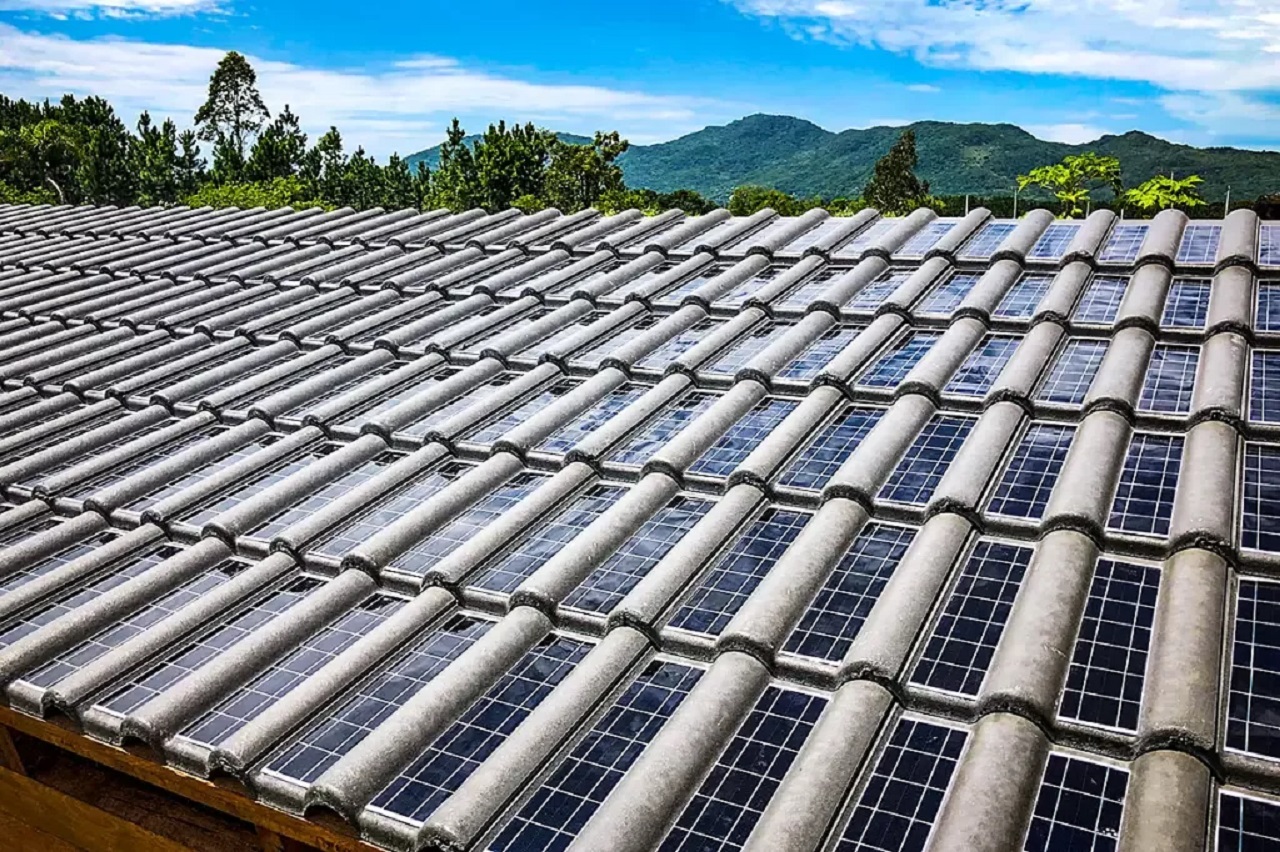


Eternit Is Bringing Its New Solar Tiles to Market. Now, the Company’s Models Can Generate an Efficiency of 20%, Enough to Reduce R$ 120 on the Electricity Bill.
Eternit, a company that produces solar tiles, announced new models to the market. The new releases, BIG-F10C, PLANA-F15, and BIG-F15, have been certified and can be marketed by the group. The models aim to complement the company’s portfolio, which has been investing in the research and development of sustainable and innovative solutions.
Modules Can Generate Savings of Up to R$ 120 on the Electricity Bill
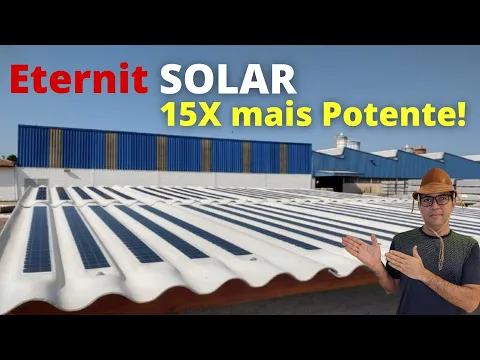

Eternit has obtained registration with Inmetro for its new models of Tégula Solar tile line, which provide greater ease of installation and higher power compared to the first solar tile, certified by the company in 2019.
The main advantage of solar tiles is their ability to adapt to existing structures, as their installation is very similar to that of common tiles. The BIG-F10C model was designed to offer greater flexibility in installation.
-
Giant Batteries Take Center Stage in Chile Auction as Company Offers 960 GWh of Solar Energy for Nighttime Use, Aiming to Stabilize Solar Power Supply

-
After a Year of Success in Switzerland, Solar Railway Attracts Italy’s Interest for Clean Energy Transformation
-
Robots Clean Solar Panels in Desert Power Plants Without Water, Preventing Energy Losses
-
Brazil’s Offshore Wind Energy Potential Worth $1 Trillion Stalled by Long-Delayed Agreement



According to Luiz Lopes, the New Business Development Manager at Eternit, with the BIG-F10, the company will serve a larger number of already developed roofs, especially where the BIG tile from the Tégula line has been installed, with a lower jump than the standard of 40.5 cm. Lopes also states that the company will serve these customers without needing to alter the battens.
The BIG-F11 tile is an advancement of the BIG-F10, as the new version consists of a product that is 20% more powerful than the first, with 11Wp. Each solar tile has the capacity to generate an average of 1.4 kWh of energy per month. In a house in São Paulo, for example, the product can generate savings of up to R$ 120 on the electricity bill.
Company Is Testing Solar Tile in Various Types of Properties
The PLANA-F15 model, on the other hand, has a power of 15Wp using a gauge of 34 cm, and only 10 pieces are needed per square meter.
The greater occupancy of the tile with photovoltaic cells makes the model even more powerful in relation to the power/area of coverage. Lopes emphasizes that the increase in power of this solar tile further improves space utilization for electricity generation, directly impacting the reduction of the number of tiles needed for each project.
Eternit is conducting performance tests of the tiles and customer feedback in various types of properties, including popular houses, warehouses, communities, commercial facilities, projects in the agricultural sector, gas stations, and airports. The market value of the tiles has not yet been disclosed.
Italian Company Develops Solar Tile Identical to Clay Tiles
Several companies around the world are focusing on the installation of solar panels, but many of the panels have a design that does not fit some residences. For those living in a historic building, for example, this product is still not allowed.
Thus, to maintain the aesthetics of these residences, the Italian company Dyaqua has developed a solar tile that closely resembles traditional clay tiles. This can be an excellent solution for installation in historic buildings and churches, for example, which typically consume a lot of energy due to their aged structure and architecture. This is the first solar energy technology that can harness renewable and clean energy without compromising the beauty of a historic building and the landscape.
Dyaqua is a small family-owned Italian company based in Vicenza, responsible for developing a unique tile, where each tile features small solar cells made of a polymeric compound that is extremely similar to building materials.