Portuguese
  Spanish


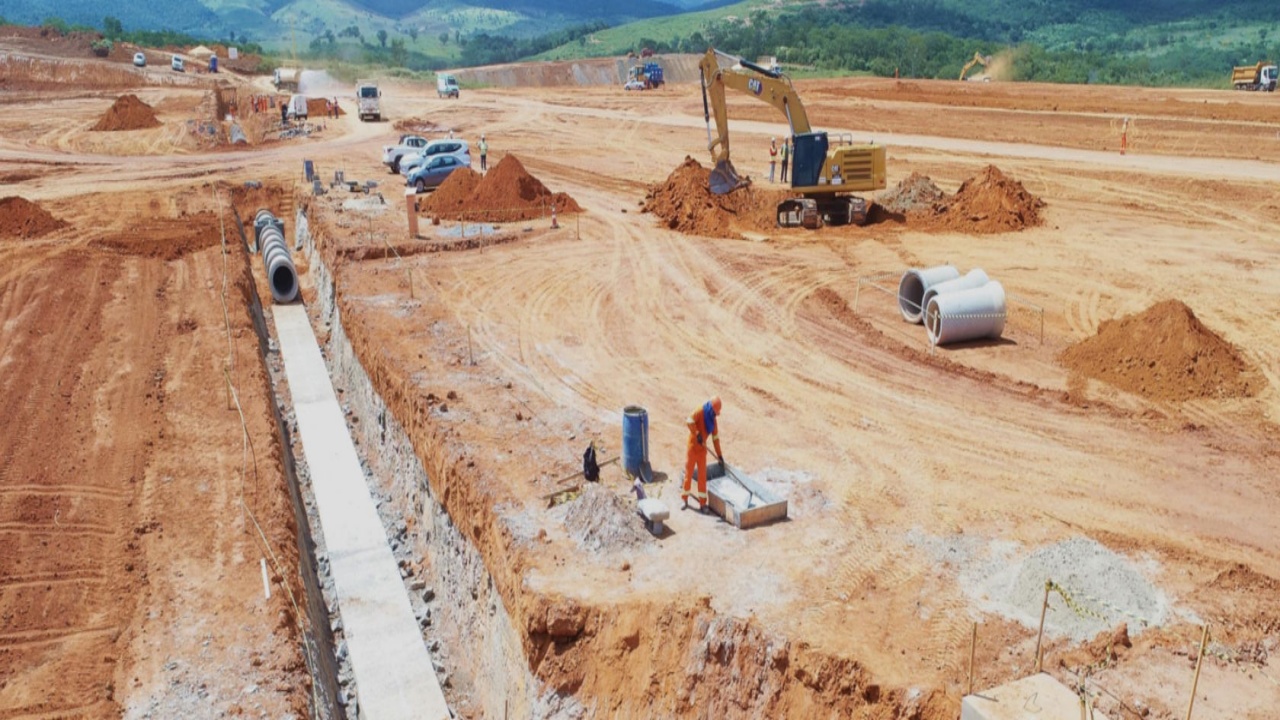

Estimation Is That By 2030, Brazilian Lithium Production Could Represent an Investment Exceeding R$15 Billion in the Minas Gerais Region!
With the aim of positioning Brazil in the global electric vehicle battery market, whose demand is expected to reach 2 million tons by 2030, the government published a decree on July 7, which reduces restrictions for the export of lithium and its derivatives.
The case for approving this new legislation is much more confusing than expected. In theory, the vote should have taken place since Deputy Danilo Forte, also known as the rapporteur of the PEC for the state of emergency and social benefits, maintained the text approved in the Senate for everything to flow smoothly, but the TCU (Federal Court of Accounts – external control agency of the Federal Government) issued a mandate for investigation against the action.
Minas Gerais Gains Lithium Production Plant for Batteries
According to the Ministry of Mines and Energy, everything indicates that with this new method, the advancement of production capacity and components and batteries will increase significantly. This is the goal, to attract investment for research and mineral production. According to research, the estimate is that by 2030, Brazilian lithium production could represent an investment exceeding R$15 billion in the Jequitinhonha Valley region – Minas Gerais. This does not include the R$100 million annually, related to royalties through the Financial Compensation for Mineral Exploration (CFEM)
-
Abandoned Factory in Rio’s North Zone Becomes Urban Hazard with Standing Water and Debris

-
The U.S. Navy Conducts Submarine Tests in Idaho Lake to Detect Underwater Noises Hidden by the Ocean

-
Mexico’s Giant Crystal Cave: A Deadly 58°C Underground Palace with 11-Meter Crystals Formed Over Nearly a Million Years
-
British Factory Transitions from Mechanical Parts to Producing 420,000 Electric Power Units Annually, Supplying 70% of Ford’s Electric Cars Sold in Europe



The Jequitinhonha Valley region mentioned above already has some projects like the construction of a concentrated lithium production plant for batteries, executed by Canadian mining company Sigma Lithium, with delivery expected in the fourth quarter of the year. Initially, production will be 270 thousand tons/year, but projects indicate that starting in 2024, production will double to 531 thousand tons/year.
Global Lithium Demand Expected to Reach 2 Million Tons by 2030
Lithium, a mineral, has various uses, among which, the main focus is on the manufacture of vehicle batteries where the component is used as a traction battery, meaning it stores electricity that will be used.
But for this to actually happen, an export authorization for the material has already been granted in Decree 11.120/2022:
Art. 1º “The operations of foreign trade of lithium minerals and ores, of organic and inorganic chemical products, including their compositions, manufactured based on lithium, lithium metal, and lithium alloys and their derivatives, are permitted.”
S&P Global estimates that global lithium demand is expected to reach 2 million tons by 2030.