






 Portuguese
  Spanish
  6 min of reading
  0 comments


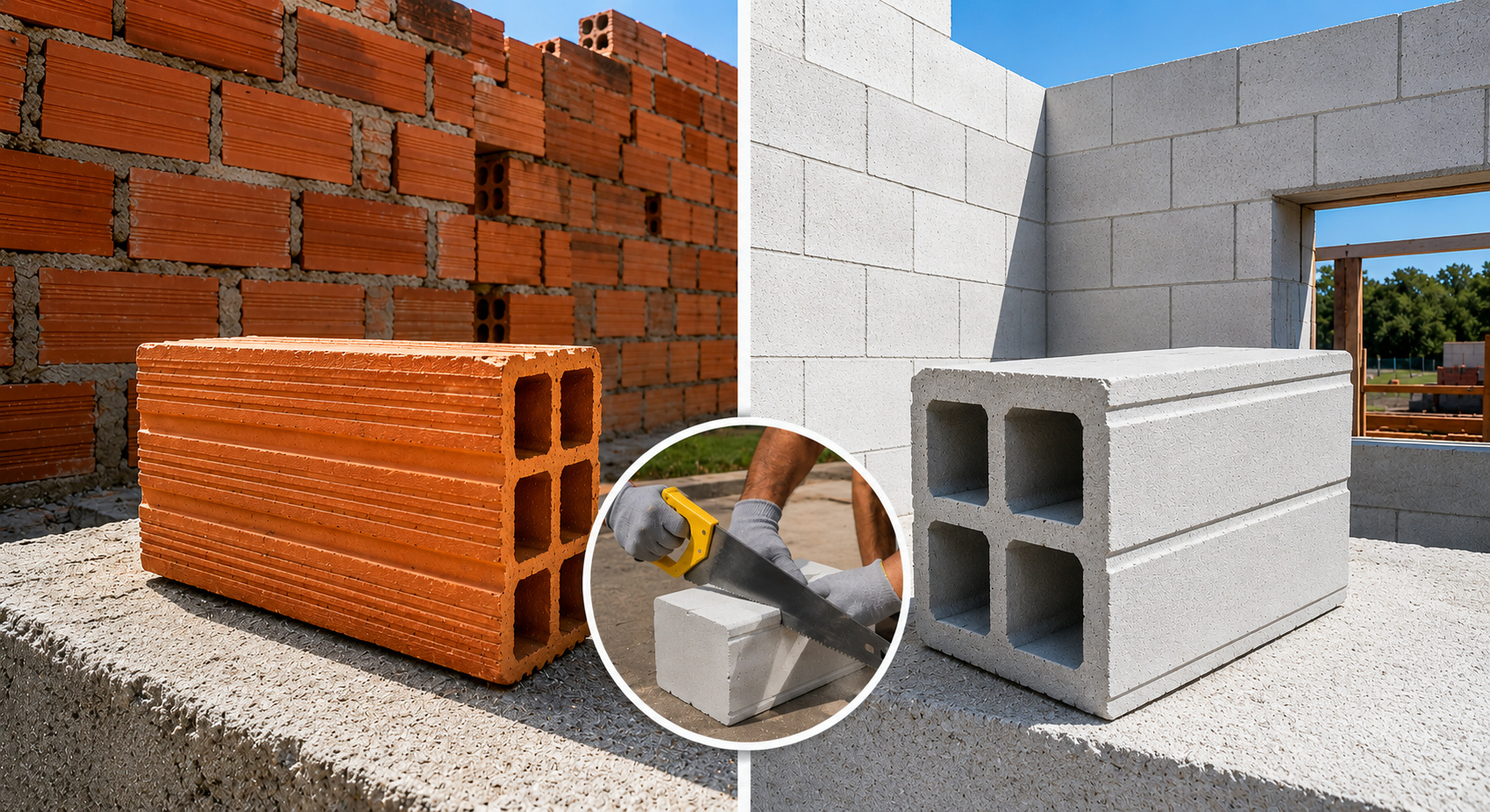
Lightweight cellular concrete block reduces construction weight, improves thermal comfort, and can decrease waste on site.
For decades, the Bahian brick has established itself as one of the most used materials in Brazilian residential constructions due to its affordable cost and wide availability in the market. In recent years, however, autoclaved cellular concrete, known as CCA block, has begun to gain ground in projects aiming to reduce masonry weight, improve thermal comfort, and decrease waste on site, an application provided for in technical standards such as ABNT NBR 13438:2021, which deals with the requirements for autoclaved cellular concrete blocks.
The material draws attention because it is not just a variation of the common block. As explained by ArchDaily Brazil, on July 3, 2019, autoclaved cellular concrete is a prefabricated material produced with binders, fine aggregates, water, and an expanding agent, forming a porous internal structure. These micro air bubbles reduce the weight of the pieces and help with thermal and acoustic insulation, two points that have become more significant in residential constructions exposed to intense heat and the search for efficiency.
Lightweight cellular concrete block has millions of micro air bubbles within the structure
The secret of the material lies precisely in its internal composition. During manufacturing, the concrete receives components that cause the formation of microbubbles distributed throughout the piece. This creates a structure full of small air spaces inside the block.
-
Tired of seeing families sleeping on the street, São Paulo delivered 18 m² furnished microhouses and took 888 people off the streets: Vila Reencontro became the model social housing for the homeless population.

-
The hydroelectric plants on the Madeira River, like Jirau, came for the energy, but now the drought wave has reduced artisanal fishing by 39% and emptied the tables of the riverside communities in the Amazon.
-
The Zuluk road has 32 zigzag curves at 3,400 meters in the Himalayas, originated as the Silk Route in Sikkim and became a military border where foreigners cannot pass.
-
Rio de Janeiro receives more than R$ 5.5 billion in sanitation, includes almost 1 million residents from communities in the formal customer base, and brings water, sewage, and proof of residence to regions historically neglected by urban infrastructure.


These microchambers reduce the total weight of the piece and alter the thermal and acoustic properties of the masonry. One of the main differences of cellular concrete appears right away in transport and handling.
The lightweight blocks have significantly lower density than conventional materials used in masonry. This reduces physical effort during construction and decreases the total load applied on beams, columns, and foundations.
In single-story houses and small duplexes, this weight reduction can lead to significant changes in structural sizing.
Houses made with lightweight blocks may heat up less during the day
The micro air bubbles present within the material also help in thermal insulation. The trapped air reduces rapid heat transfer through the walls. In practice, this can help indoor environments remain less hot compared to conventional masonry exposed to intense sunlight.
This factor has started to draw attention especially in Brazilian regions with high temperatures for much of the year. Besides thermal insulation, the system also offers improved acoustics.
The internal microchambers help to dampen some of the sound vibrations that pass through the walls. Although performance varies according to the thickness and design of the construction, the material usually presents superior acoustic insulation compared to some traditional lightweight masonry. This contributes to quieter indoor environments.
Material is easy to saw, adjust, and cut during construction
Another factor that made the cellular block gain space was the ease of handling. The material can be cut with relatively simple tools, allowing quick adjustments on-site without the need for heavy equipment.
Passages for hydraulic piping, electrical conduits, and small adaptations usually generate less breakage compared to more rigid conventional blocks. In traditional constructions, material losses often represent an important part of the final cost.

Brick breakage, poorly executed cuts, and waste during adaptations are common problems in conventional construction sites.
Since the cellular block is more uniform and easier to work with, some of these losses can be reduced depending on the quality of execution.
Reduced weight can relieve load on the house’s beams and foundations
The total weight of the masonry directly influences the loads transmitted to the construction structure. When walls are lighter, part of the stress on foundations, beams, and pillars also decreases.
This does not eliminate the need for structural calculation, but it can influence sizing in certain types of residential projects. The lightweight blocks usually have larger dimensions than many conventional ceramic bricks.
This means that each piece covers a larger area of the wall, reducing the number of settlements needed during execution. In practice, this can speed up part of the masonry compared to smaller and more fragmented systems.
Thin mortar replaces thick layers used in conventional masonry
Another important difference appears in the settlement. In many cellular concrete systems, a thinner adhesive mortar is used instead of the traditional thick layers of conventional mortar.
This reduces material consumption and helps maintain a more uniform alignment of the walls. Despite the advantages, the cellular block does not function as a universal magic solution.
Each type of construction requires an adequate technical evaluation involving mechanical resistance, structure, sealing, and masonry behavior. The system’s performance depends directly on the quality of the project, execution, and correct sizing of the construction.
Material began to gain space in sustainable works and efficient constructions
The search for more energy-efficient constructions helped boost the use of cellular concrete. As the material improves thermal insulation and reduces part of the structural weight, it started to appear frequently in projects aimed at energy efficiency and material rationalization.
Additionally, some manufacturers highlight the reduction of waste and lower consumption of raw materials per square meter built. For a long time, many Brazilian constructions prioritized only the resistance and immediate cost of materials.

Today, factors such as thermal comfort, acoustic performance, and energy efficiency have gained more importance in residential projects.
In this scenario, lightweight materials have started to attract attention precisely because they alter the internal behavior of the house throughout the day.
Lightweight block also facilitates the passage of hydraulic and electrical installations
The ease of cutting the material simplifies part of the internal installations of the residence. Creating space for conduits, pipes, and electrical boxes usually requires less effort and generates less debris compared to more rigid materials.
This helps speed up stages of the work and reduces part of the rework within the construction site. The growth of cellular concrete is part of a larger trend within modern engineering.
In various countries, construction systems have started to seek lighter materials capable of reducing structural load without compromising adequate performance for each application.
This logic appears not only in walls but also in slabs, facades, and prefabricated elements.
Cellular block shows how small changes in material can completely alter the behavior of the house
The most interesting aspect may be precisely the indirect impact caused by changing the wall material.
By altering weight, thermal insulation, acoustics, and ease of execution, the cellular block changes various aspects of the construction’s functioning at the same time. This transforms a simple masonry change into an important structural shift in the overall performance of the residence.
Historically, Brazilian construction has become accustomed to heavy materials, a lot of debris, and high mortar consumption.
The advancement of lightweight blocks shows an attempt to reduce part of this logic through larger pieces, less heavy structures, and more streamlined systems.
In the end, the cellular block represents an important change within modern civil construction: transforming traditionally heavy walls into lighter, more efficient structures that are potentially more comfortable for those living inside the house.







Be the first to react!