





 Portuguese
  English
  Spanish
  4 min of reading
  11 comments


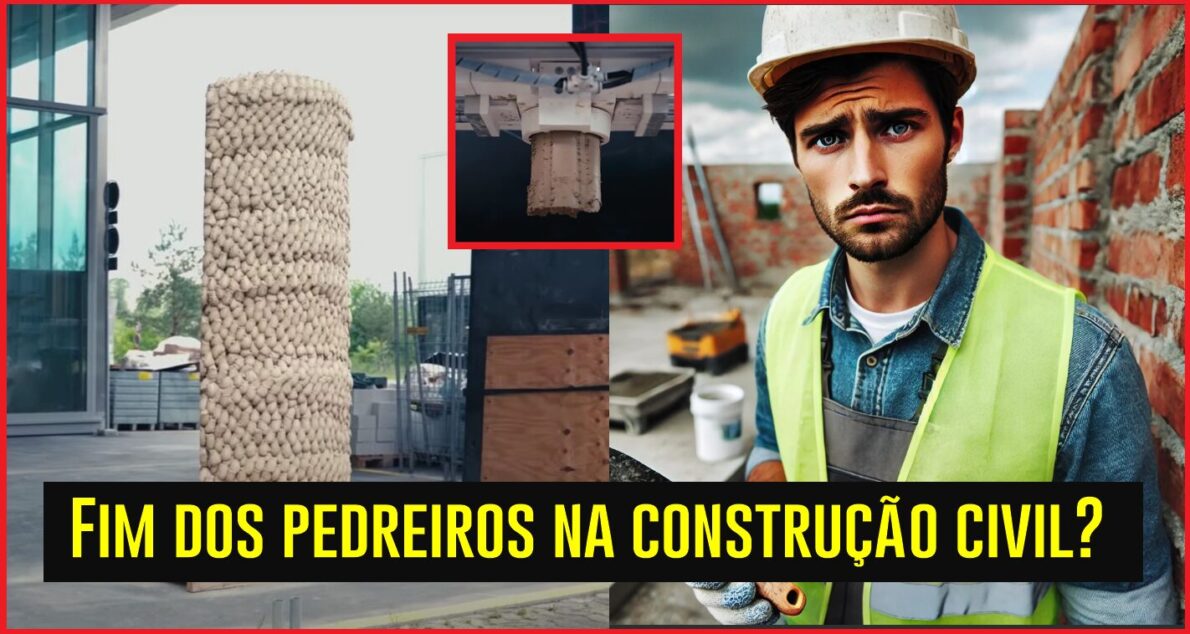

Swiss Researchers Create An Innovative 3D Printing Technique And Clay-Based Material To Build Faster And More Sustainable Structures, Transforming The Construction Industry. Will It Be The End Of Masons?
A team of researchers from ETH Zurich has developed a new construction method that promises to revolutionize the construction industry with sustainability and innovation, acting as a kind of electric mason.
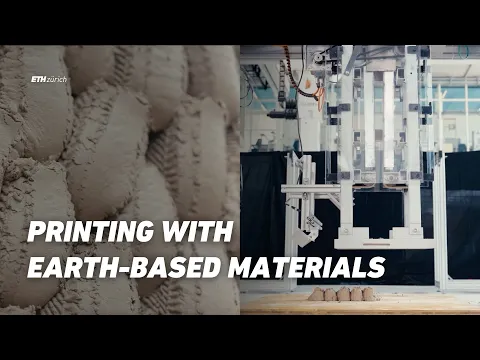
Inspired by children’s play with clay and mud, the process dubbed “impact printing” utilizes construction robots to shoot earth-based materials without the need for cement, making construction more ecological and competitive.
This advancement was made possible due to the development of innovative technology that deposits material at an impressive speed of up to 10 meters per second. No mason can do that.
-
While the world opens dry channels and routes between two oceans, Brazil is still discussing the railways it promised decades ago.

-
It’s not just China: a giant bridge was built next to the highway and moved into place during a 12-hour operation.

-
Two Swiss students have created a 3D-printed terracotta brick that cools bus stops and squares by up to 9 degrees using only water, clay, and solar energy, without using electricity from the grid, in a project that repurposes an ancient technique against the extreme heat of cities.

-
China wants to build a city on the Moon using robots that transform lunar soil into bricks and 3D-printed habitats in the shape of an eggshell: the plan envisions Chinese astronauts living on the surface by the end of the next decade.


The construction technique allows the material, when shot, to bond with minimal additives, eliminating the need for pauses for solidification.
Unlike traditional concrete 3D printing, where layers are deposited slowly, the impact printing method works with speed and efficiency far superior.
The Search For More Sustainable Construction
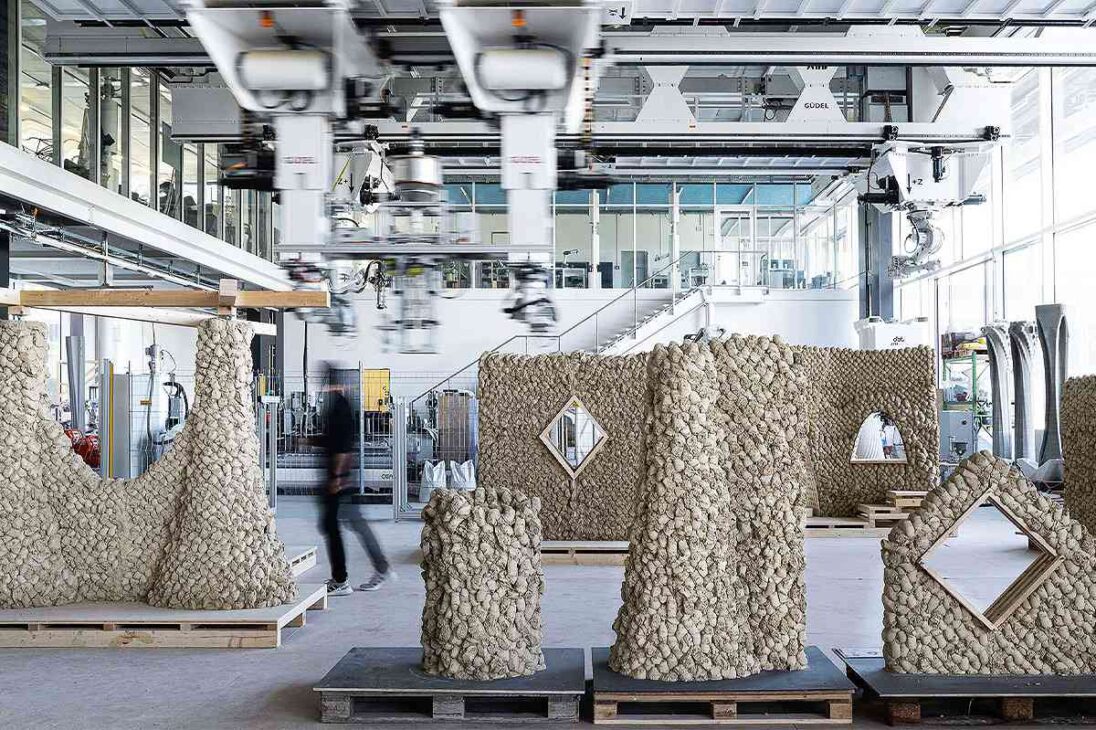
The growing need for more sustainable solutions in the construction sector has been one of the main drivers for the development of the new technique.
The impact printing aims to make sustainable construction materials more competitive in terms of cost, which could encourage their large-scale adoption. ETH Zurich researchers believe that this automated and efficient approach could be a viable response to reduce the carbon footprint in the construction industry.
Compared to traditional 3D printing, which relies on chemical additives for the transition from liquid to solid state, the new process offers greater stability to the deposited material.
With less dependence on additives, the resulting structures are more robust and have a significantly lower environmental impact.
Customized Robotics For Construction
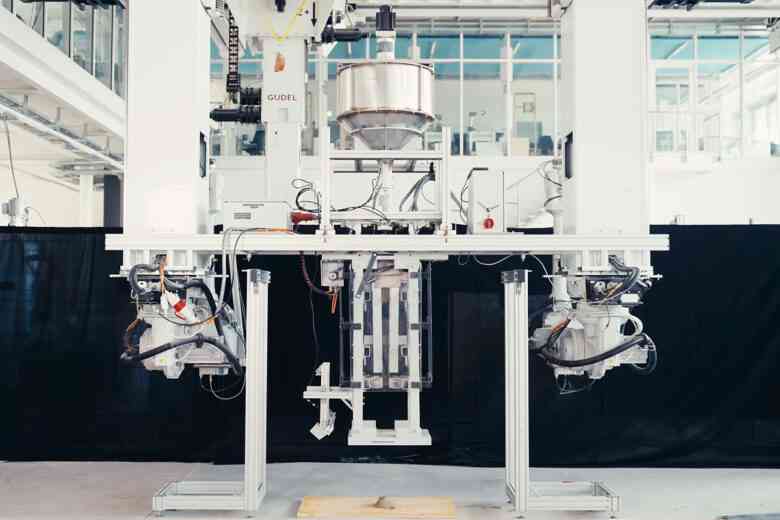
The ETH Zurich team developed a customized printing tool that can be integrated into different robotic platforms. This feature provides flexibility for construction both in traditional locations and on more complex terrains. At the Robotic Fabrication Laboratory, the tool was installed on a high-payload gantry system, allowing the construction of structures nearly three meters high.
One of the most notable innovations was the integration of the hardware with a legged autonomous excavator developed by the ETH Zurich Robotic Systems Lab. This opens up the possibility of printing in unstructured locations with uneven terrain, which can be useful for building walls, sound barriers, and other infrastructure in challenging environments.
Although the produced structures have a stained texture due to the impact process, researchers highlight that robotic finishes with ecological plasters can provide a smooth and high-quality finish.
The Use Of Low-Carbon Materials
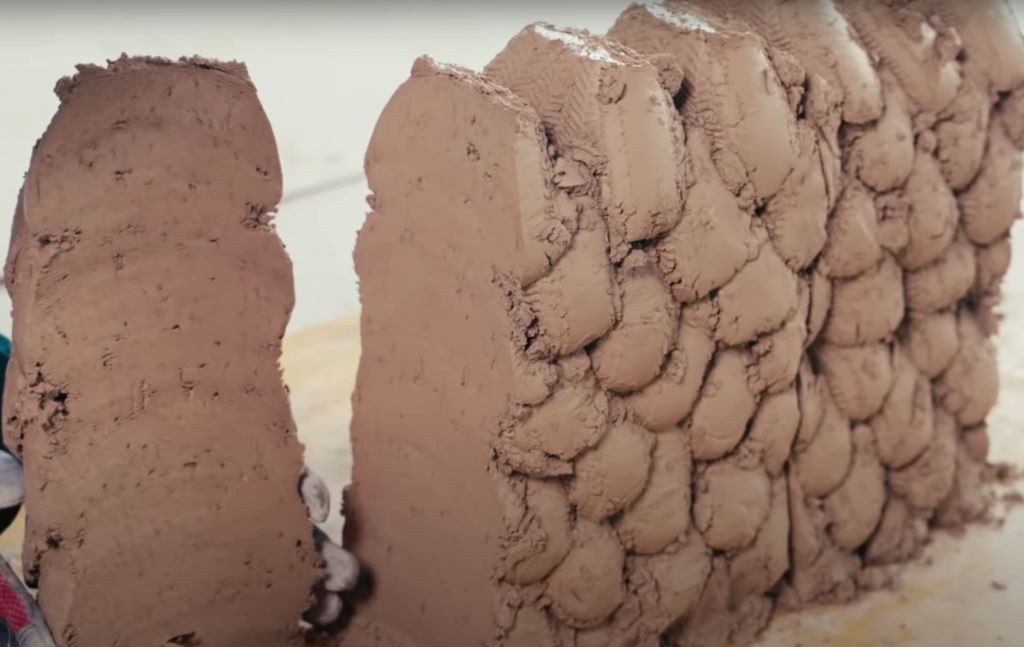
Another relevant factor is that the process is specifically designed to use low CO2 incorporated materials, such as locally excavated earth. The ETH Zurich team developed a specific mixture that includes local secondary materials and a minimal amount of mineral additives, ensuring strength and stability to the constructed structures.
According to Lauren Vasey, a postdoctoral researcher and the project’s lead author, the mixture was designed to provide “stickiness and interlocking” between parts, utilizing a combination of aggregates that do not hinder the mixing process. In the future, the team hopes to incorporate larger aggregates, provided that the effects of erosion on the extrusion hardware can be mitigated.
Limitations And Future Possibilities
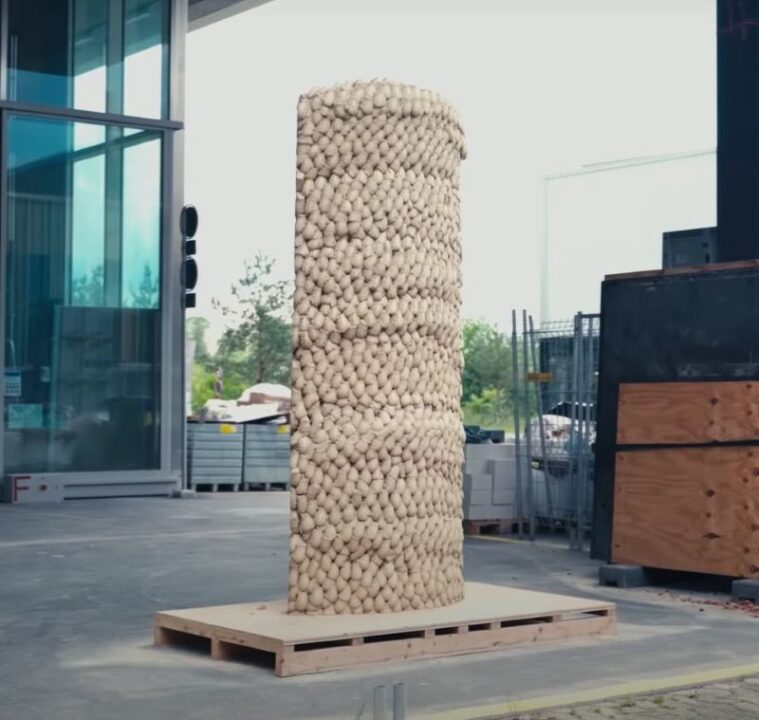
Despite the many advantages, the method still has some limitations. The overall strength of the printed material with the currently used mineral additive is 1.9 MPa, slightly lower than unreinforced compacted earth, which typically reaches 2.3 MPa. However, Vasey explains that this strength can be increased with the application of an ecological gypsum coating, raising the compressive strength to about 5 MPa, providing greater durability and load-bearing capacity.
Additionally, the team has already managed to print structures up to 3 meters high with a thickness of 0.22 meters. With the autonomous robotic platform constantly improving, it is possible that in the future even larger and more complex structures will be built in both urban areas and more challenging terrains.
The impact printing system is also capable of handling different shapes, such as columns supported by temporary gravel fillings, which are later removed. This construction method is particularly suitable for structures that require high compression, although the material has a limited capacity to withstand tension.

Commercialization Of The Technology
With the promising results of the project, Vasey and her team are planning to launch a spin-off from ETH Zurich to commercialize the technology. This move could democratize access to more sustainable and efficient constructions, with the potential to transform the construction industry worldwide.
The article on the research, titled “Circular Robotic Construction,” was published in “A Circular Built Environment For The Digital Age,” and offers a detailed view on the possibilities and innovations provided by impact printing. With this new technology, ETH Zurich paves the way for a more sustainable future in construction.







Temos que achar uma nova tecnologia para construção, modelo atual vem décadas sem inovação e cada dia mais caro
Me parece que foi inventado pelos alunos da pré-escola, bem interessante!!
Casinha das inhacinza e melhor fabricada
Excelente.