Portuguese
  Spanish


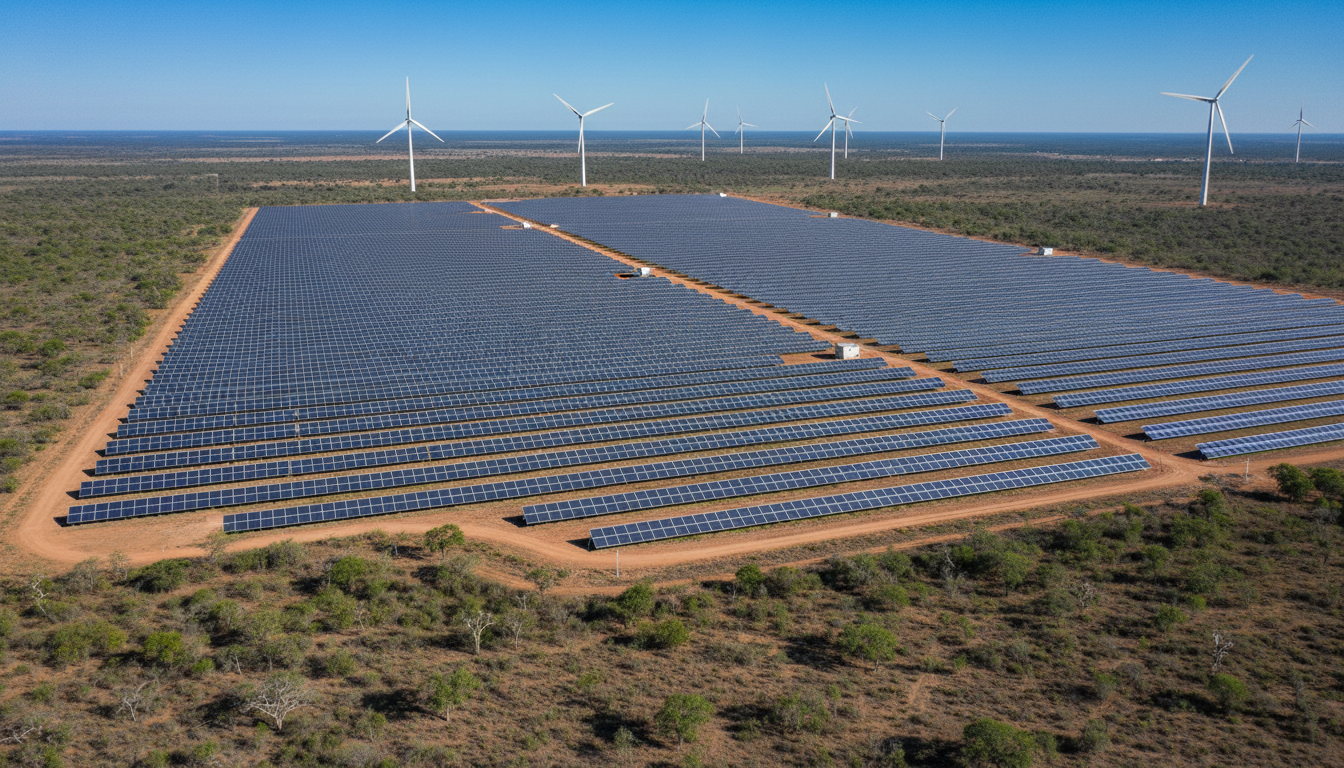

With 84.63% of its electricity matrix coming from renewable sources and the addition of 9,142 MW planned for 2026, Brazil consolidates its position among global leaders in clean energy — but fossil fuel thermal power plants still account for 30% of new additions, reminding us that the transition is not over
The number is impressive in its absolute scale: US$ 629 billion accumulated in over 1,900 renewable energy projects in Brazil.
This volume includes large-scale solar plants in the Cerrado and Northeast regions, wind farms that have transformed landscapes from Rio Grande do Norte to southern Bahia, battery storage systems that are beginning to appear, and all the transmission infrastructure that connects these distant sources to consumption centers.
It’s an investment that positions the country alongside China, the United States, and India in the global race for clean energy.
-
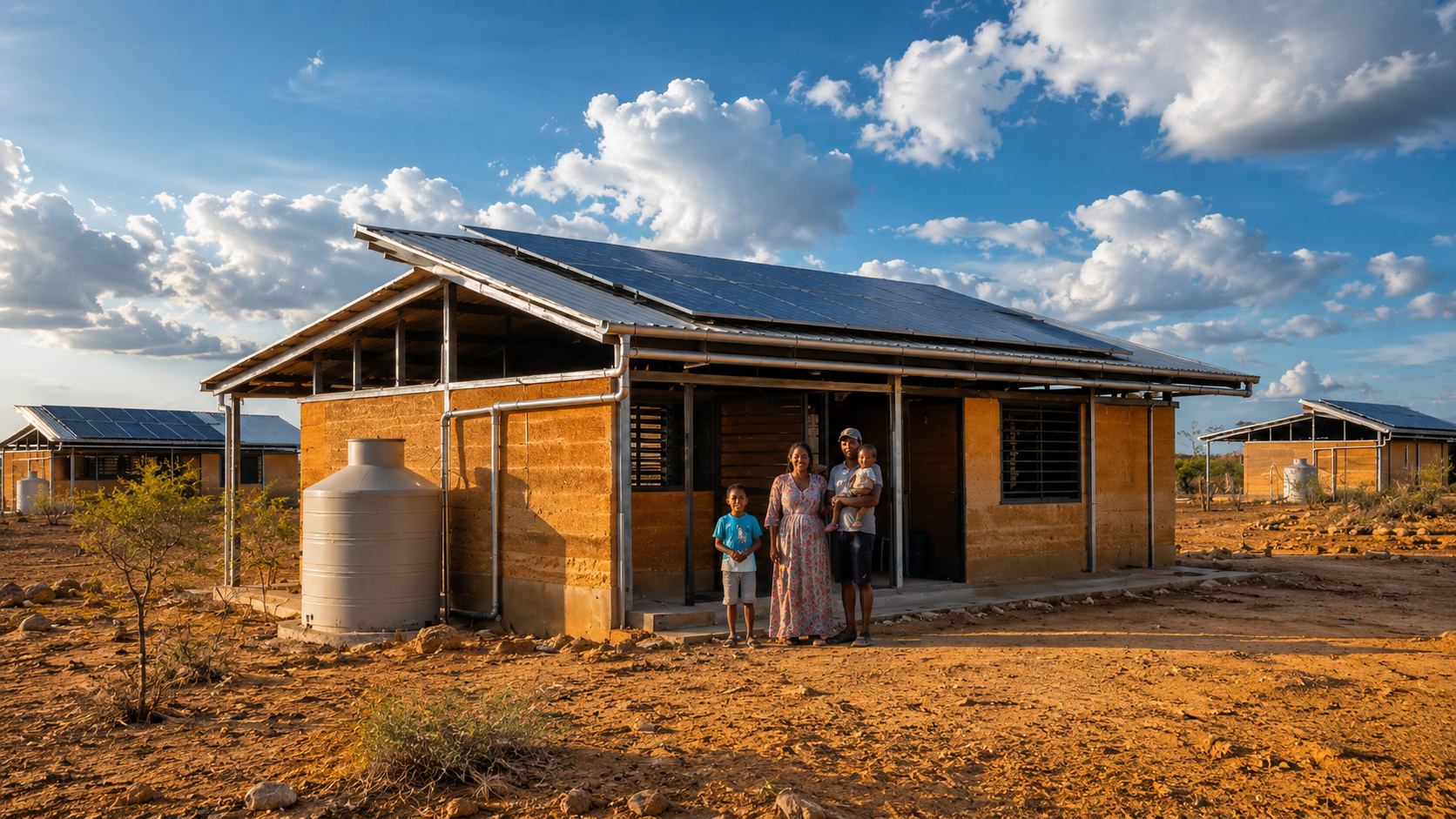
In Colombia’s desert, 30 families receive 80 m² homes with solar panels, waterless toilets, and rainwater collection systems amid water and energy shortages.

-
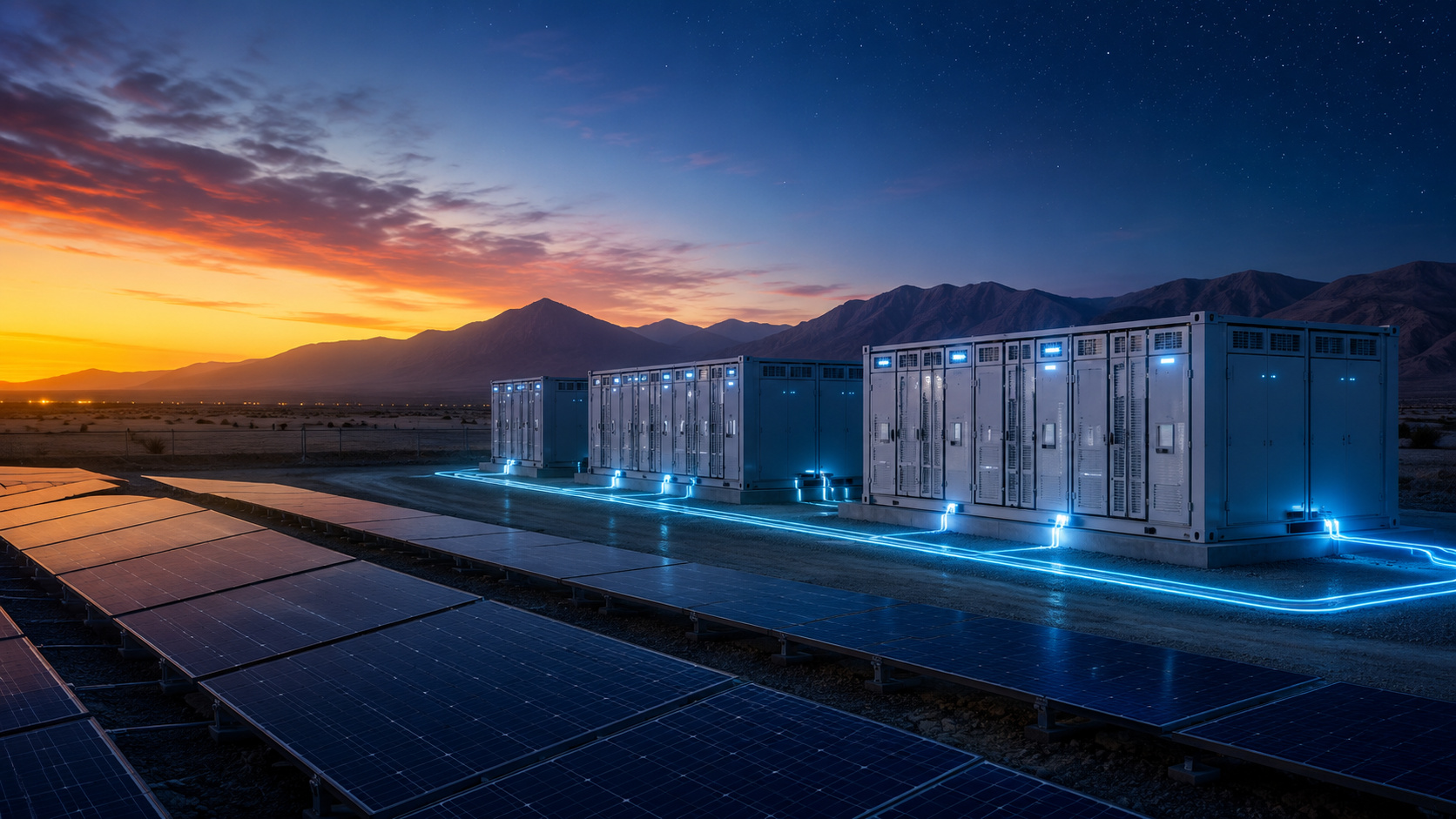
Engie Secures 10-Year Use of 625 MWh in Batteries to Store Excess Solar and Wind Energy in Spain by 2028
-
Giant Batteries Take Center Stage in Chile Auction as Company Offers 960 GWh of Solar Energy for Nighttime Use, Aiming to Stabilize Solar Power Supply
-
After a Year of Success in Switzerland, Solar Railway Attracts Italy’s Interest for Clean Energy Transformation

However, the numbers hide important nuances that deserve detailed analysis.

215.9 GW installed — and growing at 9 GW per year
As of January 1, 2026, Brazil’s total installed capacity reached 215,936 MW (215.9 GW), according to ANEEL’s SIGA.
Of this total, 84.63% comes from renewable sources — hydroelectric, solar, wind, and biomass combined.
For comparison, the global average for renewables in the electricity matrix is around 40%.
Brazil is more than double above this world average.
It has one of the cleanest electricity matrices on the planet among large economies.
ANEEL projects the addition of 9,142 MW in 2026, of which 4,560 MW will be from solar photovoltaic energy — a 61.7% growth over the previous year, confirming the solar shift in the Brazilian matrix.
Solar photovoltaic — the silent protagonist
Solar energy has surpassed historical milestones in the last two years.
Driven by both large centralized plants and distributed generation on rooftops of residences, businesses, and industries, solar is growing at rates exceeding 60% per year in new installations.
In the first quarter of 2026, 25 out of 27 plants inaugurated in Brazil were solar.
The states receiving the most are Ceará, Goiás, Bahia, and Pernambuco — regions with high solar incidence that have transformed into true energy hubs.
Therefore, Brazil is experiencing a photovoltaic revolution that is simultaneously silent, decentralized, and irreversible.
Offshore wind — the potential of 697 GW on the horizon
Brazil’s offshore wind potential is estimated at 697 GW — more than 3 times the country’s entire current installed capacity combined.
The first auction for offshore areas is scheduled for 2027, following regulation in the first half of 2026 based on Law No. 15,097/2025.
If explored over the coming decades, this resource could transform the Northeast into a global hub for offshore wind energy.
The constant winds off the Brazilian northeastern coast are a natural advantage that few competitors worldwide can replicate.

Batteries — the missing piece in the energy puzzle
One of the biggest bottlenecks for renewables is intermittency: the sun doesn’t shine at night, and the wind doesn’t always blow when electricity demand is highest.
Battery energy storage systems (BESS) are being installed alongside power plants to solve this fundamental problem.
In 2026, Brazil held the first exclusive battery auction in its history, with an impressive 18 GW of registered projects.
The next frontier of Brazil’s energy transition is no longer generating clean energy — it is storing it efficiently to use when and where needed.
Countries like the United States are already adding over 24 GW of batteries per year, demonstrating that the path is viable and scalable.
The elephant in the room: 2,770 MW of fossil fuels in 2026
Despite all the advances, the 2026 expansion includes 2,770 MW in fossil fuel thermal power plants.
This represents almost 30% of the projected new capacity.
The reason is technical: the electrical system needs dispatchable plants — which can be quickly turned on when reservoir levels are low or wind is scarce in the parks.
Without sufficient large-scale battery storage yet, natural gas thermal power plants are the safety valve of the Brazilian electrical system.
However, this dependence partially contradicts the clean transition narrative and shows that there is still a long way to go.
How Brazil compares to the world
The 9.1 GW of new additions in 2026 are impressive in Latin America, but modest in a global context:
- China: over 100 GW/year — more than 10 times Brazil
- United States: 86 GW projected for 2026, 99% renewable
- India: accelerated expansion in solar and nuclear
However, Brazil has a structural advantage that none of these countries can easily replicate: 84.63% of its matrix is already renewable, while most struggle to reach 40%.
The 1,900 mapped projects range from small community solar plants in the semi-arid Northeast to mega wind farms on the coast and storage systems in São Paulo, showing that the transition is geographically diverse and economically decentralized.

Caveats
The value of US$ 629 billion is a historical accumulated over several decades, not a single year’s investment.
A significant portion comes from hydroelectric plants built in the last century, before the era of modern renewables like solar and wind.
Onshore wind decelerated from 1,825 MW in 2025 to 1,430 MW projected for 2026, and offshore still depends on regulation to get off the ground.
The historical series shows considerable volatility: 2024 saw 10.9 GW of expansion, 2025 dropped to 7.4 GW.
Still, with almost 85% renewables, accelerated solar expansion, the first battery auction, and 697 GW of offshore wind potential on the horizon, Brazil remains among the world leaders in the race for clean energy — with a foundation many envy and a future that depends on agile regulation and continuous investment to materialize.