Portuguese
  Spanish


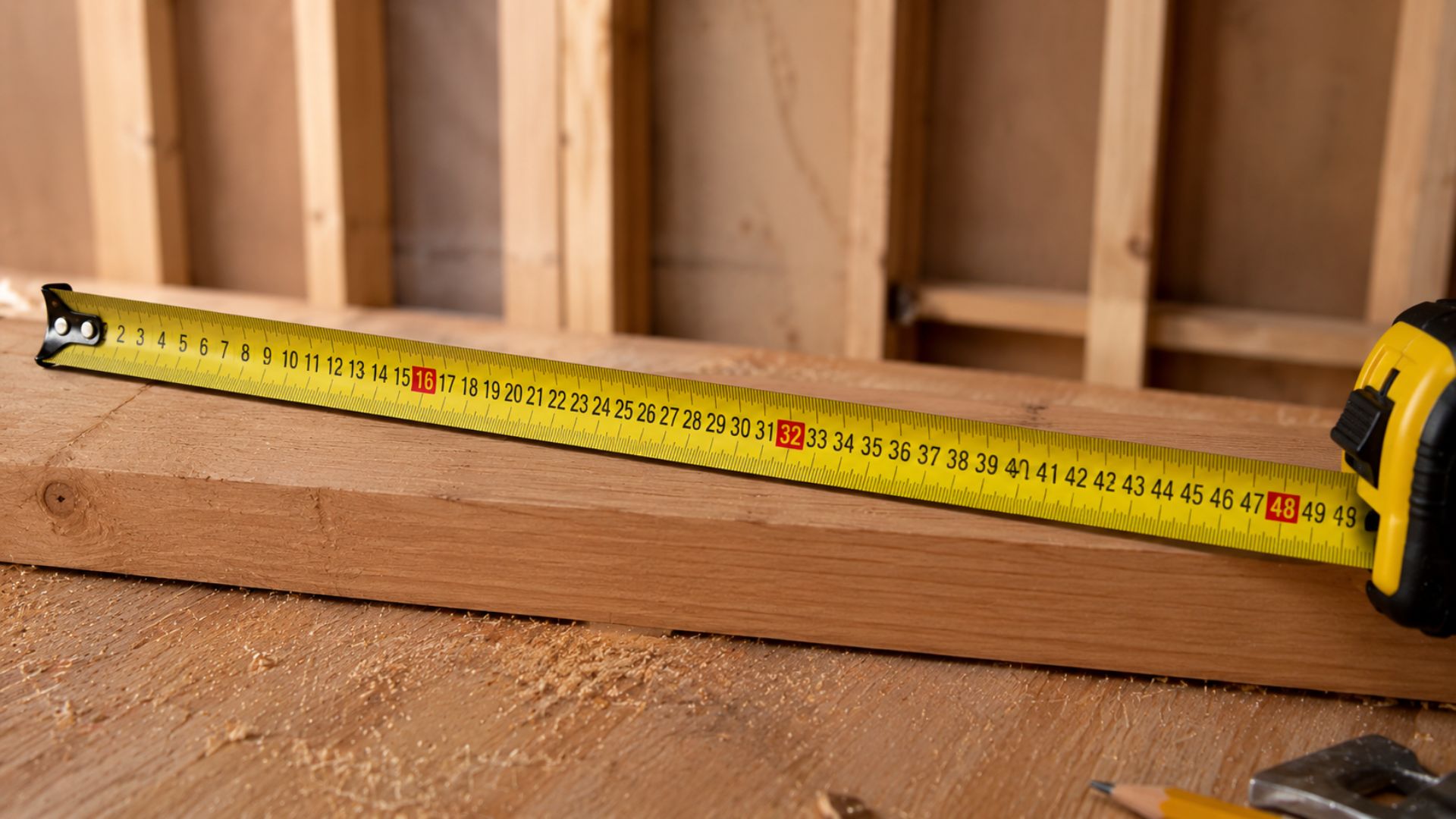

That little red number that no one pays attention to carries an entire construction logic behind it. It is not a decoration or a factory defect. It is a shortcut designed for those who build walls, and understanding the tape measure from this angle changes the way you look at the tool in the drawer.
Take the tape measure that is in your house and stretch about two meters of the blade. At some point, around 40 centimeters, it is likely that a number highlighted in red, different from the others, will appear. Most people live with this mark all their lives without suspecting the reason. The explanation was detailed by Catraca Livre in a publication this Friday, June 13, 2026, and it has everything to do with the way of building walls in countries that adopt the imperial system.
The starting point is simple and practical. Those red numbers mark the 16-inch interval, a distance equivalent to about 40.6 centimeters that organizes a large part of wall structures around the world. Instead of redoing the calculation with each measurement, the professional follows the highlighted marks along the tape and locates the fixing points in the blink of an eye. Those who work with wood, drywall, or panels gain speed and make fewer mistakes.
What the red numbers actually mean
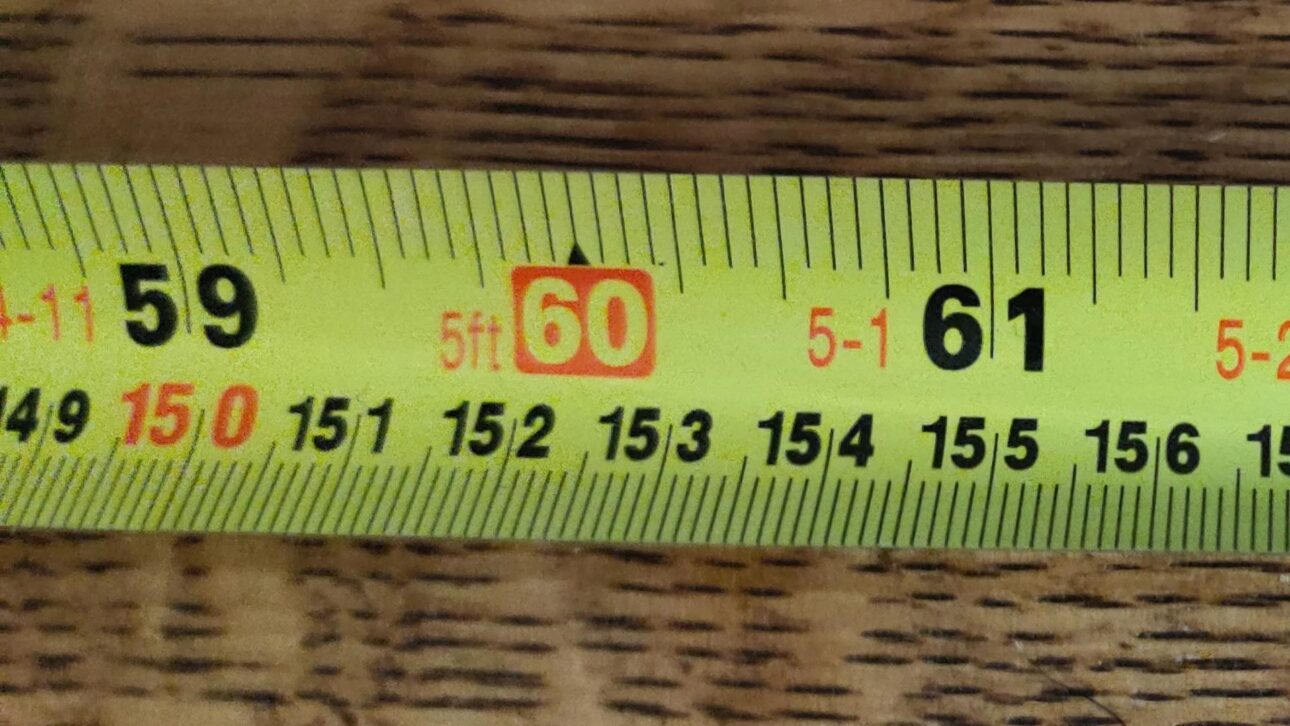
Vertical studs, which are the pieces that support a wall, are usually installed every 16 inches in many construction systems.
-
Denmark Constructs World’s Largest Immersed Tunnel to Connect with Germany, Sinking 217-Meter Concrete Sections in the Baltic Sea

-
Low-Cost Concrete Panel House Goes Viral: Investor Reveals Prefabricated Kit Structure for Around $1,500, Assembled in 30 Days, with Plans for Rental and Resale Income

-
Polymeric Mortar Revolutionizes Brazilian Construction with Efficient, Clean Application and Uniform Finish

-
Biologist Builds 160m² Dream Home in Brazil for $32,000 Using Eco-Friendly Bricks, Achieving 67% Savings Through Smart Planning and Simple Solutions


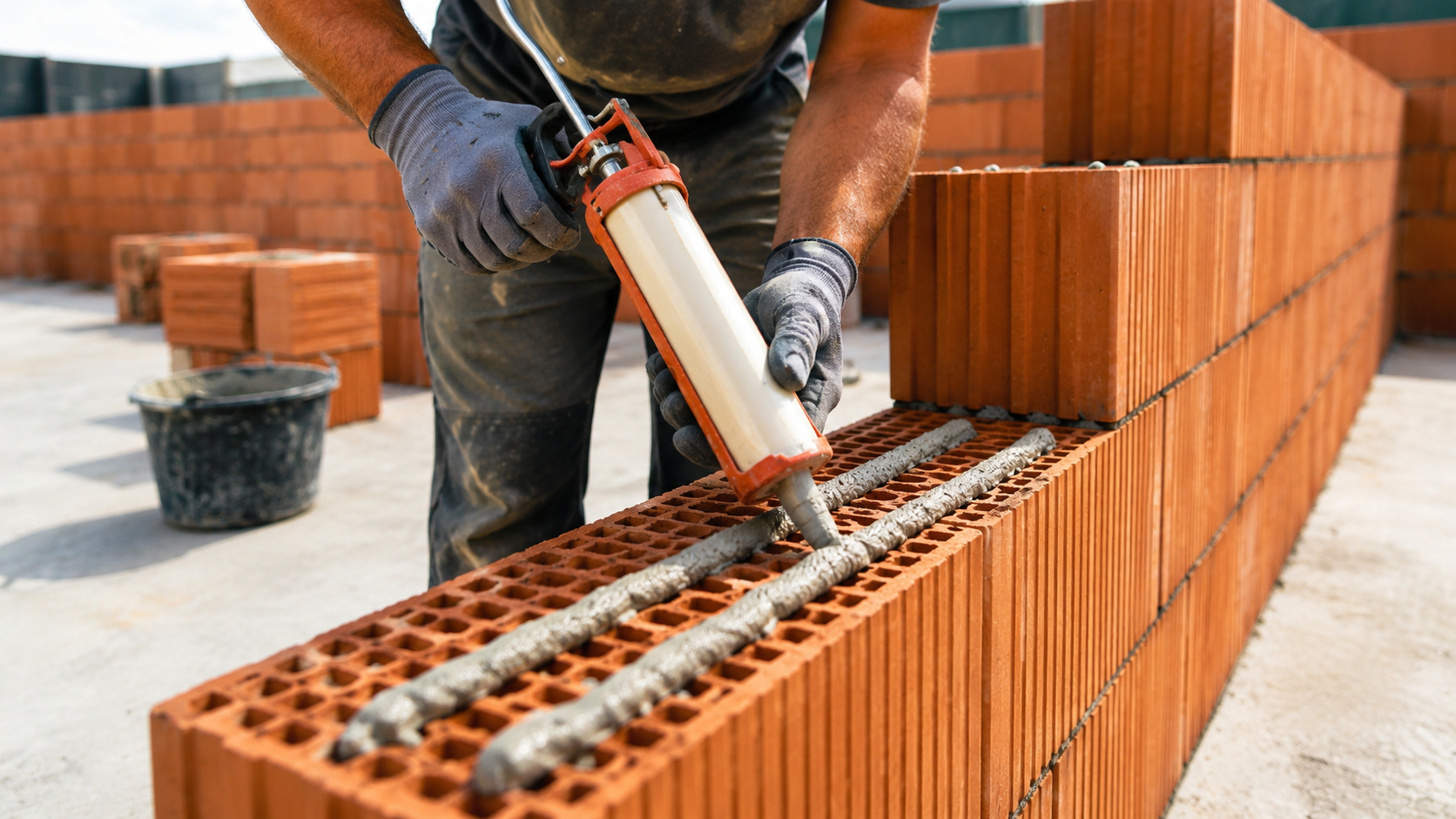

Whenever the task requires the same spacing repeated dozens of times, the red mark becomes a guide that dispenses with calculation.
The eye runs along the blade and stops exactly where the next stud needs to be.
In the construction routine, this translates into real gain.
The marks help to locate studs behind already closed walls, to position repeated structures with uniform distance, and to reduce the chance of error in successive cuts and holes, as described by Catraca Livre.
Work with panels, sheets, and wood becomes more agile. Less manual measurement means less margin for error that ruins a piece.
Why exactly 16 inches stand out
The choice of this interval is neither random nor recent.
It has been established as a construction standard in markets that use the imperial system, especially in wall structuring.
The number 16 has gained its own significance because it is the measurement most frequently used by those who build structures with wood or metal.
That’s why it receives the visual highlight that sets this mark apart from all others on the ruler.
The reasoning behind it is to save effort.
Instead of measuring everything from zero at each new point, the professional only follows the red marks and maintains constant spacing from the beginning to the end of the wall.
The tape, in this case, functions less as a ruler and more as an assembly map. Each mark anticipates the next.
Why this clue goes unnoticed in Brazil
Here lies the reason why so many people have never understood the marks. In Brazil, the vast majority of work uses centimeters and meters, not inches.
Since the country thinks in measurements by the metric system, the red numbers were designed for a standard that almost never appears in everyday Brazilian construction.
The result is that many people look at them and simply don’t realize they belong to a different logic.
Even so, they remain there. A large portion of tape measures sold in the country features references to both systems simultaneously.
According to Catraca Livre, the tool can display centimeters on one edge, inches on the other, and even keep special marks inherited from markets that adopt the imperial system.
It’s a vestige of another way of measuring, carried along without most people noticing.
Other secrets hidden in the tool


The red numbers are just one of the peculiarities that go unnoticed.
The metal hook at the tip, the one many people think is loose from the factory, has intentional slack.
This small gap is not a defect; it exists to compensate for the hook’s own thickness and maintain the exact measurement inside and out.
When you push the hook against a surface, it retracts just enough for the reading to be accurate.
The list of discreet features doesn’t stop there.
The movable hook adjusts internal and external measurements, the casing sometimes indicates its own length to help measure gaps, some tapes have center markings to divide a measurement in half, and the lock holds the blade steady during long readings.
These are details that transform a common ruler into a precision instrument for those who know how to use them.
How to use the marks without messing up the measurement
The risk appears when the two systems mix unintentionally.
Before following the red numbers, it’s worth checking if the work is in centimeters or inches.
In furniture, walls, and small household repairs, crossing the two systems is a sure recipe for wrong cuts and misaligned pieces.
A slip-up at this point costs material and time.
The practical rule is straightforward. When the requested measurement is in centimeters, use the metric scale as the main reference and set the red marks aside.
They work better when the project mentions inches, 16-inch spacing, or structures standardized by this system, according to Catraca Livre. Outside this context, ignoring them is the safest way to avoid confusing the reading.
In the end, that red mark that seemed random tells a story of engineering and constructive culture.
The tape measure is a simple tool only in appearance, and the 16 inches painted in red explain why it carries clues from two different worlds of measurement.
Understanding this, as shown by Catraca Livre, avoids mistakes and reveals how much thought is behind a common object.
And you, had you noticed the red numbers on your tape measure? Did you know what they were for or did you just find out now? Tell us in the comments if you work in construction and use these marks daily, or if you’ve always overlooked them like most people. We want to read your stories from the construction site and workshop.