Portuguese
  Spanish


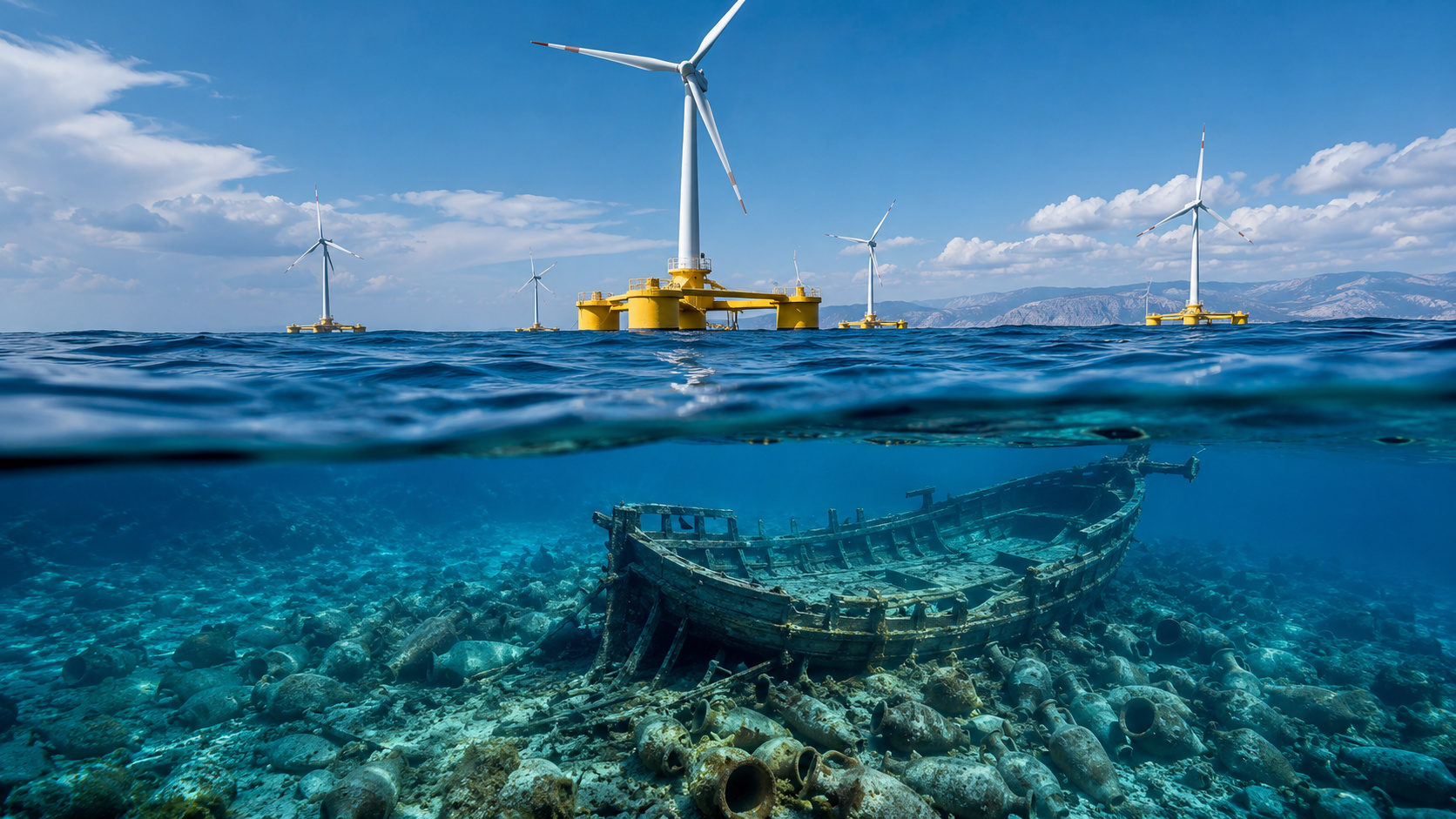

The floating wind farm in the Ionian Sea found a Greek ship near Calabria, revealed more than 300 amphorae, and made the project change the planned area for turbines, cables, and structures before the start of installation at sea.
Before receiving turbines, a floating wind farm under study in the Ionian Sea found a Greek ship with more than 300 amphorae at the bottom of the sea, near Calabria, in southern Italy. The vessel was dated between the 5th and 4th centuries BC.
The discovery was announced on June 29, 2026 by Acciona Energía, a Spanish company focused on renewable energy production. The find appeared during feasibility studies, a phase that analyzes site conditions before a project advances.
The project is still in the study phase. The presence of the archaeological site led to a revision of the preliminary design of the floating wind farm, to avoid an area that preserves an important part of Mediterranean history.
-
Sunken Ships Near Israel and Southern France Carried Tin from Britain, Evidence of a 4,000-Kilometer Trade Route Supplying the Mediterranean 3,300 Years Ago

-
Robots Tested in the Atlantic to Inspect Offshore Turbines Without Initial Human Deployment
-
CMA CGM Launches World’s Largest Clean-Fuel Container Ship: 400 Meters Long, 24,212 Containers, LNG-Powered

-
Norwegian Barge Transformed into Floating Structure in Copenhagen Highlights Technical Challenges of Retrofitting Vessels


The ship appeared before the installation of the turbines
The Greek ship remained hidden at the bottom of the sea for more than two thousand years. The discovery occurred before the installation of turbines, cables, anchors, and other structures necessary to generate wind energy at sea.
The most striking point is the cargo. The ship carried more than 300 amphorae, ancient containers that help identify products, trade routes, and relationships between peoples living in different regions of the Mediterranean.
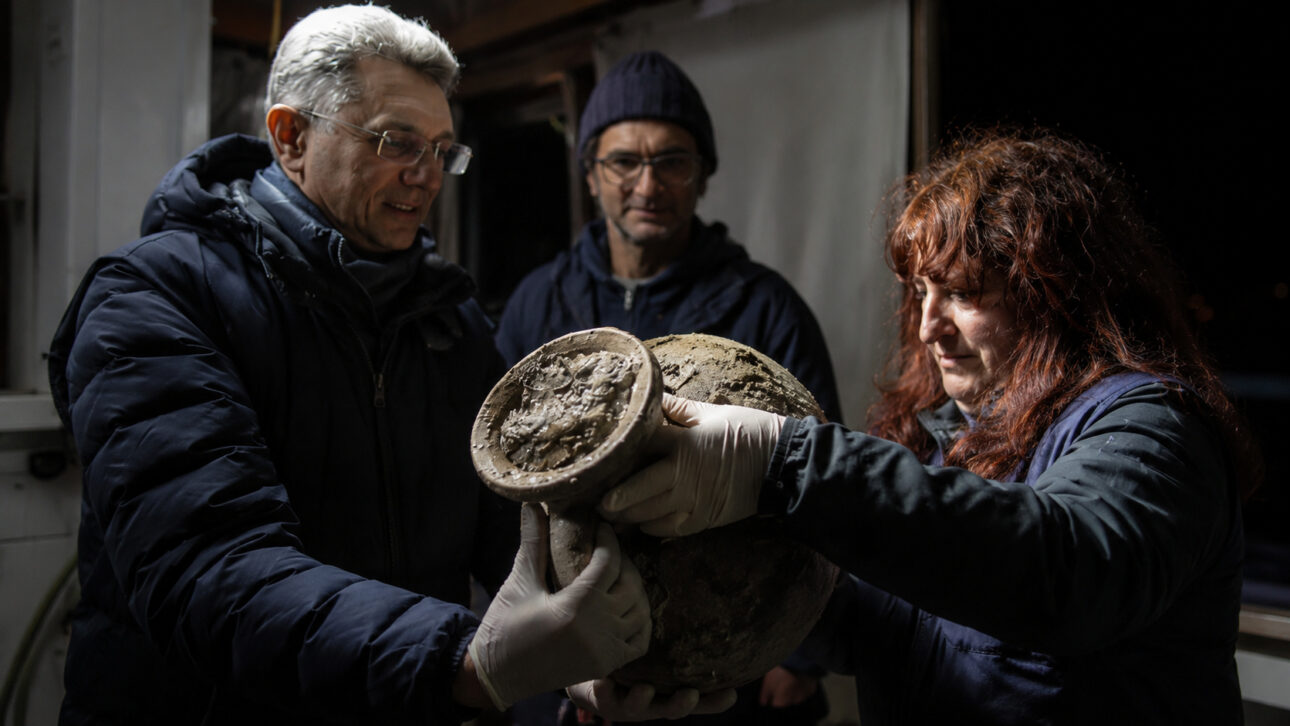
The area now requires preservation care. The material found has been included in the procedures for the protection of submerged cultural heritage, which gathers historical assets located underwater.
What the more than 300 amphorae can reveal about ancient trade
The amphorae were large ceramic containers used to transport products like wine and olive oil. Their shape facilitated storage on ships and helped merchants carry goods over long distances.
Each amphora can hold clues about the origin of the cargo and the path taken by the ship. The size, type of pottery, and marks left on the surface help researchers understand the circulation of products in ancient times.
The cargo found near Calabria can expand knowledge about maritime routes, trade exchanges, and wine distribution in Magna Graecia. This name was used for areas in southern Italy that maintained a strong Greek presence before Roman rule.
How a Floating Offshore Wind Farm Works
A floating offshore wind farm uses turbines installed on structures that float on the surface. These platforms remain in place through mooring cables and anchors connected to the seabed.
This explains why the seabed needs to be studied carefully. It’s not enough to find strong wind and adequate depth, as the project also needs to assess the terrain, sensitive environmental areas, and possible historical remains.
A wrong choice of location can place equipment over a region that houses archaeological heritage. In the case of the Ionian Sea, the study prevented this decision from being made without knowing what lay beneath the water.
Why Sonars and Surveys Can Change the Location of Turbines
The sonar is a device that uses sound waves to create maps of the seabed. It helps locate obstacles, identify differences in the terrain, and find submerged objects, like ancient ships.
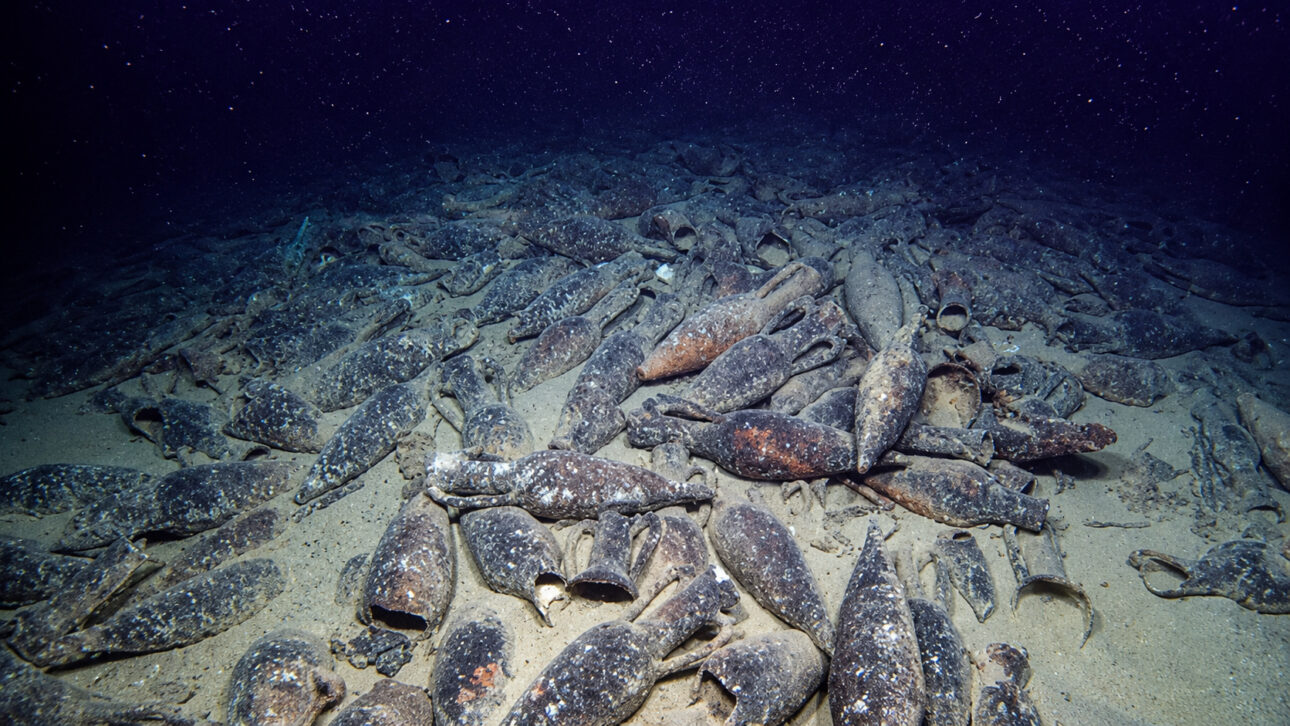
In the project near Calabria, advanced technologies were used to analyze the seabed. The research brought together professionals from underwater archaeology, geology, marine biology, and other scientific areas.
This type of survey prevents a project from discovering problems only after installation. The mapping shows where structures can be placed and which points need to be preserved before the arrival of heavy equipment.
Preventive Archaeology Changes the Design of the Floating Offshore Wind Farm
Preventive archaeology is research conducted before a project begins. It looks for signs of the past at the site so that energy, construction, and infrastructure projects do not destroy historical objects or areas.
Acciona Energía, a Spanish company focused on renewable energy production, reported that the preliminary design of the park will be adjusted to avoid the archaeological site and other areas considered environmentally sensitive.
The change does not prevent the continuation of studies on the floating wind farm. It shows that energy generation at sea needs to consider the space occupied by cables, anchors, marine life, and preserved heritage on the ocean floor.
The Greek ship found near Calabria put history in the path of a renewable energy project. The more than 300 amphorae made the park reconsider the placement of the turbines before any structure was installed.
In your opinion, should a historical discovery at the bottom of the sea completely change an energy project or just alter the location of the equipment? Leave your opinion in the comments and share this post.