





 Portuguese
  English
  Spanish
  3 min of reading
  2 comments


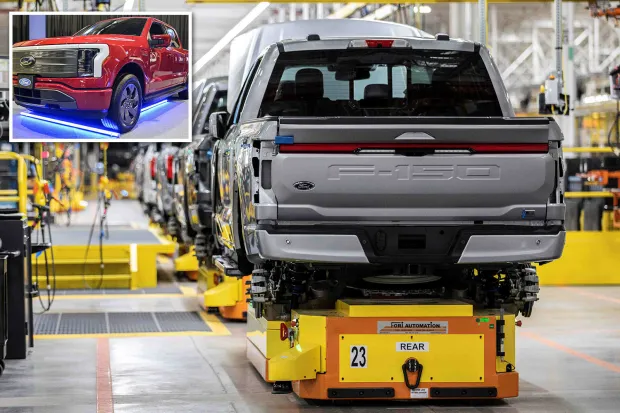

Automaker Faces Economic Difficulties and Halts Classic Vehicle; Leadership Acknowledges Need for Strategic Restructuring
Ford has announced a temporary halt in production of one of its most traditional models, affecting the pickup segment of the F-Series.
This pause will occur between November 18 and January 6 and reflects the financial challenges faced by the American automaker, which is trying to balance the development of electric vehicles (EVs) with high competition and pressure from costs.
Ford’s Financial Structure and Decisions
Since introducing the F-Series electric vehicles in 2021, with the debut of the Lightning model, Ford has been experiencing a series of setbacks.
-
The 2012 Mitsubishi Pajero Dakar diesel shows 314,000 km and still draws attention for its reputation for durability; the seven-seater 4×4 SUV handles trails, but signs of severe use may conceal losses for used car buyers.

-
Peugeot publicly acknowledged the errors of the PureTech engine, which caused serious failures in hundreds of thousands of cars, and introduced the new Turbo 100 as a definitive solution, a 1.2 turbo tested for over 3 million kilometers that replaces the faulty belt with a more durable chain.

-
Automatic cars become ‘cheap’ in Brazil, and models from Toyota, Hyundai, Nissan, and Honda appear for R$ 65,000 with up to 120 hp, CVT transmission, 482 liters of trunk space, keyless entry, and six airbags to tackle traffic without a clutch.
-
Honda revives a classic from Brazilian streets with a new name, TFT panel, and reprogrammed engine in the 2027 lineup; see the first impressions of the CB500 Hornet, which arrives with 49.6 hp, 4.5 kgf.m torque, 6-speed gearbox, 175 kg, and Showa suspension on Brazilian streets.


In 2024, the company reported substantial losses on every EV launched, highlighting the difficulty in competing in a market where costs are high, particularly with batteries, and public acceptance is still hesitant.
According to a statement from Ford to the Wall Street Journal, adjustments in production are underway to try to balance sales and profitability. Since August, Ford had already begun to reduce production of EVs and recently postponed the goal of producing two million electric vehicles by 2026.
The new goal has not yet been established, reflecting the company’s caution in light of high costs and competition.
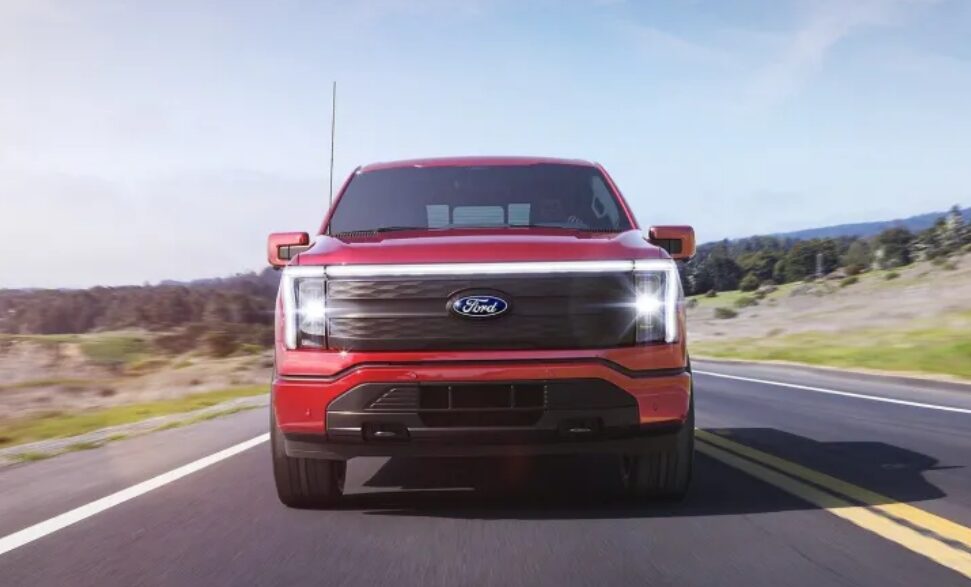
Intense Competition in the SUV Sector
The electric SUV market, in particular, has become a highly competitive landscape. John Lawler, Ford’s Vice President and Chief Financial Officer, highlighted that the company is struggling to compete in the three-row SUV segment due to rising battery costs and the arrival of various competitors.
Statistics cited by S&P Global show that around 143 new electric vehicle models are in development for the North American market, most of which are two- and three-row SUVs. The pressure to stand out in such a crowded sector is a challenge that Ford still needs to overcome.
The Success Story of Pickups and the Focus on Hybrids
Despite the challenges, the F-Series remains one of the most popular pickup lines in the U.S., with over 700,000 units sold in 2023. This success has kept the model’s lead as the best-selling truck in the country for 47 consecutive years.
Additionally, Ford has heavily invested in hybrid vehicles, which combine an electric motor and a gasoline engine. However, the financial return from these models has also fallen short of expectations. According to data from Reuters, Ford projects a loss of approximately US$ 5 billion in its electric vehicle line for 2024.
External Pressures and Their Impact on Ford’s Results
The challenges extend beyond production: external factors, such as rising raw material prices, also impact the company’s operating costs. Lawler noted that Ford has already cut expenses, but competitors have been reducing their costs more aggressively, putting the automaker at a disadvantage.
The attempt to boost the Lightning model has encountered significant obstacles, with slow sales and excess inventory at dealerships. To make matters worse, Ford’s shares fell 6.7% in 2024, while other automakers, such as General Motors and Tesla, recorded gains.
Comparison with Competitors
In contrast to Ford, other American automakers, such as General Motors, which had a 47% increase in shares, and Tesla, with a 4.7% increase, have demonstrated more solid financial performance in the EV market. This indicates that while Ford struggles to handle high costs and competition, other companies have found more effective ways to navigate this competitive segment.
What to Expect from Ford’s Future?
While Ford has a solid track record in the automotive market, especially with its pickup models, the challenges to compete in the electric vehicle sector are undeniable. With the halt in production and the postponement of goals, the automaker signals a pause to reevaluate its strategies.
The company’s stance reflects an attempt to remain competitive, but it faces the difficult balance between innovation and profitability.








Companhia sem convicção do q qer, só querendo trabalhar em função de lucros sem apresentar um portfólio inovador que atraía a atenção da cliente, sem renovações inteligentes e presa ao século passado análoga a ideologia de seu patrono Henry Ford.
Sempre usei Ford, mas as últimas decisões da montadora andam sem base. Acho que a Ford deve passar a fabricar carrinhos pra supermercados.