Portuguese
  Spanish


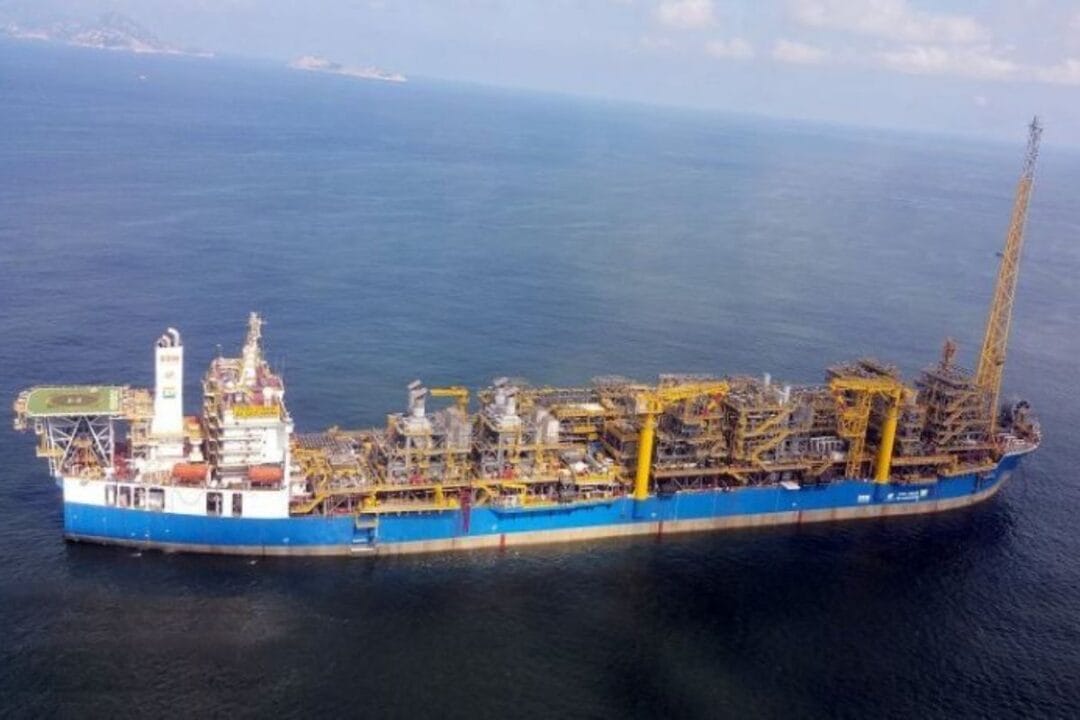


SBM Offshore Unit Operates in Lula Field with Advanced Technologies, DP System and Depth of 2,120 Meters
The FPSO Cidade de Saquarema is one of the jewels of offshore engineering in the Brazilian pre-salt. Commissioned in July 2016, it currently operates in the Lula field, Santos Basin, under a 20-year contract with Petrobras. The unit is responsible for producing up to 150,000 barrels of oil per day and compressing 6 million m³ of natural gas, with 18 connected wells, of which 9 are producers and 9 are injectors.
History of FPSO Cidade de Saquarema
Originally built in 2006 in South Korea as the VLCC tanker Elisabeth Maersk, the hull was converted to FPSO in two phases:
- The first took place in China, in 2014
- The finalization occurred at Estaleiro Brasa (Brazil), in 2016
The vessel arrived in Brazil at the end of 2015 and began oil production in July 2016, through the well 8-LL-81D-RJS.
-
OPEC+ Boosts Oil Supply by 188,000 Barrels per Day in July 2026, Leading to Price Drop from $112 to $89 per Barrel in Under Two Months

-
TotalEnergies Signs 20-Year Deal to Purchase 2 Million Tons of LNG from Alaska, Boosting Project Viability
-
Turkey Deploys Çağrı Bey Drilling Ship to Explore New Oil Frontier Off Somalia’s Coast
-
Golden Pass LNG Ships First Liquefied Gas Cargo from the U.S., Completing $10 Billion QatarEnergy and ExxonMobil Investment




Technical Performance and Strategic Location

The FPSO Cidade de Saquarema is anchored at a depth of 2,120 meters, utilizing cutting-edge technologies to ensure stability, safety, and efficiency in one of the industry’s most challenging environments.
Technical Highlights:
- Dynamic Positioning (DP) System
- Large-Scale Storage and Processing Capacity
- Full Integration with the Injection and Production Networks of the Lula Field
The field is operated in partnership by Petrobras (65%), Shell (25%), and Petrogal Brasil (10%).
Energy Efficiency in the Pre-Salt
In addition to operational robustness, the FPSO Cidade de Saquarema is a reference in energy efficiency, focusing on sustainable practices. Its design has been optimized to reduce environmental impact and maximize the utilization of extracted resources.
The unit features modern systems for water treatment, gas reinjection, and emission control, aligning with the environmental objectives of the offshore sector.