Portuguese
  Spanish



Petrobras Production Unit Promises to Revolutionize the Third Largest Oil Field in Brazil with Advanced Technology and Massive Production Capacity
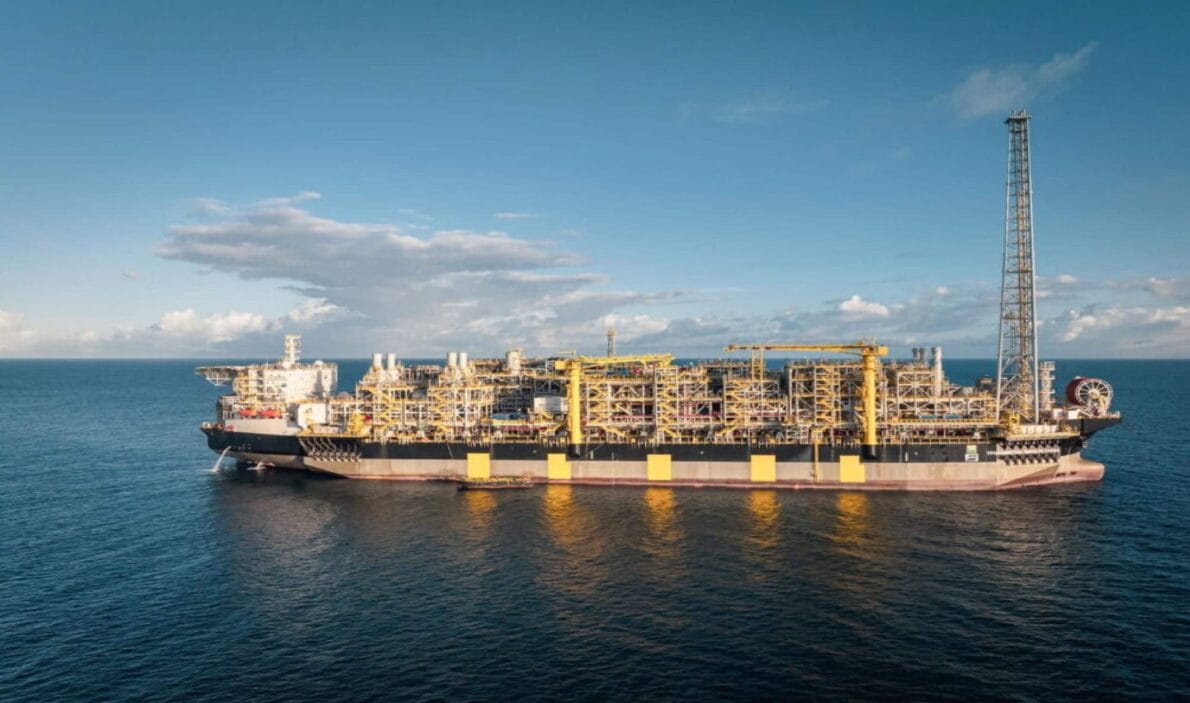
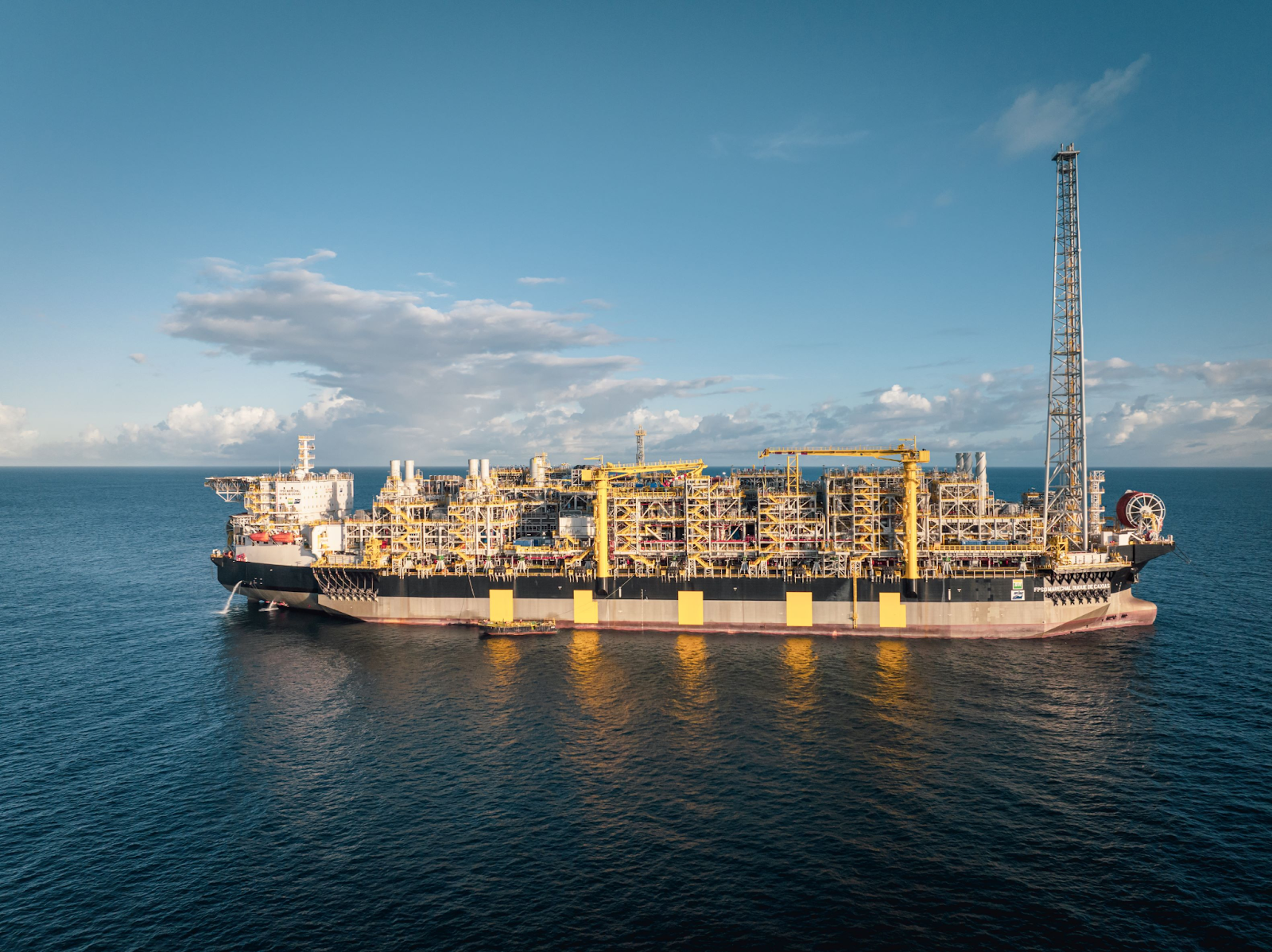
Petrobras celebrates a significant milestone with the arrival of the floating production, storage and offloading (FPSO) ship Marechal Duque de Caxias in Brazilian waters. Originating from the Yantai shipyard in China, the FPSO began its journey in February and, after a brief stop in Mauritius for crew change and cargo handling, reached the Brazilian coast. Destined for the Mero field in the Santos Basin, the FPSO will contribute to a substantial increase in Petrobras’ production capacity.
Final Preparations for the Start of Operations
After the commissioning ceremony in January 2024, the FPSO Marechal Duque de Caxias began its long journey to Brazil. Before starting operations, the vessel will undergo rigorous commissioning procedures and final equipment testing. The Mero field, where the FPSO will be deployed, is part of the Libra production sharing contract, operated by Petrobras in partnership with Shell Brasil, TotalEnergies, CNPC, CNOOC, and Pré-Sal Petróleo SA (PPSA).
Capacity and Impact on Production
With the capacity to produce up to 180,000 barrels of oil per day and compress up to 12 million cubic meters of gas, the FPSO Marechal Duque de Caxias is an integral part of the third definitive production system of Mero, known as Mero-3. This system will increase the installed production capacity of the field to an impressive 590,000 barrels of oil per day.
-
Brazil’s ANP Opens 86 New Oil Blocks in the Equatorial Margin, Expanding the Amazon River Mouth Frontier

-
OPEC+ Boosts Oil Supply by 188,000 Barrels per Day in July 2026, Leading to Price Drop from $112 to $89 per Barrel in Under Two Months

-
TotalEnergies Signs 20-Year Deal to Purchase 2 Million Tons of LNG from Alaska, Boosting Project Viability
-
Turkey Deploys Çağrı Bey Drilling Ship to Explore New Oil Frontier Off Somalia’s Coast



The Mero field, the third largest in Brazil after Tupi and Búzios, already has three FPSOs in operation: Pioneiro de Libra, Guanabara, and Sepetiba. Additional development phases, Mero-3 and Mero-4, each with a capacity of 180,000 barrels per day, are scheduled to begin operations in 2025.
High-Tech Subsea Infrastructure
The FPSO Marechal Duque de Caxias will be interconnected to 15 wells, including eight oil producers and seven water and gas injectors. The associated subsea infrastructure includes 80 km of rigid production and injection pipelines, 47 km of flexible service lines, and 44 km of control umbilicals, ensuring efficient and continuous operation.
Evamar José dos Santos, PPSA’s Contract Management Director, emphasized the importance of the Mero field for the Union’s oil production. “Last year, Mero was the main oil producer for the Union, producing 11.1 of the 17 million barrels to which the Union was entitled. With the arrival of another unit, the Union’s production increases, which translates into more benefits for society.”