






 Portuguese
  Spanish


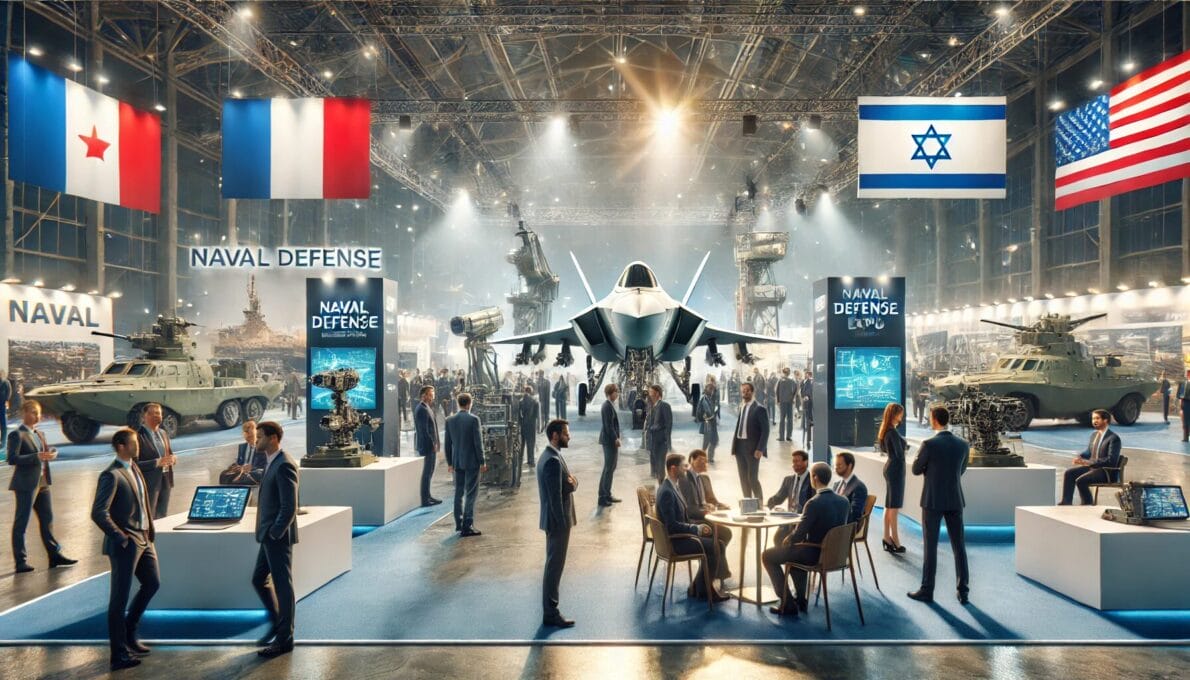

France Imposed a Surprising Ban on Israeli Companies at Euronaval, Causing Repercussions in Diplomatic Relations. In a Context of Tensions and Criticism from Emmanuel Macron to Benjamin Netanyahu, This Decision Raises Questions About the Future of the Defense Industry and International Politics
An unexpected measure is shaking the behind-the-scenes of the international defense sector. France has decided to bar the participation of Israeli companies at the prestigious Euronaval fair, an event that brings together the main players in the naval warfare industry.
This decision may seem like a simple restriction, but it hides deep political and strategic implications, raising questions about diplomatic relations between Paris and Jerusalem in an increasingly complex global context.
Next month, Euronaval, considered one of the largest defense naval fairs in the world, will take place in the outskirts of Paris.
-
U.S. Air Force Launches Air-to-Air Missile Project with Range of Up to 1,850 km for Indo-Pacific Operations

-
Australia to Deploy Up to 8 Nuclear-Powered Submarines in Indo-Pacific, Establishes Billion-Dollar Naval Chain Through AUKUS, Joining Elite Group Capable of Extended Underwater Missions

-
Indonesia Begins Construction of 2,000-Ton Scorpène Stealth Submarines with Advanced Weaponry and French Steel

-
Brazil’s Largest Navy Ship, NAM Atlântico, Transforms into Field Hospital During National Crises



While allowing the presence of Israeli delegations, the French government made the drastic decision to prevent Israeli defense companies from showcasing their military equipment.
This ban is not an isolated act but part of a context of intensifying diplomatic tensions between French President Emmanuel Macron and Israeli Prime Minister Benjamin Netanyahu.
Context of the Bans
According to the portal Poder Naval, this is not the first time the French government has placed obstacles to the participation of Israeli defense companies in arms fairs.
In June of this year, France had already barred the presence of Israel at Eurosatory, one of the largest land arms fairs in Europe.
Although a subsequent court ruling reversed the ban, the impact was significant as the situation occurred too late for Israeli companies to effectively participate in the event.
This time, the ban directly affects seven renowned Israeli contractors, including industry giants like Rafael and Elbit Systems.
These companies were scheduled to showcase their products at Euronaval, but the French government’s decision left a significant void in the exhibits.
The impact of this measure extends beyond the event, reverberating in bilateral relations and defense trade between the two countries.
The Position of Macron
In recent months, Emmanuel Macron has taken a firm stance toward Israel, urging other countries to halt arms deliveries to the Israeli government.
This pressure is particularly directed at the use of these weapons in conflicts in Gaza and Lebanon, raising questions about the responsibility of countries supplying arms in conflict situations.
During a private meeting with European leaders, Macron criticized Netanyahu’s stance, accusing him of ignoring UN decisions aimed at protecting human rights in the region.
This public criticism not only heightened tensions between the two leaders but also exposed a rift in relations between Europe and Israel, which have historically maintained close ties.
The Israeli Reaction
The ban on Israeli companies at Euronaval generated discontent in Israel. Government sources expressed indignation at the decision, considering it an unfair measure and a reflection of growing hostilities.
A senior official from the Israeli government stated that this ban represents a double standard and a lack of understanding of the security realities that Israel faces.
The absence of an official statement from the Élysée Palace on the matter has only intensified speculation about the future of relations between France and Israel.
The lack of open dialogue raises concerns about how a country’s defense policies can be affected by diplomatic issues, jeopardizing trust between allies.
The Impact on the Defense Industry
The Israeli defense industry is one of the most advanced in the world, and its presence at international fairs is crucial for promoting its technologies and products.
With the ban at Euronaval, Israeli companies lose a valuable opportunity to showcase innovations at a time when the naval defense market is expanding.
In addition to losing visibility, these companies may face financial difficulties, as participation in such events is one of the cornerstones for generating business in the sector.
The impact of the decision could also create precedents for other nations that might follow the French example.
The possibility of even greater isolation for Israeli companies in the international arena may become a reality, especially in a world where political alliances are rapidly changing.
As tensions rise and the conflict in the Middle East escalates, France’s decision to bar Israeli companies from Euronaval can be seen as a reflection of the complex political and diplomatic dynamics shaping global security.
The future of relations between France and Israel remains uncertain, and the impact of this measure will be felt both politically and economically.
The repercussions of this ban extend beyond defense trade; they reflect an ethical and moral dilemma faced by many nations today.
Western countries, in particular, find themselves pressured to balance their strategic alliances with the need to uphold human rights in conflict situations.
The coming months promise to be revealing, and the answer to this question may define the course of defense policies and global alliances.







Quem mais perde com esta decisão é a própria França.
Israel tem todo o direito de se defender dos terroristas, tanto os do Hamas quanto os do Hezbollah e iranianos.
Viva ISRAEL,que merece todo o respeito do mundo civilizado!