Portuguese
  Spanish


In 2023, in the south of France, ENGIE replaced eight old wind turbines with just six modern ones at the Fitou park, and the capacity nearly doubled from about ten to almost nineteen megawatts. WindEurope estimates that this repowering could release a lot of clean energy in Europe.
It seems contradictory, but it’s real. In 2023, in the south of France, the energy company ENGIE demolished eight wind turbines that had been operating for more than twenty years and installed just six modern machines in their place. The result: electricity generation nearly doubled, jumping from about ten to almost nineteen megawatts, at the Fitou wind farm.
The secret has a name: repowering. Instead of building a new park, ENGIE reused the existing land and simply replaced the old wind turbines with much more powerful models. And the best part, without occupying a single new hectare of land or facing a decade of licensing, since the community and the connection to the power grid were already there.
What is the repowering that ENGIE applied in France
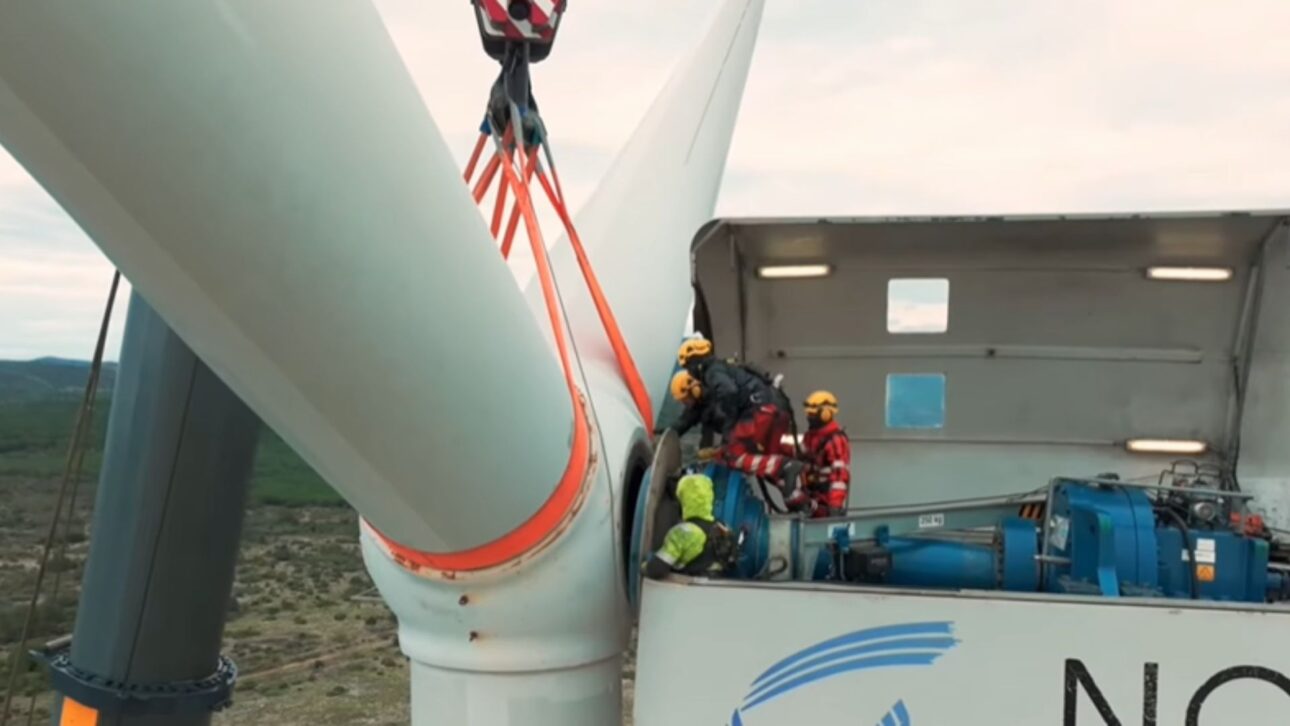
Repowering involves dismantling old turbines and installing new generation models, more powerful and efficient, utilizing the existing infrastructure, such as the grid connection, access roads, and community acceptance.
-
Former Merchant Marine Captain Invents Fuel-Free Barrier, Removes 20,000 Tons of Trash from Chennai Rivers

-
14-Year-Old Maxim Harris Turns School Project into Anti-Rage Gaming Accessory, Sells 1,000 Units Across 46 U.S. States, Donates 20% of Profits to Charity
-
Brazilian Health Agency Approves First Oral Medication for Cancer Patients
-
11-Year-Old Boy and His Mother Discover 1.8-Million-Year-Old Elephant Tooth on English Beach Eroded by the Sea



At the Fitou park, which has been operating since 2001 and is one of the oldest in France, on a ridge facing the Mediterranean coast, ENGIE removed eight wind turbines and installed six modern ones, from the manufacturer Vestas, with larger rotors and taller towers.
The capacity increase was significant. The total power of the site went from about ten to almost nineteen megawatts, that is, it practically doubled, with fewer machines and in the same area.
The company, which recycles an average of 90% of the components from removed turbines, treats Fitou as a model to be repeated across its European portfolio, with repowering projects already underway in France, Belgium, and Germany.
Why six modern wind turbines generate more than eight old ones
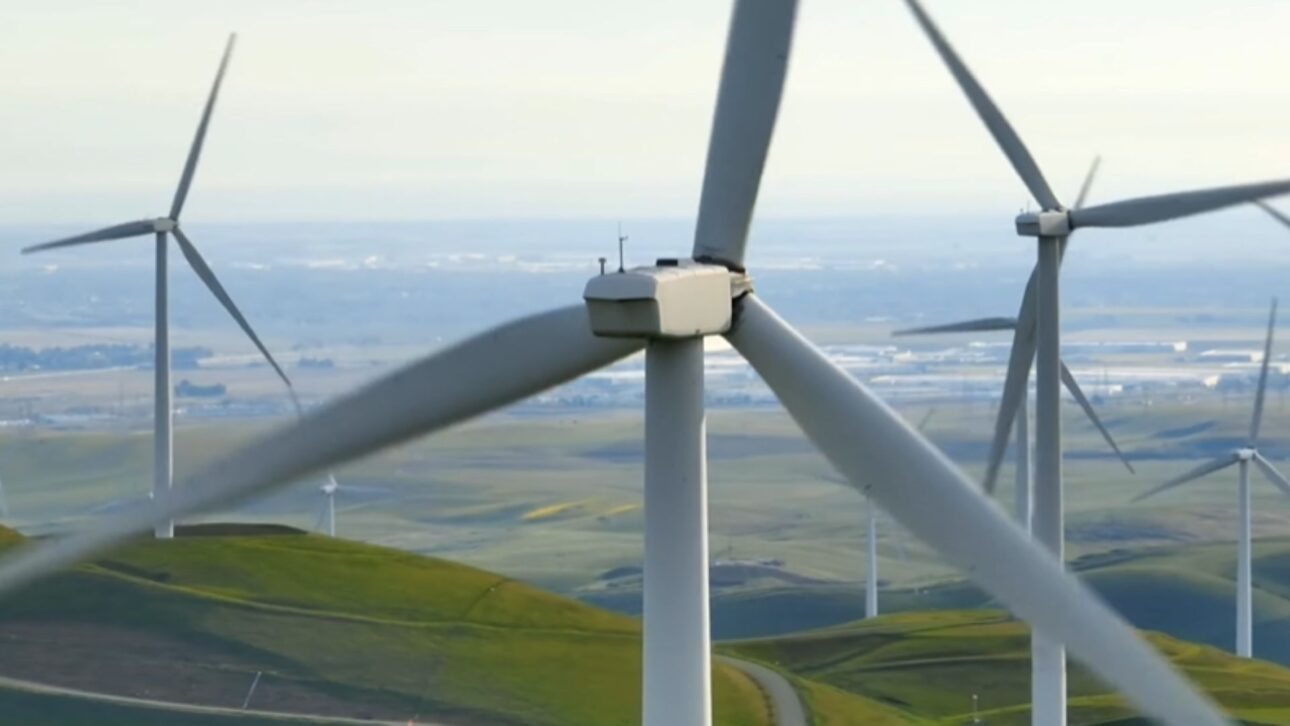
The counterintuitive part is how fewer pieces of equipment produce more energy. A modern turbine can generate three to four times the annual electricity of the machine it replaced, and this is explained by three advancements.
The first is height: the first-generation wind turbines were about 50 to 60 meters tall, while the current ones exceed 100 meters, and the wind is stronger and more constant the higher you go.
The second advancement is the blades. The rotor diameter has practically doubled in two decades, and a larger blade sweeps a larger area of air, capturing more energy with each rotation, even under the same wind.
The third is embedded intelligence: modern wind turbines use variable-speed generators and pitch control, rotating the blades in real-time to optimize the angle.
Together, these improvements allow six new machines to easily outperform eight old ones.
The potential of repowering for Europe
The case of Fitou is of interest because it can multiply. The first commercial wind turbines in Europe were installed in the early 1990s and 2000s, designed to last about twenty years, a period that has already expired or is ending in hundreds of locations.
Since building a new park on the continent takes 7 to 15 years, between licensing, environmental studies, and legal challenges, repowering emerges as a shortcut, taking advantage of what is already in place.
The numbers reinforce the argument. Between 5,000 and 8,000 wind turbines in Europe are reaching or have already passed the end of their design life.
According to WindEurope and industry estimates, repowering this aging fleet could release an additional 50 to 100 gigawatts without a single new land license request, with 50 gigawatts roughly equivalent to the electricity consumption of a country the size of Spain.
Even so, WindEurope itself points out that less than 10% of turbines reaching the end of life are repowered today because operators are discouraged by slow and changeable licensing rules.
Not every wind farm serves: the limits of repowering


Despite the enthusiasm, repowering does not work everywhere. Modern wind turbines, being larger, require more robust foundations, and some old parks were not designed to support them.
When the ground cannot support deeper bases, it is necessary to rebuild the entire foundation, which can compromise the economic viability of the project.
The capacity of the electrical grid is another limit, as old connections were sized for the original production and updating them can be too expensive.
There is also the issue of social acceptance. Although it is usually easier than in new locations, it is not guaranteed, because modern machines are much more visible.
Communities that accepted wind turbines of about 50 meters in 2001 may have real concerns in front of a 150-meter one.
Even with these caveats, according to consultancy Wood Mackenzie, 275 gigawatts of wind capacity worldwide will reach 20 years between 2023 and 2033, which should strongly boost repowering in the next decade.
For WindEurope, however, taking full advantage of this potential depends on simplifying licensing rules that still hinder the replacement of wind turbines in Europe.
Replacing eight old wind turbines with six modern ones and almost doubling the energy, without occupying new land, shows that part of the solution for the energy transition may lie in the parks that already exist.
Tell us in the comments if you think Brazil should adopt repowering in its oldest wind farms and what still hinders this type of work.