






 Portuguese
  Spanish
  2 min of reading
  0 comments


Discover How Disc Brakes Emerged, Moved from Aviation to Cars and Became a Global Automotive Safety Standard!
Have you ever stopped to think about how cars manage to stop with such precision? The secret lies in the brake disc, an invention that revolutionized automotive safety. Although common today, its origin involves ingenuity, war, and speed.
From Wagons to the First Mechanical Brakes
Initially, braking meant pressing wooden blocks against the wheels. These systems were inefficient, dangerous, and easily overheated. On long descents, they often simply stopped working.
Even so, for a long time, they were the only means available to stop moving vehicles.
As cars became faster, the need for something better became evident. The evolution of speed demanded a revolution in braking — and it would come soon.
-
Two new 300cc models from QJ Motor are expected to arrive in Brazil as SBM to target the CB 300F and shake up the low-displacement market, with more power and liquid cooling than Honda.

-
Camaro may reappear in 2027, but not as you remember: Chevrolet prepares the return of the icon with four doors, manual transmission, and an extreme performance version to face the new era of sports cars.

-
Is the BYD Song Pro worth it? The Anderson Sincero channel says it doesn’t exceed R$ 140,000, and the price dropped by R$ 47,000, reinforcing the depreciation of the plug-in hybrid in the Fipe table.
-
Caoa Changan CS75 arrives for R$ 199,990 with 4.77 m in length, a trunk of up to 1,620 liters, 8-speed Aisin transmission, 180 hp, 37.2 inches in screens, and Zero Gravity seat with massage.


The First Idea: A Concept Ahead of Its Time
In 1902, Frederick Lanchester created a primitive model of a disc brake. But the materials of the time didn’t help: they were noisy, expensive, and impractical. Moreover, tire and suspension technology were still not up to the innovation.
The industry was not ready to adopt it, and its creation was forgotten for decades. But his idea planted the seed for a safer future on the roads.
From Aviation to the Roads
During World War II, disc brakes proved their worth on airplanes. After the war, the efficiency of short landings caught attention. Heavy aircraft landed with precision, even on wet or short runways.
Technology soon migrated to sports cars, which demanded high performance and control. It was the beginning of the transition from the skies to the asphalt.
A Legend Is Born: The Car That Popularized Discs
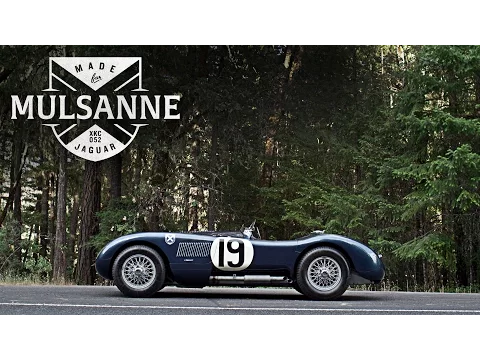
In 1953, the Jaguar C-Type won Le Mans using disc brakes. The victory showcased their superiority over drum brakes. Performance in corners and resistance to overheating were decisive.
From then on, discs began to gain traction on the streets. The race accelerated automakers’ interest and forever changed the braking standard.

From Luxury to Routine: The Disc Becomes a Global Standard
Over time, discs evolved with ventilated steel and ceramics. Today, they are standard in almost all cars, at least on the front wheels. The use of lighter and more durable materials has increased efficiency.
They are allies of technologies like ABS, ensuring safety in modern traffic. Braking with precision has ceased to be a luxury and has become a necessity — for the good of all.


Be the first to react!