Portuguese
  Spanish


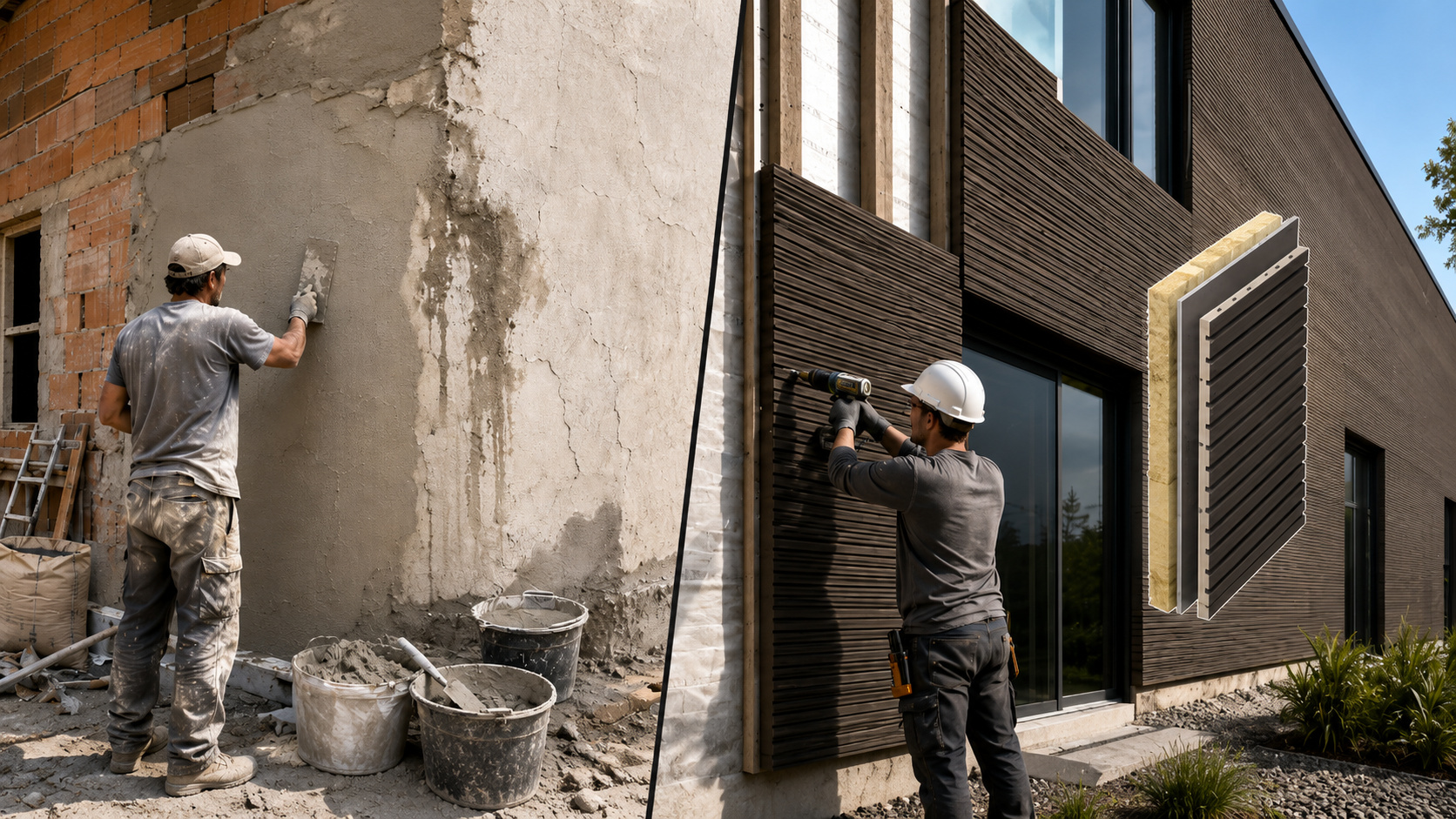

Thermo Siding advances in civil construction with modular panels that promise thermal insulation, moisture resistance, and quick installation.
In recent years, civil construction has begun to adopt a new generation of modular claddings aimed at facades, internal walls, and external areas. Among them, Thermo Siding has attracted attention for combining ready-made finishes, thermal insulation, and simplified installation in a system that reduces traditional stages such as plastering, rendering, and conventional painting in certain applications. The Thermo Siding panels have been primarily used in residential facades, gourmet areas, external walls, and environments subject to moisture, including coastal regions.
Manufacturers and distributors claim that the system was developed to offer greater stability against infiltration, reduced aesthetic maintenance, and faster installation compared to traditional cladding methods.
The growth of this type of solution follows a strong trend in modern construction: replacing time-consuming processes with a lot of waste generation with industrialized, lightweight, and modular systems.
-
While the World Opens New Airports and High-Speed Trains, Brazil Rushes to Complete Projects Stalled for 40 Years

-
Brazil Invests in Massive Waterway to Transport Soybeans by Barge, Reducing Costly Truck Reliance
-
Bridge Rebuilt in Just One Year Reconnects Two Brazilian States
-
Custom Furniture Costs in Brazil Expected to Range from $350 to Over $1,450 per Square Meter by 2026, with Kitchens, Closets, and Laundries Highlighting the Impact of Premium Features


What is Thermo Siding and why has the system started to gain space in modern facades
Thermo Siding is a modular cladding made up of panels with decorative finishes and an insulating core designed for internal and external applications. In many models available on the market, the system combines metallic layers, structural polymers, or composite panels with thermal insulating materials.


The goal is to create a cladding capable of delivering visual finish, surface protection, and thermoacoustic performance in a single structure. This reduces the need for multiple conventional construction stages involving rendering, skim coating, and frequent external painting.
The system has started to gain popularity mainly in modern architectural projects because it offers a contemporary appearance, relatively quick installation, and less waste generation during renovations and constructions.
Another important feature is modularity. The panels typically use interlocks and mechanically fixed structures, reducing drying time and wet stages common in traditional claddings.
Thermal insulation has become one of the main commercial arguments of the system
Thermal comfort has become one of the biggest concerns in modern residential and commercial projects, especially in hot regions of Brazil.
According to industry manufacturers, Thermo Siding uses insulating layers that help reduce heat transfer between the external and internal environment. This can decrease excessive heating of walls exposed to intense sunlight throughout the day.
Insulating materials work by creating barriers to thermal dissipation, reducing part of the heat conduction through surfaces. Depending on the system’s composition and thickness, this can improve internal comfort and reduce the demand for artificial climate control.

The actual performance varies according to installation, solar orientation, building ventilation, and the specifications of the panel used, but thermal insulation has become one of the main factors for the growth of this type of cladding.
The system also attempts to reduce noise propagation in urban areas
Besides thermal control, Thermo Siding has come to be associated with improvements in acoustic insulation in certain projects.
According to industry companies, the combination of structural layers and an insulating core helps reduce part of the sound transmission between external and internal environments. This has made the system gain ground, especially on facades facing busy streets and dense urban areas.
The acoustic performance depends on the density of the materials, the thickness of the panels, and the installation method. Even so, the argument of sound comfort has become important in the commercial growth of the product.
In modern projects, thermal and acoustic comfort has come to be sold almost as part of the architectural experience of the residence, and not just as a technical engineering detail.
Moisture resistance helped the material grow in external areas and coastal regions
One of the most commercially exploited points by companies is resistance to moisture and sea spray in external applications.
Traditional claddings often suffer wear caused by infiltration, paint peeling, efflorescence, and cracking over time. Thermo Siding attempts to reduce some of these problems by using industrialized surfaces less vulnerable to water absorption.

Manufacturers claim that some models can even be applied in coastal regions due to their superior resistance to humidity and reduced need for constant aesthetic maintenance. However, performance directly depends on the quality of the material, anti-corrosive treatment, proper installation, and local climatic exposure.
Even so, the system began to be used on external facades precisely because of the promise to reduce visual deterioration caused by rain and continuous environmental exposure.
The installation of Thermo Siding panels has become one of the most attractive factors for modern renovations
Another important reason for the growth of Thermo Siding is the speed of installation. While traditional systems require roughcast, plaster, curing time, sanding, and painting, modular panels usually arrive ready for fixing. This reduces wet stages and significantly accelerates quick renovations and constructions.
In many projects, the cladding can be installed directly over existing structures, reducing demolition and debris generation. This factor has become especially valued in residential renovations where residents wish to reduce construction time inside the home.
The logic follows a larger transformation in civil construction: increasing industrialization of finishes and the replacement of time-consuming artisanal processes with ready modular components.
Manufacturers speak of warranties of up to 20 years for certain models
Some companies in the sector advertise warranties that can reach up to 20 years depending on the type of panel, usage conditions, and installation specifications. The warranties typically involve structural resistance, surface stability, and coating performance when applied according to the manufacturer’s technical guidelines.
Experts note that real durability depends on various factors, including solar incidence, quality of fixing, preventive maintenance, and environmental exposure. Even so, the promise of long life with low maintenance has become one of the main commercial drivers of Thermo Siding.
This is because consumers have started seeking materials capable of reducing frequent expenses with painting, leak correction, and aesthetic maintenance of facades.
The growth of Thermo Siding shows how industrialized coatings are changing civil construction
For decades, Brazilian facades mainly depended on plaster, mortar, and conventional painting. The advancement of systems like Thermo Siding shows an important change in the sector by incorporating concepts of modularity, integrated insulation, and industrialized finishing.
The system attempts to combine quick installation, thermal comfort, moisture resistance, and contemporary appearance into a single solution applied directly over walls and structures.
Although traditional plastering remains extremely prevalent in Brazilian civil construction, modular claddings have started to gain ground precisely in projects that prioritize speed, low maintenance, and a modern look.
And as thermal comfort, energy efficiency, and durability become more significant in construction decisions, materials like Thermo Siding are beginning to transform the way facades and external walls are built in the country.