Portuguese
  Spanish


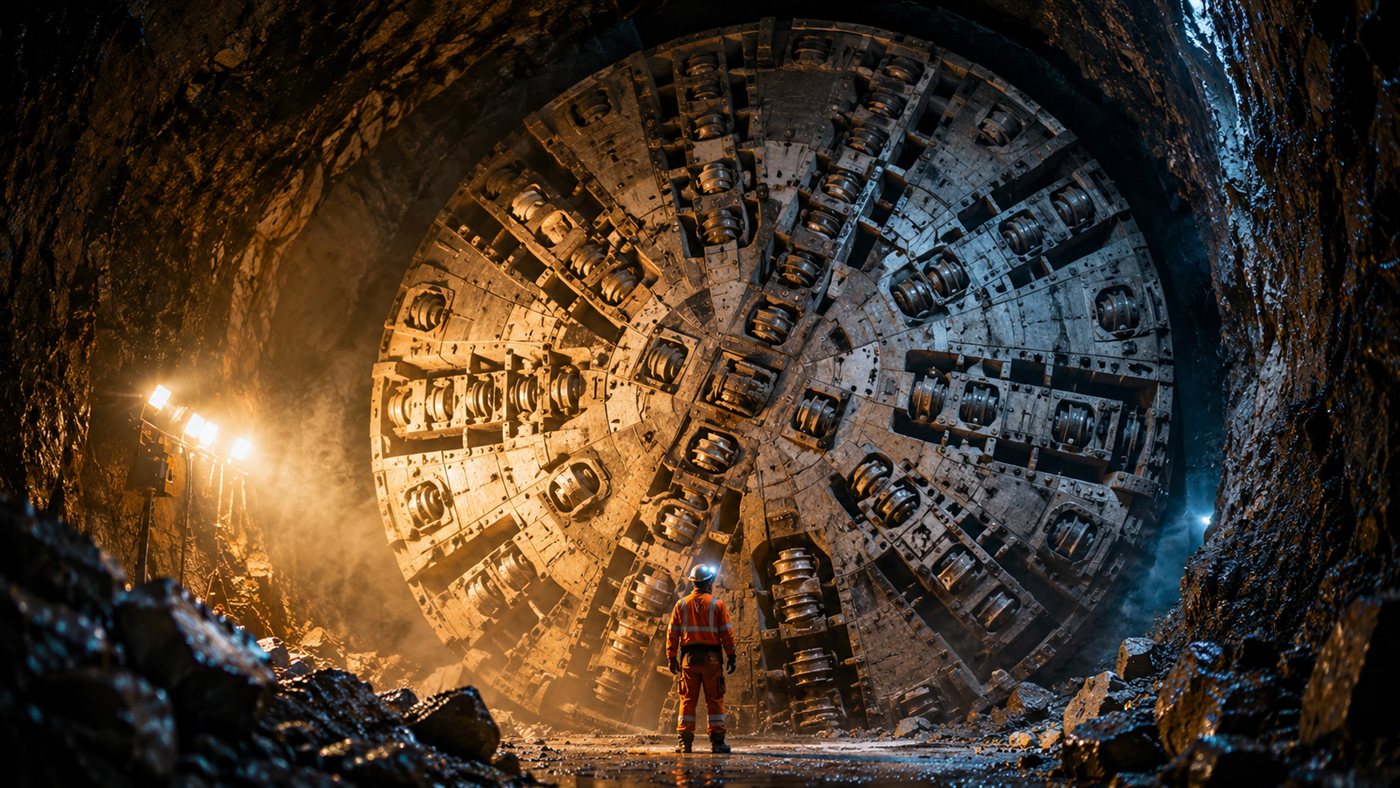

DW Brasil documentary, with over 106,000 views, descends to the Lyon-Turin tunnel site, shows the drilling machine advancing 15 meters per day, and listens to the valley residents who call the project a disaster
The railway tunnel that promises to unite Europe beneath the Alps has also become one of the biggest battles between progress and territory today, and a documentary published on June 30, 2026, by DW Brasil on YouTube shows both sides up close, in a dilemma that Brazil with its unfinished railways knows well. The Lyon-Turin connection project, between France and Italy, has already consumed 11 billion euros and takes place 600 meters below the surface.
The scale is literally moving mountains. According to DW Brasil, the two one-way tubes will each be over 57 kilometers long, almost 60 kilometers of double-track tunnel under the mountain range, with tons of explosives and colossal drilling machines carving a path through the rock.
600 meters below the Alps: the site that never stops
The documentary descends to the heart of the project with Emmanuel Humbert, the site manager, who has worked in underground engineering for 20 years and describes the project as the greatest challenge of his career, the “most beautiful project in the world.” On one side of the site is France; on the other, Italy, and a 9-kilometer stretch has already been excavated towards the Italian side, as DW Brasil records during the visit.
-
Japanese Company Constructs 100m² 3D-Printed House Using Earth Instead of Concrete, Generating Its Own Energy and Reducing Costs and Emissions

-
In Southern Brazil, a couple builds a Russian-style stove with 430 bricks that heats their 90 m² home all night using just 15 kg of wood.

-
U.S. Farmer Tackles $4 Million Water Issue by Installing Hundreds of Miles of Drainage Pipes to Protect Farm Profits
-
Two-Person Team Builds Entire House from Scratch in Just 3 Days Using Low-Cost Materials, Documenting Every Step on Video




The pace is dictated by the rock. The drilling machine advances a maximum of 15 meters per day, and in difficult terrains, explosives break through the rocky layer, in a partially unstable mountain range, constantly in motion. One of the workers, on the site since 2002, sums up the spirit of those who build: it’s a project for a lifetime.
The goal: to take trucks off the road and 45 minutes off the clock
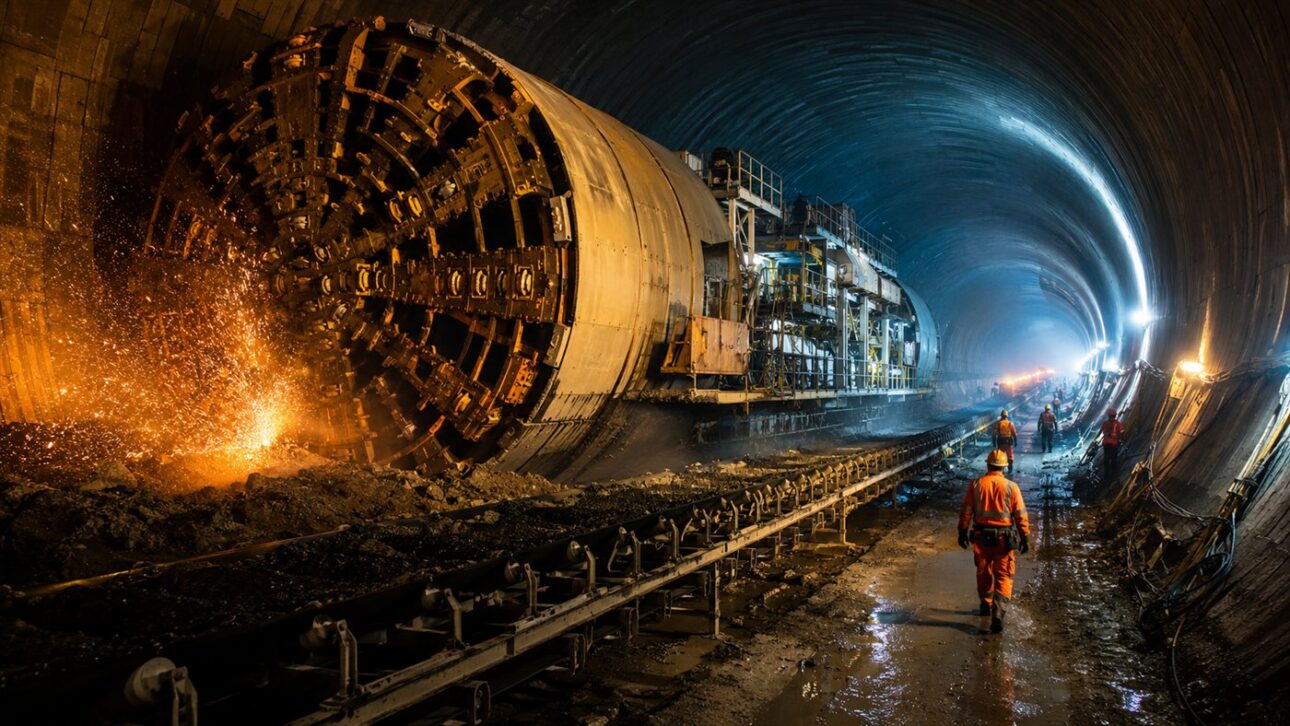
The official argument of the project is threefold, according to DW Brasil: to bring people closer, decarbonize transport, and build a durable infrastructure for all of Europe. In practice, the connection promises to reduce travel time between Lyon and Turin by 45 minutes and, more importantly, transfer freight transport from the Alpine roads to the railway.
The financing is shared: European Union, France, and Italy share the bill of 11 billion euros, and the forecast is that the railway tunnel will be completed in 2033, when trains will finally cross the depths of the Alps.
The investment in the railway has a direct environmental logic: each freight train that crosses the mountain through the railway tunnel replaces dozens of trucks that currently climb the Alpine roads burning diesel in the mountains. In European transport, this modal shift is considered one of the fastest ways to cut emissions without reducing the volume of goods in circulation.
The valley of 44,000 inhabitants that pays the price of the work
The counterpoint of the documentary resides in the Maurienne Valley, in southeastern France, home to about 44,000 people, where the tunnel begins, near the small town of Saint-Jean-de-Maurienne. It is there that DW Brasil meets Philippe, a resident for 20 years and an activist against the project, for whom the work is an economic and ecological disaster.
The revolt has a specific address. “The construction companies are the ones getting rich. And it’s us, the taxpayers, who end up footing the bill”, says Philippe to DW Brasil, pointing to the mountain roads pitted by winter and without maintenance, while the billions go underground.
Dust, debris, and a retirement next to the work
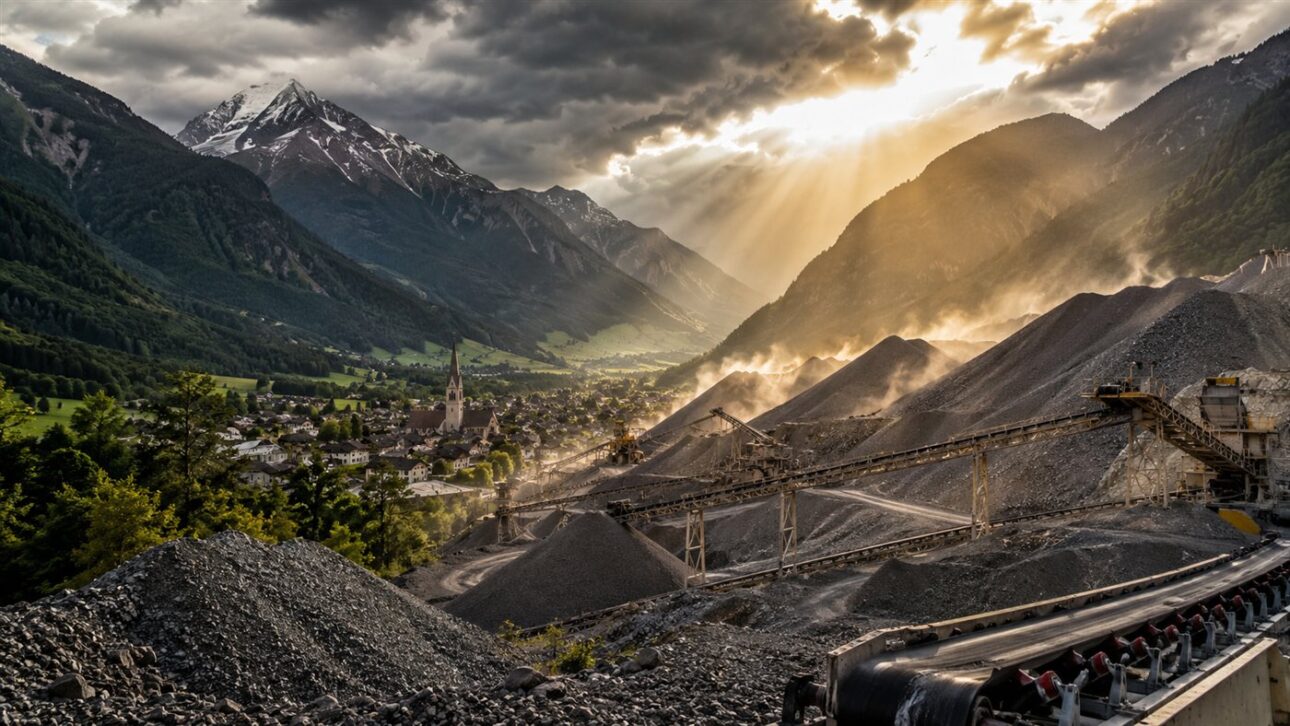
The downside of engineering appears on the surface. According to DW Brasil, the excavation debris is transported by trucks and conveyors, part is recycled and the rest is discarded in the valley itself, transforming a once idyllic landscape into a scene of dust and noisy machines.
The documentary puts a face to this cost: Patrick, 70, lives next to a pile of debris and makes the bitter calculation. “This will still last another ten years. I will spend my retirement on this work, without receiving anything”, he tells DW Brasil, resigned to “saying amen to everything”.
The drained mountain: the hydrogeologist’s warning
The most silent risk of the construction is in the water. According to DW Brasil, the excavation of tunnels can lower the level of the local water table, and authorities have already observed the effect on several springs in the valley, raising the alarm of a hydrogeologist interviewed in the documentary.
The image she uses is educational and frightening: excavating the mountain is like removing the bathtub drain plug, a drainage of the mountain itself, with the risk of the region’s water supply drying up. It’s the kind of side effect that doesn’t appear in the 11 billion euro budget but can last longer than the railway itself.
Temporary jobs in a declining valley
The local economy experiences the classic paradox of megaprojects. The Maurienne Valley, a victim of deindustrialization like other rural regions of France, received improvements co-financed by the tunnel operator, which funds 10 to 40% of community projects, such as the cathedral square, in addition to the renovation of a school with just over 2 million euros, highlights the mayor in the documentary.
But the criticism recorded by DW Brasil is spot on: the billions create temporary jobs that benefit a small portion of the inhabitants, and the railway, like a highway, connects large centers without helping the areas it passes through, accelerating demographic decline instead of containing it. Among the residents, opinions are divided between “they demolished everything, I’m against it” and “it can give us the necessary boost, with a little patience”.
What the Alpine railway tunnel teaches Brazil
The Alpine dilemma sounds familiar here. Brazil has also been discussing for decades moving cargo from trucks to rails, and each major national railway project faces the same equation: diffuse benefit for the entire country, concentrated cost for those living along the construction path.
There is also an engineering lesson embedded in the project. The Lyon-Turin link belongs to the family of so-called base tunnels, which cross the mountain at the lowest possible level instead of climbing slopes: the train gains an almost flat route, consumes less energy, and transports more cargo per composition. That’s why a railway tunnel of this magnitude is treated as century infrastructure, not a term project: expensive and slow to build, but designed to operate for generations.
The lesson from the documentary is twofold. Infrastructure that decarbonizes and reduces freight costs pays off in the long run, but the social and environmental cost of the construction site needs to be included in the budget from day one, with real compensation for the valleys, and not just renovated squares. It’s the difference between a project that unites, as promised by the Alpine railway tunnel, and one that runs over.
Watch the documentary of the tunnel under the Alps in video
The complete descent to the railway tunnel construction site, with the tunnel boring machine gnawing at the rock and the valley residents counting the cost of the neighborhood, is in the documentary by DW Brasil, on YouTube.


When the trains cross the Alps in 2033, the 45 minutes saved will have cost 11 billion euros and a decade and a half of coexistence between a valley and its construction. Tell us in the comments: are megaprojects like this worth the price paid by those living in the path?