






 Portuguese
  Spanish


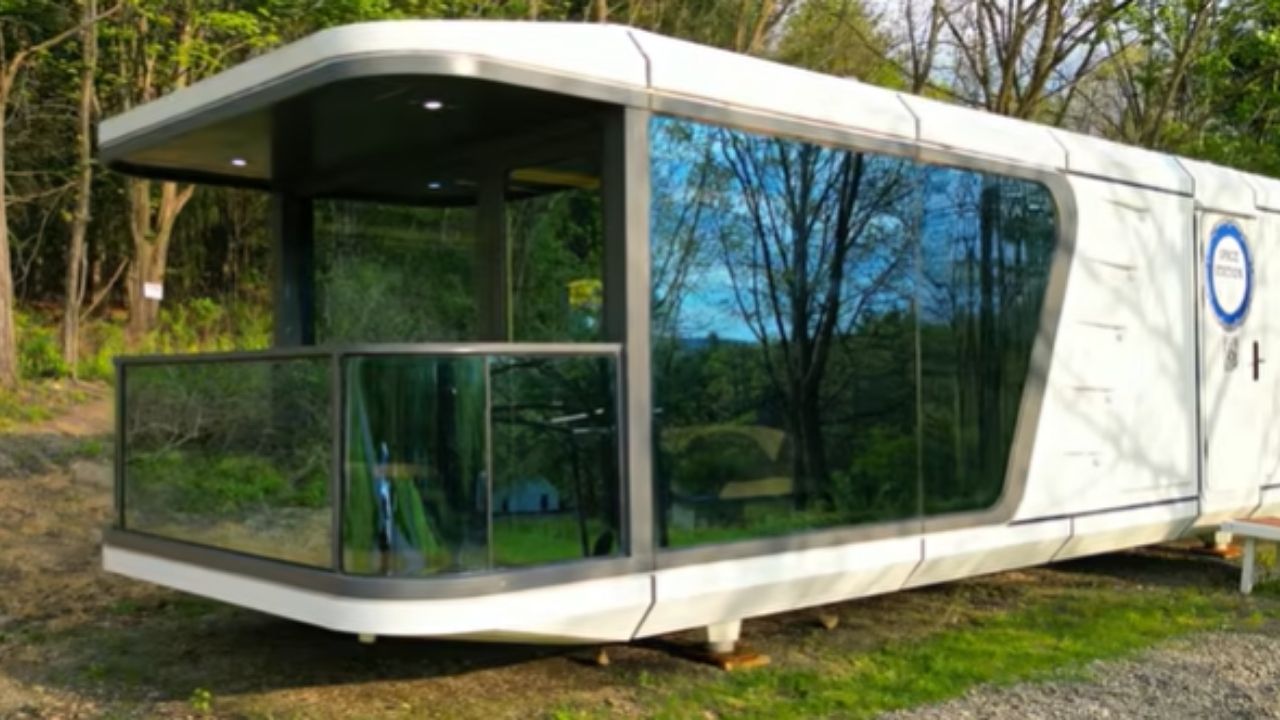


In New York, the mini house imported from China measures about 38 feet by 11 feet, cost US$ 70,000 without shipping, electrical, and land, and functions as a smart Airbnb with a full kitchen, bathroom, laundry, retractable roof, curtains by tablet, projector, balcony, and tree view for short-term rental.
The futuristic mini house installed in New York draws attention for mixing spaceship visuals, structure imported from China, and a rental income proposal for short-term stays. Purchased for about US$ 70,000, the unit became a smart Airbnb designed to offer a different experience in the United States.
The owner brought the structure with the idea of expanding his hosting business and creating an unconventional property. The project took about seven months including permits, transportation, land preparation, crane coordination, and correct installation on site.
Mini house was imported from China and installed in New York

The structure is approximately 38 feet long by 11 feet wide, according to the presented tour. The body of the mini house is made with stainless steel and aluminum, materials that help reinforce the modern and technological look of the construction.
-
China’s Engineered Bamboo: The “Material of the Future” Stronger Than Steel and a Sustainable Wood Alternative

-
Egypt’s “New Nile”: 170 km Artificial River Aims to Turn Desert into Farmland, but Water Supply Concerns Loom
-
Unable to secure a mortgage as a self-employed single mother, she designed her own floating home from a 20-meter boat and now lives “off-grid” with her two children and solar panels on an English canal.
-
Man Transforms Rusty Shipping Container into Luxury Home with Insulated Walls, Large Windows, and Drywall Finish, Surprising Onlookers


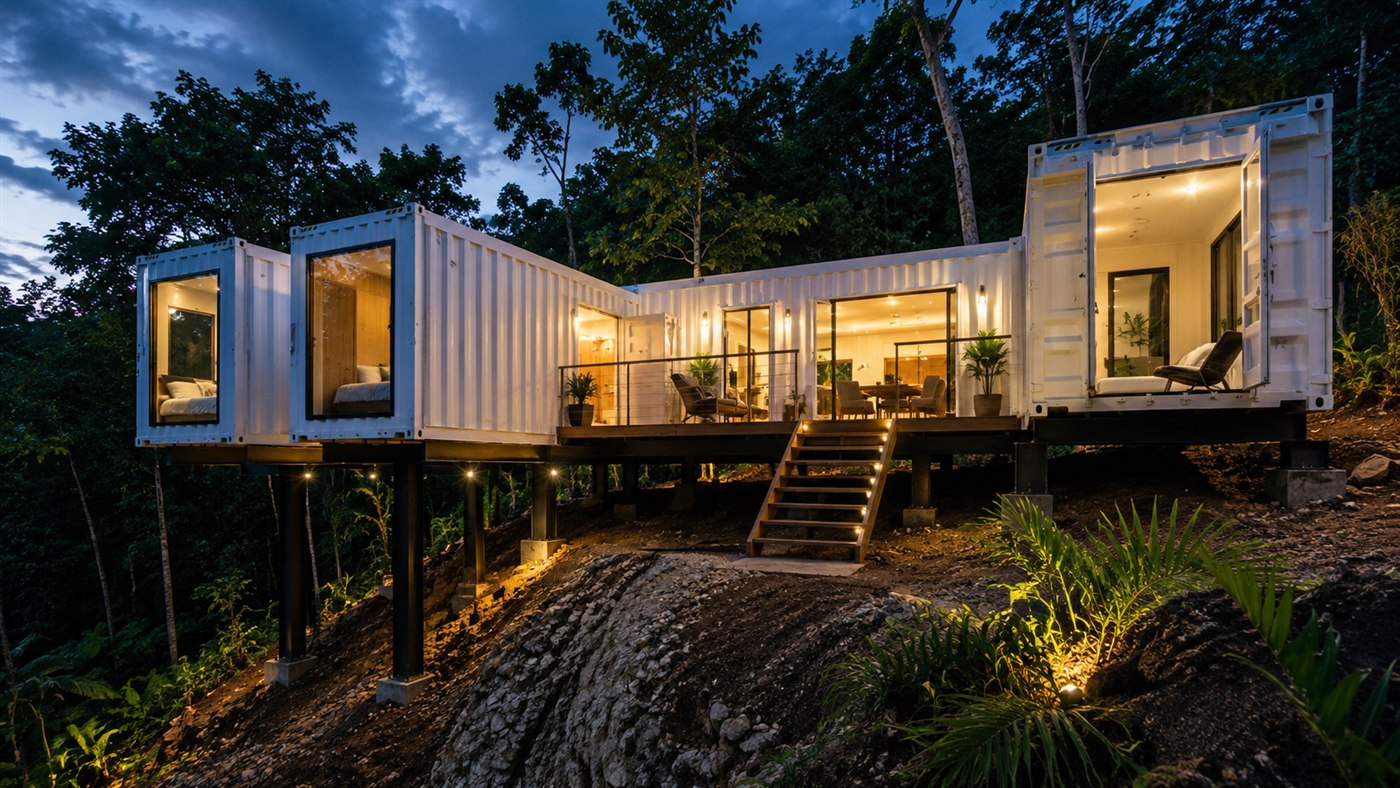
Before installing the unit, it was necessary to prepare the land. The area received parking, a gravel layer, and leveling to prevent the structure from sinking or being supported irregularly.
The proximity to the street facilitated the arrival of the mini house at the site. It also helped with the electrical installation, as access to the land did not require as complex an operation as it would in more isolated areas.
From the outside, the white facade, side windows, small balcony, and futuristic lights reinforce the habitable capsule aesthetic. The proposal is to appear modern even before the visitor enters.
Interior is controlled by commands and tablet
Right at the entrance, the tiny house showcases its main differentiator: intelligent control. Lights, air conditioning, and curtains can be activated by internal buttons and also by tablet.
The automated curtains stand out as one of the most striking features. With a touch, they close around the glass areas, offering more privacy without eliminating the feeling of being surrounded by nature.
Tablet control enhances the futuristic lodging experience. For those renting for a few days, this type of feature creates a quick impact and helps differentiate the unit from a regular accommodation.
The decor also mixes wood, modern lighting, and a world map on the wall. The result tries to balance technology, comfort, and the feeling of a compact retreat.
Complete kitchen has island, dual stove, and panoramic view

The kitchen occupies one of the most impressive areas of the tiny house. The space has a panoramic view of the trees, built-in lighting, cabinets, countertop, coffee maker, oven, utensils, stainless steel sink, and compact refrigerator.
The stove combines two solutions: one gas burner and one electric. The idea increases flexibility, allowing cooking even if one of the sources is unavailable.
Another unusual detail is the extractor integrated into the stove itself, a compact solution to control smoke and steam without taking up much space in a small house.
The central island functions as a preparation area and also as a dining table. Besides visually separating the environments, it makes the kitchen appear more complete and functional for short-term guests.
Glass creates a sense of nature without sacrificing comfort

The mini house has large glass areas, which creates a direct connection with the external environment. The view of the trees appears both in the kitchen and in the bedroom area, increasing the sense of spaciousness.
Despite the presence of glass, thermal comfort was considered. The unit has central air to maintain the appropriate internal temperature, as well as a window that can be opened for fresh air circulation.
The combination of glass, air conditioning, and automated curtains tries to solve three needs at the same time: view, comfort, and privacy.
This balance is essential for an Airbnb of this type. The proposal is not just to sleep in a compact house, but to live for a few days the experience of being in a modern capsule surrounded by nature.
Smart bathroom has laundry and toilet with control
The bathroom follows the same technological logic as the rest of the mini house. The toilet has its own control, automatic flush, and heating function, a common feature in more modern standard smart units.
The environment also includes a washbasin, mirror with light, space for towels, rain-style shower, and compact laundry installed under the counter. Every centimeter was utilized to combine comfort and function.
The bathroom walls appear ceramic at first glance, but they are made of water and moisture-resistant plastic material, according to the tour description. The choice helps to keep the space suitable for continuous use.
The frosted glass sliding door also saves internal area. In small houses, this type of solution avoids space waste and improves circulation.
Bedroom opens the roof and becomes a lodging experience

The bedroom is the most cinematic point of the mini house. The bed is in front of a panoramic view of the woods, and the environment also has a small sitting area for reading, coffee, or contemplating the landscape.
The roof can be opened in an accordion style, allowing you to see the sky and the stars. This detail transforms the room into one of the strongest parts of the experience, especially for guests seeking something different from a traditional room.
The space also features curtains controlled by a tablet, adjustable lighting, a comfortable bed, and a projector for watching movies. The proposal is to sell not just accommodation, but a sense of technological refuge.
The balcony connected to the room enhances this experience. The guest can step directly into the outdoor area, enjoy the view, and return to the indoor environment in just a few steps.
Price of US$ 70,000 does not include everything


The owner reported that the unit cost about US$ 70,000. However, this amount does not include shipping costs, electrical installation, or land preparation.
The structure was purchased through a Texas-based company called Atena Space Homes, which imported this type of unit from China to the United States. It was mentioned that the company apparently no longer does this work.
Smaller models found for lower prices were also mentioned, including options in the range of US$ 48,000 and smaller versions for about US$ 30,000 at major retailers, but these amounts do not represent the total cost of installing a unit ready for accommodation.
To function as an Airbnb, the final account needs to consider land, access, energy, transportation, crane, licenses, furniture, maintenance, and daily operation. The capsule’s price is just one part of the project.
Smart Airbnb becomes a short-term rental bet
Currently, the property is available for short-term rental on Airbnb and is named Space Station. The concept combines compact accommodation, futuristic aesthetics, and technology to attract people interested in a different experience.
The owner’s bet is to turn a tiny house into a business. Instead of a conventional building, he chose an imported unit, visually striking and easy to promote in videos, photos, and social media.
This type of accommodation works because it sells curiosity beyond the stay. The visitor does not pay just for a bed, kitchen, and bathroom; they pay for the sensation of sleeping in a futuristic capsule in the middle of nature.
Even so, the financial return depends on occupancy, daily rate, maintenance, platform fees, and property costs. The tiny house can be a good showcase, but it remains an investment that requires planning.
Mini house shows how short-term rental became a real estate laboratory
The mini house imported from China shows a strong trend in the hospitality market: small, smart, and visually striking properties can compete for travelers’ attention.
With a retractable roof, curtains controlled by tablet, full kitchen, smart bathroom, projector, and panoramic view, the unit transforms little space into an experience. The difference lies less in the size and more in how each detail was designed to impress.
The case also raises an important question: can a property like this really become a retirement plan? The answer depends on the total costs, the demand for short-term rentals, and the ability to keep the experience attractive over time.
And you, would you stay in a futuristic mini house like this in New York, or do you think it’s risky to bet $70,000 on an imported structure to live off short-term rentals? Share your opinion.







