






 Portuguese
  Spanish



Through a Joint Venture, Gerdau and SpaceTime Labs Want to Innovate the Everyday Life of Industry with High Technology.
Gerdau Next, the new business division focused on diversifying the multinational’s portfolio with adjacent steel businesses, has introduced Ubiratã, a joint venture with SpaceTime Labs. The new company specializes in high technology and the creation of new platforms that integrate into the industrial daily life through AI (artificial intelligence), autonomous systems, and robotic operations.
Ubiratã, A New Chapter in Gerdau’s History
Ubiratã was born as a project between Gerdau and SpaceTime Labs established in April 2021. Since then, the companies have been working together, and through this collaboration, their efforts have evolved towards business development.
According to Gerdau, the joint venture converges its measures to accelerate the industry’s transition to decarbonized, hyper-productive, and resilient operations.
-
ChatGPT Alerts FBI to Prevent Planned Murder of 8-Year-Old in Brazil’s Espírito Santo

-
Scientists Discover 125-Million-Year-Old “Pregnant Fossil” with Preserved Embryos and Microscopic Larvae Inside Mollusk in England

-
17-Year-Old Justin Bernstein Develops Bacteria to Produce Glass on Arctic Ice to Reflect Sunlight, Wins $50,000 U.S. Scholarship

-
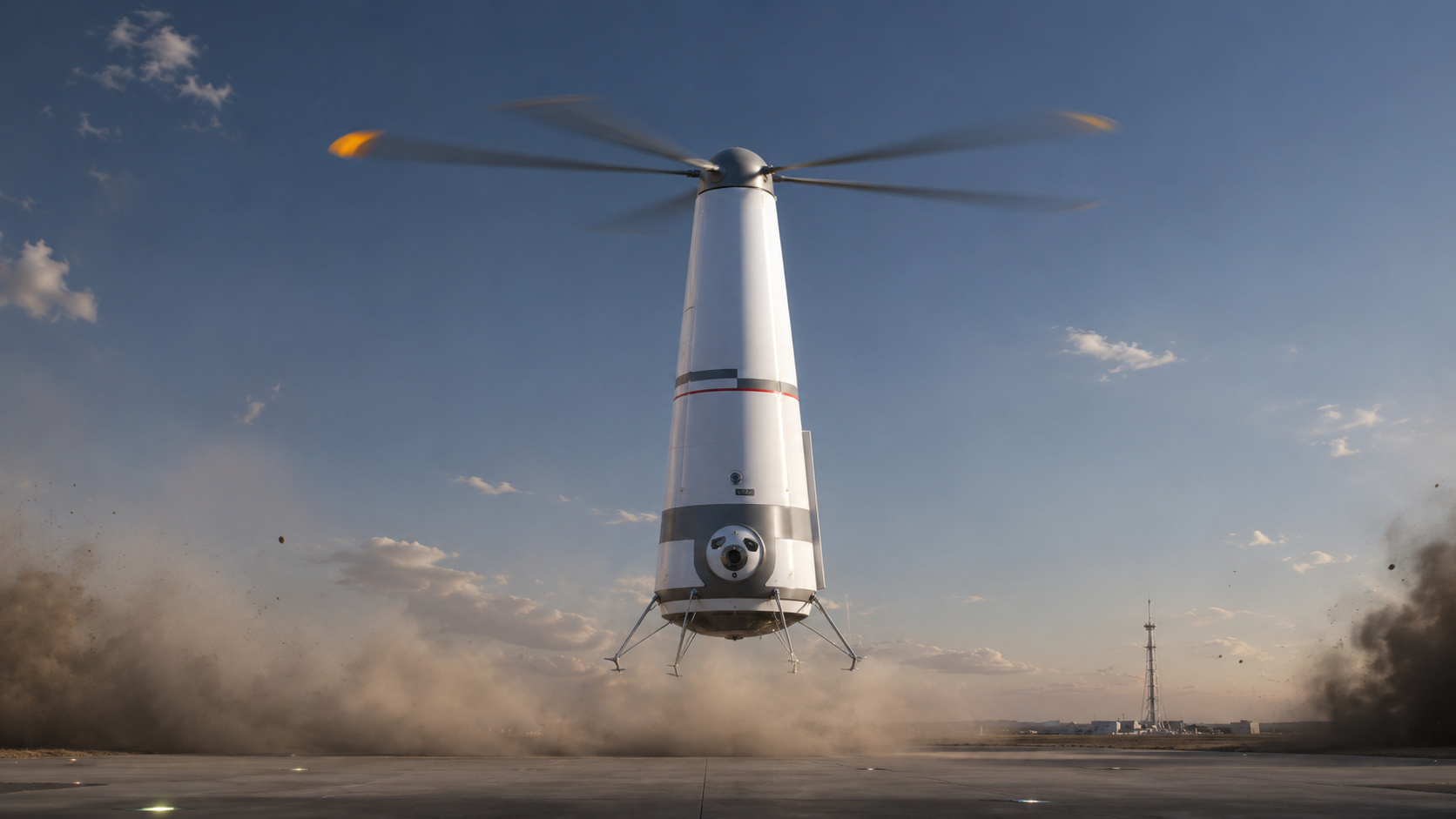
The 19-Meter Rocket-Helicopter: A Private Industry Prototype That Challenged Space Race Logic


Conceived by leading companies, the joint venture brings together Gerdau’s expertise in industrial value chains and combines it with SpaceTime Labs’ knowledge in machine learning, robotics, and autonomous systems.
Mateus Jarros, CEO of Ubiratã, says: “The joint venture leverages Gerdau’s expertise in industrial value chains and SpaceTime Labs’ knowledge in creating high-tech ventures. The partners co-invested significant resources to capture synergies through the integration of assets and complementary skill sets. Ubiratã is pioneering the development of a unique digital twin for online monitoring of the quality of mineral supply inputs that, once scaled, will create significant improvements in resource efficiency, contribute to its decarbonization efforts, and generate substantial cost savings.”
According to the steel producer, Ubiratã is an important chapter in the business transformation journey, reinforcing the company’s ability to adapt, innovate, and transform over its 122-year history.
Juliano Prado, Vice President of Gerdau and leader of Gerdau Next, states: “The joint venture will play a crucial role in integrating artificial intelligence platforms and robotic systems into our operations.”
Reinforcing Its Competitive Value in the Market While Staying in Harmony with the Environment
Among Ubiratã’s particularities such as hyper-productivity, operational efficiency, and resilience, the effectiveness in the decarbonization process of the company’s platforms also reinforces its competitive value.
“The increasing impact and frequency of climate extremes worldwide, caused by the acceleration of climate change, requires rapid decarbonization of the sector. In this context, optimizing recycled volumes through the use of scrap and gains in hyper-productivity in the use of inputs, energy, and supply chain processes can provide substantial emissions reductions and cost savings,” points out Juan Carlos Castilla-Rubio, Chairman of SpaceTime Labs.
According to Gerdau, Ubiratã is already operational. Two technologies that are in the final stages of development are being applied at Gerdau’s largest unit, the Ouro Branco (MG) mill. The company emphasizes that the new technologies will have a significant impact on cost reduction and the stratification of information regarding the quality of raw materials.


