Portuguese
  Spanish



Vale’s Restructuring Plans to Transfer Copper Assets to Salobo Metais and Nickel Assets to a New Company
Vale announced that the company’s Board of Directors has approved the reorganization of its base metals operations, such as copper and nickel, held by the mining company in Brazil.
Meet Vale
Vale is a multinational mining company from Brazil and one of the largest logistics operators in the country. It is one of the largest mining companies in the world, also being the largest producer of iron ore, pellets, and nickel. The company also produces manganese, ferroalloys, copper, bauxite, potassium, kaolin, alumina, and aluminum.
Regarding the electric power sector, the company participates in consortia and currently operates nine hydroelectric plants in Brazil, Canada, and Indonesia. In 2008, according to the Financial Times, Vale was ranked as the 33rd largest in the world and the largest in Brazil by export volume. By 2009, the company and its trade name changed from Companhia Vale do Rio Doce (CVRD) to simply Vale S.A., a name it has always been known by in the stock markets.
-
France Revamps 530 Social Housing Units with Large Balconies and Glass Facades Without Demolishing Existing Buildings

-
10-Year-Old Max Makes History with Paris Fashion Show, Launches Own Brand, Hires Staff, and Sets World Record as Youngest Runway Designer

-
Bolivian Female Construction Workers Form Association to Combat Discrimination and 38% Pay Gap in the Industry
-
Near Amsterdam, residents buy land and discover they must also build streets, manage drainage, handle waste, and grow food on half their plot.




Vale was founded in 1942, during Getúlio Vargas’s government, for the exploration of iron ore mines in the Itabira region of the state of Minas Gerais. The company is now a private, publicly-traded entity based in Rio de Janeiro.
Check How the Restructuring of Metal Operations Will Occur
The approval of the restructuring plans to transfer copper assets to Salobo Metais and nickel assets to a new company that will be established by Vale in Brazil. The nickel and copper assets will continue to be consolidated and fully held by Vale.
The earnings before interest, taxes, depreciation, and amortization (EBITDA) for Vale’s Base Metals division was US$ 603 million in the second quarter of 2022, which accounts for 10.9% of the total EBITDA recorded in the same period.
According to a statement, the company’s reorganization aims to centralize Vale’s base metals operations in Brazil into two companies, namely copper and nickel, bringing greater efficiency in processes and management.
The mining company Vale further clarifies that there is currently no determination regarding new transactions involving its Base Metals business.
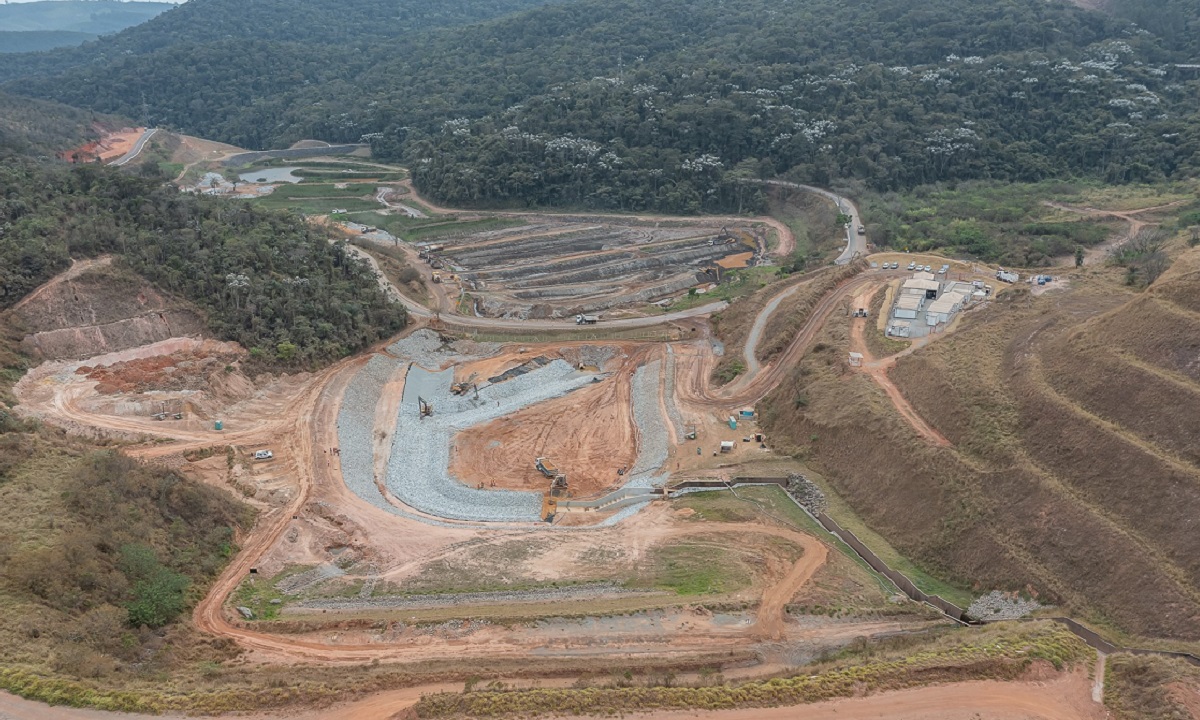
Construction of Vale’s Dams
The mining company Vale also reported the completion of the decharacterization works for three more upstream structures: the Auxiliary Dike of Dam 5 at the Águas Claras Mine in Nova Lima (MG), the Dike 3 of the Pontal System at the Cauê Mine, and the Ipoema dam at the Meio Mine, both in Itabira (MG).
Thus, the mining company Vale has eliminated 40% of the structures planned in the Decharacterization Program. In total, Vale has eliminated 12 structures since 2019, with five in 2022.
Want to know more news about the mining company Vale? Check below!
Impressive Autonomy! VALE is Testing the World’s First Electric Haul Trucks for Ore Transport
The goal of Vale with the electric truck tests is to get closer to the zero carbon emission target set by the company.
Vale is testing the first fully electric trucks for heavy load transportation. The two units will be used for internal transport in mines both in Brazil and Indonesia. The corporation announced the new resource in recent weeks, and according to the company, the main objective of this initiative is to get as close as possible to not emitting carbon dioxide into the atmosphere.
To read the full article in its entirety, just click here!