






 Portuguese
  Spanish


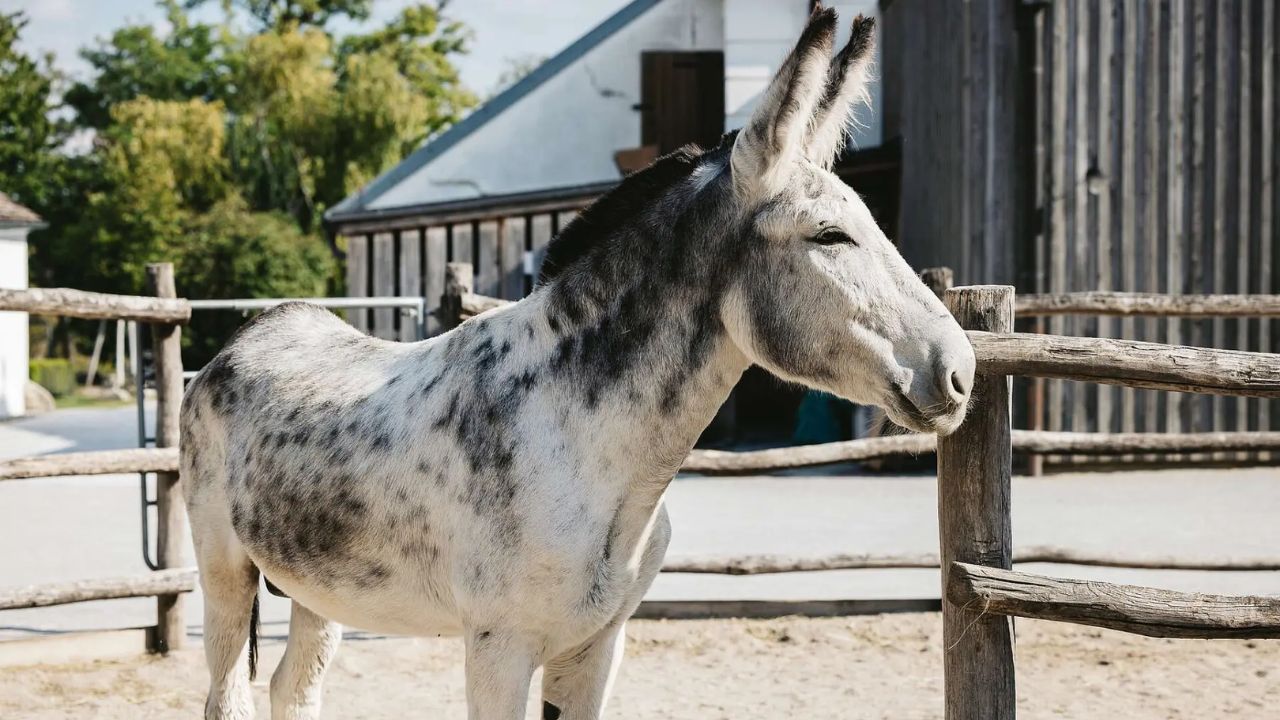


The Giant Donkey of Andalusia Is Officially At Risk of Extinction in Spain. Low Genetic Diversity and Few Pure Females Threaten the Survival of the Breed.
The Giant Donkey of Andalusia faces a real threat of extinction. Classified by the Spanish Ministry of Agriculture as a “native breed at risk”.
Although records indicate slight numerical growth in recent years, experts warn that the survival of the breed is far from guaranteed.
The main problem is not just the number of individuals, but the genetic fragility of the herd.
-
Why Yellow is the Safety Color for Heavy Machinery: Origins and Benefits Since 1931

-
U.S. Channel Highlights 20 Brazilian Innovations Leading Latin America: From Açaí to Modular Homes and Biogas

-
Dog Goes Viral for Buying Its Own Food and Carrying the Bag Home in Its Mouth

-
Unfinished 150-Year-Old Church in Brazil’s Bahia Stands Without a Roof After Railway Shifted Alagoinhas’ Center


How Many Animals Still Exist and Why Does This Concern Us?
Official data reveals a delicate scenario. In 2013, there were only 749 registered Giant Donkeys of Andalusia.
By 2018, the number rose to 839 individuals, which at first glance could indicate recovery.
However, the progress is misleading. Only 14 females were considered genetically pure, an extremely low number to ensure the continuity of the breed.
This limitation compromises breeding and increases the risk of genetic erosion.
Physical Characteristics of the Giant Donkey of Andalusia
With a striking appearance, the Andalusian donkey catches attention for its above-average size and natural elegance.
In adulthood, the breed can reach between 1.50 and 1.60 meters in height at the withers, placing it among the largest representatives of the equine group.
The coat is short, thin, and soft, usually in shades of light gray, sometimes appearing almost white.
The head features a convex profile and well-balanced proportions, reinforcing the imposing aspect of the animal.
An additional trait that distinguishes the breed is its gentle and calm temperament, a characteristic that facilitates handling and training.
Furthermore, the Andalusian donkey demonstrates excellent adaptation to hot and dry climates, a typical condition of the Andalusian region where it has developed over the centuries.
This set of attributes makes the Andalusian donkey a robust, resilient, and highly functional animal, recognized for both its physical strength and its ability to withstand adverse environments.
Historical and Economic Importance of the Breed
Despite its elegance, the Giant Donkey of Andalusia has always had a practical function.
For centuries, it has been essential in agriculture, regional transport, and the formation of high-quality mules.
Its strength, robustness, and ease of training have made the animal strategic for the Spanish rural economy.
Therefore, its extinction would represent not only a biological loss but also a historical one.
Andalusian Donkey Is Cultural Heritage At Risk
More than just a working animal, the Giant Donkey of Andalusia is considered a living heritage of the Spanish countryside.
It is directly linked to the cultural identity of the region and the memory of traditional rural life.
With the population decline and the low availability of pure breeding females, the risk of definitive disappearance of the breed increases.
Experts warn that once lost, this genetic heritage cannot be recreated.
Conservation Efforts Face Challenges
Breeders’ organizations and conservation programs are working to prevent the extinction of the Giant Donkey of Andalusia.
Among the actions are:
- Strict control of genealogical records
- Incentive for selective breeding
- Attempts to expand the genetic base
Despite this, progress is slow. The small number of animals and commercial disinterest hinder faster results.
Why Preserve the Giant Donkey of Andalusia?
The breed is considered foundational, having influenced breeding programs in the West.
Furthermore, its adaptation to extreme environments is seen as a valuable resource in the face of climate change.
Preserving the Giant Donkey of Andalusia means protecting a unique genetic heritage and preventing a fundamental part of European rural history from being erased.
Source: Compre Rural




Primeiramente, não existe “**** de raça pura” **** (muares) são animais híbridos resultados de cruzamento de azinino com equino, este é um azinino, ou seja, ****, **** Andaluz, caso fosse um ****, por ser híbrido, nem se reproduzir consegue. Portanto, informação extremamente equivocada.
Zero problema! Basta importar jumentos do Brasil!
Pelo visto, a mortadela feita dessas fêmeas, consideradas raça pura, vai subir no mercado.
No brasil temos vários **** comem abóbora, pão com mortadela, mas eles não entram em extinção, não gostam de trabalhar, se quiserem mandamos aos milhares.